
Browse using the new Vinous website now. Launch →
Printed by, and for the sole use of . All rights reserved © 2015 Vinous Media
Michel Rolland Remembered
BY ANTONIO GALLONI | MARCH 25, 2026
“Thank you for the excellent rating of Château Le Bon Pasteur in Pomerol. I knew I could trust a palate as keen and discerning as yours,” Michel Rolland wrote to me some years ago after a review he was less than pleased with. Even after all this time, I can still hear those words delivered with Rolland’s sharp wit and sarcasm. The wine world lost one of its most influential figures and most colorful characters when Michel Rolland passed away on March 19 from a sudden heart attack. He was 78 years old.
My colleague Neal Martin has already chronicled Michel Rolland’s illustrious career and life, so I will take a different approach here.
But I am going to start with something very simple: everyone who loves wine, and everyone who works in wine or in a related field, owes Michel Rolland a tremendous debt of gratitude for his life’s work. Some people gain influence because of their accomplishments, but a few others completely reshape the landscape of their industry. Michel Rolland falls squarely into the latter category.
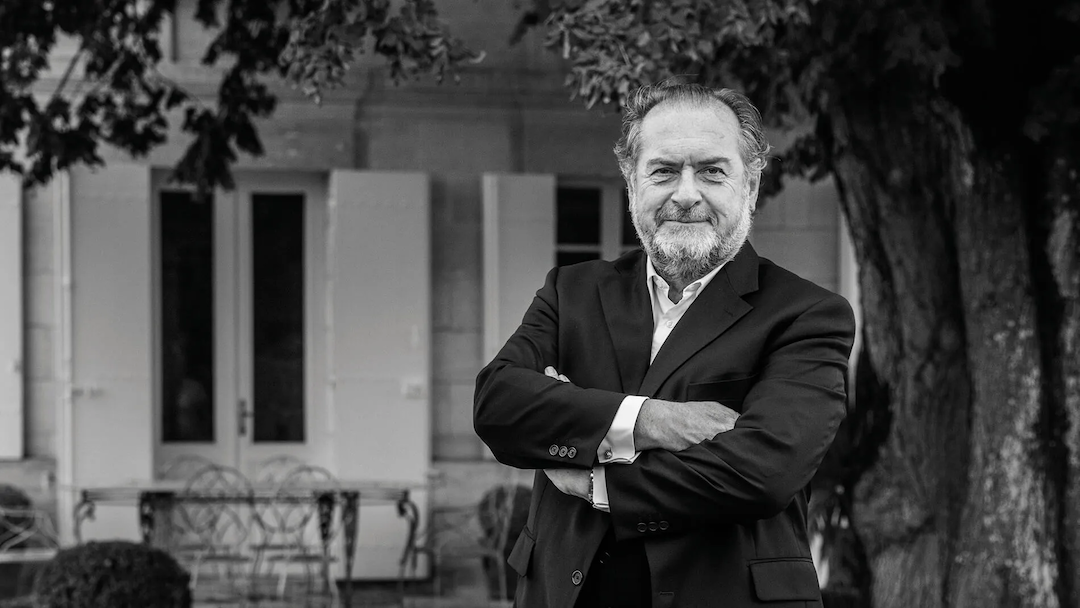
Rolland rose to fame in the 1980s and 1990s as a consultant to top properties in his native Bordeaux. Consultants have existed since wine has been made. Michel Rolland set his sights higher. He aspired to make great wines all over the world. His ambition, drive and success elevated the role of the consulting winemaker. He opened the door for everyone else who followed, not just in France, but in the United States, Italy, South America and other regions throughout the world. Every big-name winemaking and vineyard consultant today stands on the shoulders of Michel Rolland. That’s all there is to it.
One need look no further than to Rolland’s protégés to understand his sweeping influence. John Kongsgaard, Andy Erickson, Aaron Pott, Benoit Touquette, Nigel Kinsman, Axel Heinz, Jean-Philippe Fort, Julien Viaud and many others are part of a long line of winemakers who spent a portion of their formative years alongside Michel Rolland. Even those winemakers with different philosophies, like Thomas Duclos, were deeply influenced by Rolland, specifically his zest for life and work. And then there are the hundreds of young, in-house winemakers around the world at client estates who had the privilege of watching and collaborating with one of the world’s most precise tasters and blenders.
The same is true for consumers. Rolland first achieved prominence when the baby boomer generation was just starting to become interested in fine wine, especially in the United States, where wine culture was relatively new at the time. In the United States, this coincided with one of the longest periods of continuous economic expansion in history, a time between 1982 and 2007 during which the baby boomers drove growth in many sectors, including fine wine. Rolland’s rich, bold reds gained favor with his contemporary, Robert Parker, who brought attention to many of these wines in his publication, The Wine Advocate.
It’s easy to look back and say Michel Rolland’s wines were too much this or too much that. Younger wine lovers might not remember that great vintages were few and far between in the 1970s and early 1980s, and might not know that as recently as the early 2000s, many wineries in Napa Valley struggled with Brettanomyces and overall hygiene. In that context, Michel Rolland’s wines must have been very exciting to taste. As with anyone who pushed boundaries, the limits of those boundaries eventually were tested. That’s just a natural part of evolution. Rolland became a target for those who thought his wines were too ripe and oaky, the products of a formula. I have never shared this view. A consultant is a professional hired to do a job, just like an architect is hired to design and build a home in their style. This is what they are paid to do. If wines were too similar, the responsibility for that lies solely with owners who sought a shortcut to financial gain. The same thing is happening today. Approaches to farming and winemaking have evolved dramatically, but the desire to cater to the tastes of the time has not.
I did not know Michel Rolland well personally. I doubt anyone who reviews wines did. There’s just a certain professional distance that exists between producer and critic that is essential in doing the job well. Rolland was always extremely passionate, full of life and never short of opinions. The term joie de vivre suited him better than anything I can think of. I tasted with him numerous times over the years, but those weren’t the most memorable encounters.
Our schedules rarely aligned in Napa Valley, but one year they did. We made an appointment to meet for coffee and croissants. It was a gorgeous Sunday morning. Michel was headed for a golf outing, but we spent a good hour and a half in his hotel room at the Meadowood resort in front of a pot of black coffee and a basket of croissants. No wine. Over a wide-ranging conversation, Michel proceeded to break down each of the most high-profile Napa Valley estates he consulted with, one by one, going over all their history, their inner workings and their strengths, challenges and opportunities as he viewed them. I had never seen him so candid.
A few years later, I ran into Michel at the Napa Valley Wine Auction. I had not planned on being there. It was a last-minute thing. I saw Michel standing by himself, in a corner, totally alone. For all the prestige of the elite estates he worked with, at his essence, Michel was just a winemaker from Pomerol who was very happy to speak a little French. He was clearly very out of place with all the glamour and socializing that is part of formal gatherings in Napa Valley wine country. We spent the entire cocktail hour together chatting, completely undisturbed. How such an iconic figure in wine could just be left there alone was mind-boggling to me.
I saw Michel a few times after that, but I always got the impression he felt greater freedom in the United States than in France. Perhaps that’s why he kept so many of his consulting relationships in Napa Valley while those in France quietly passed on to other colleagues. Perhaps there was something about the Wild West that suited his restless soul.
Michel Rolland was a seminal figure in wine. My greatest hope is that his legacy is preserved and celebrated by all those whose lives he touched.
All of us at Vinous extend our deepest condolences to the Rolland family and his many close colleagues during this very difficult time.
© 2026, Vinous. No portion of this article may be copied, shared or redistributed without prior consent from Vinous. Doing so is not only a violation of our copyright but also threatens the survival of independent wine criticism.