
Browse using the new Vinous website now. Launch →
Printed by, and for the sole use of . All rights reserved © 2015 Vinous Media
Going to California: Sonoma’s 2024s & 2023s
BY ANTONIO GALLONI | JANUARY 27, 2026
Article Additions: September 3, 2026 - Centennial Mountain
Article Additions: August 18, 2026 - Aesthete, Aperture, Devil Proof Vineyards, Donum, Sign of the Dove, The Setting, Valette Wines
January is always such an exciting time in Sonoma, heavy rains and flooding excepted. The promise of the new year lies ahead. Many estates are releasing their latest wines. This year’s new releases are mostly from 2024 and 2023, two strong back-to-back vintages that provide fascinating contrasts, as the growing seasons were diametrically opposite. The best wines from both vintages are superb.
This report covers all the main viticultural regions in Sonoma County, except for Moon Mountain, which we review separately, although we do include wines from Moon Mountain (and other appellations) made by producers who are based in Sonoma. Much of the focus is on the 2024 vintage, although the current release for many wineries is 2023. I was able to taste both vintages side-by-side at a handful of properties, which highlighted the stark differences between the two vintages, as I will explain in more detail below.
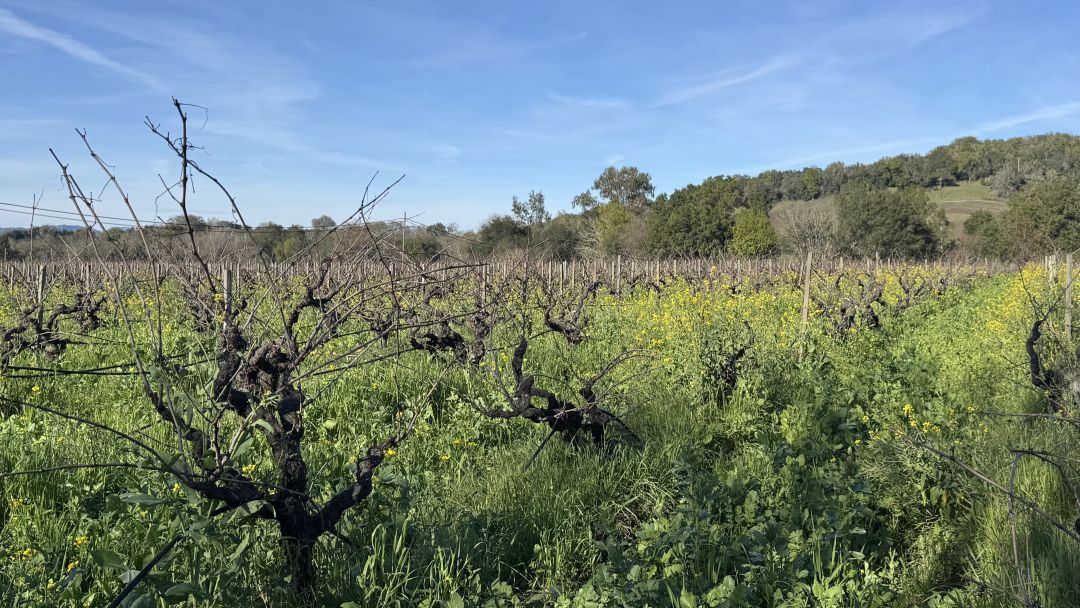
Limerick Lane's 1910 Block, in the heart of the Russian River Valley, is one of Sonoma's historic, legacy vineyard sites.
After a very cold and late-ripening year in 2023, 2024 marked a return to more typical California growing conditions. Winter rain was healthy. Another spell of rain in May was beneficial. A first heat wave arrived in late June and lasted about a week. Joel Peterson and Ted Lemon are among the producers who believe grapes began to form thick skins during this time frame that protected them throughout the rest of the year. Conditions were mostly benign in the weeks and months that followed. Flowering and set were mostly uneventful. Several brief heat spikes came and went without too much incidence, until a longer and more intense period of heat arrived in late September and into early October. Harvest times were on the earlier side relative to recent historical norms.
As always, vintage commentary in Sonoma is a bit more general than it is in other regions around the world. Only Sonoma Valley’s Central Corridor has a density of vineyards that is comparable to regions like the heart of Napa Valley, Barolo and France’s classic appellations in Burgundy and Bordeaux. Moving west, vineyards become more spread out, culminating with the West Sonoma Coast, which is best described as vast swaths of land sprinkled with tiny vineyards. As regions become remote, the story of growing seasons and wines becomes more of an estate-by-estate proposition. Nevertheless, these are some of the themes that emerged from my most recent round of visits and tastings in January 2026.
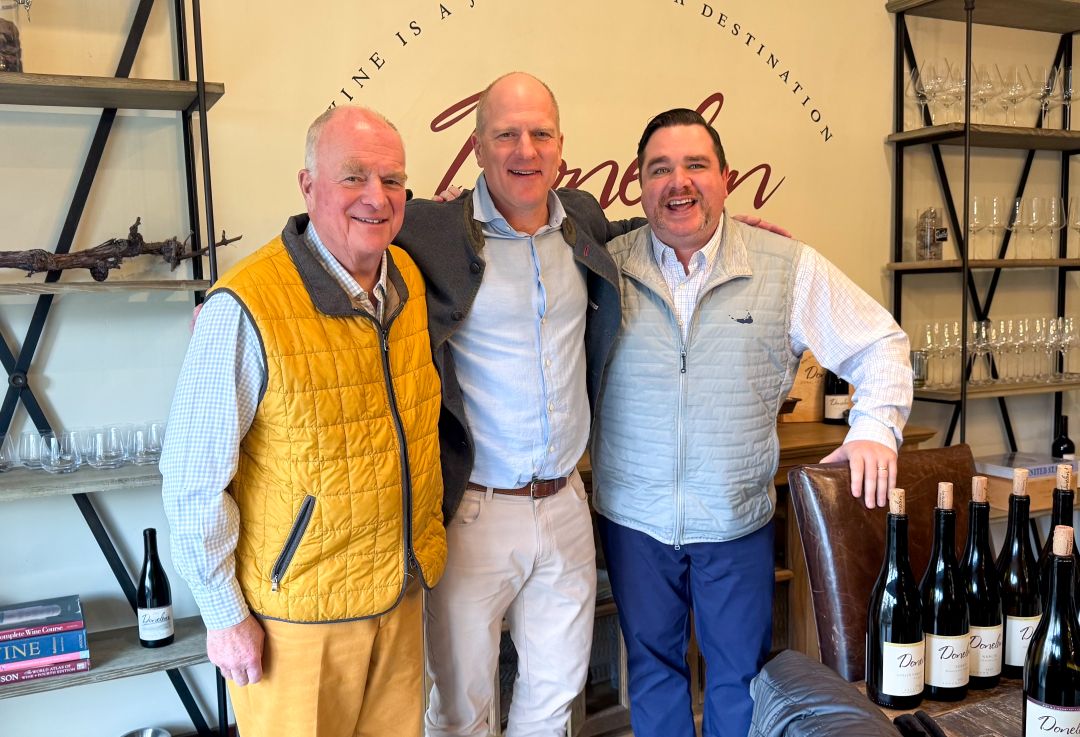
Proprietors Joe and Cushing Donelan (left and center) with Winemaker David Milner (right) at the Donelan winery in Santa Rosa. Milner turned out some of the most brilliant, utterly profound wines I have tasted here.
2024 Whites Soar
Whites are the most consistently impressive wines in 2024. That includes aromatic varieties like Sauvignon Blanc, blends and, of course, Chardonnay. In looking at the growing season and overall conditions, there’s nothing immediately obvious that indicates a great vintage for whites, but the wines speak for themselves.
Morgan Twain-Peterson MW at Bedrock commented that vintages with early heat can push the development of thiols (the compounds that produce aromatics) in white wines, something James Hall at Patz & Hall made him aware of years ago. But the 2024s aren’t just aromatically intriguing, they also have notable fruit presence, structure and energy, along with very strong site signatures; in other words, the 2024s have a lot of everything. If that sounds like an exciting combination, well, it is. Many estates made some of their very finest whites ever in 2024.
I have said it before, but I will say it again. I strongly believe that in some areas, such as in certain places in the West Sonoma Coast, Chardonnay will ultimately prove to be more interesting than Pinot Noir. Thus far, winemakers have paid much more attention to clonal and rootstock selection in Pinot Noir. As soon as producers start to do the same in Chardonnay, the wines could really go through the roof.
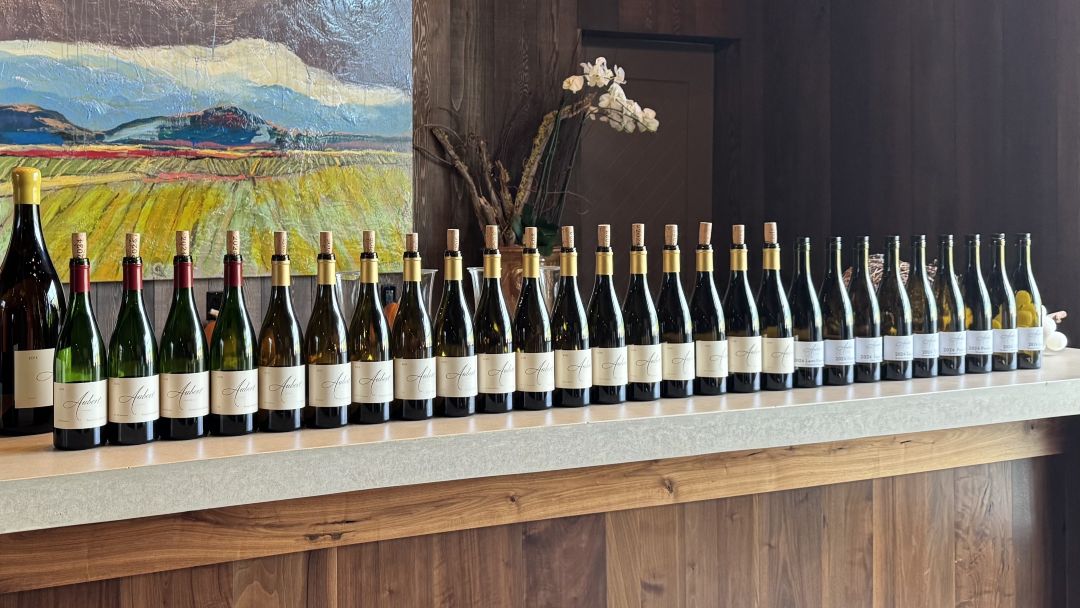
A stunning collection of 2024s and 2023s (plus some older vintages) at Aubert.
Field Blends: On the Heels of 2023 & 2021
Zinfandel-based field blends and other “heritage wines” from Sonoma Valley and the Russian River Valley also excel in 2024. The wines often have more fruit weight than the 2023s and almost as much verve, with a balance that recalls 2021 but with just a bit less mid-palate intensity and overall weight. Two thousand twenty-four is a vintage in which site character is so evident in the wines.
Syrah and Cabernet Sauvignon: Not to be Outdone
Not to be outdone, Syrah and Cabernet Sauvignon also impress in 2024. The Syrahs are consistently beautiful. Wines from cooler sites benefit from an extra kick of heat. That’s especially true in the coldest and most marginal sites, where 2023 was just too cold. Cabernet-Sauvignon-based wines are quite strong in 2024, but it will be neck and neck with the 2023s when all the wines are released. In 2023, the Cabernets benefited from an extra month of hangtime. Those final weeks of the season allowed for the full development of aromatics, phenolics and flavors.
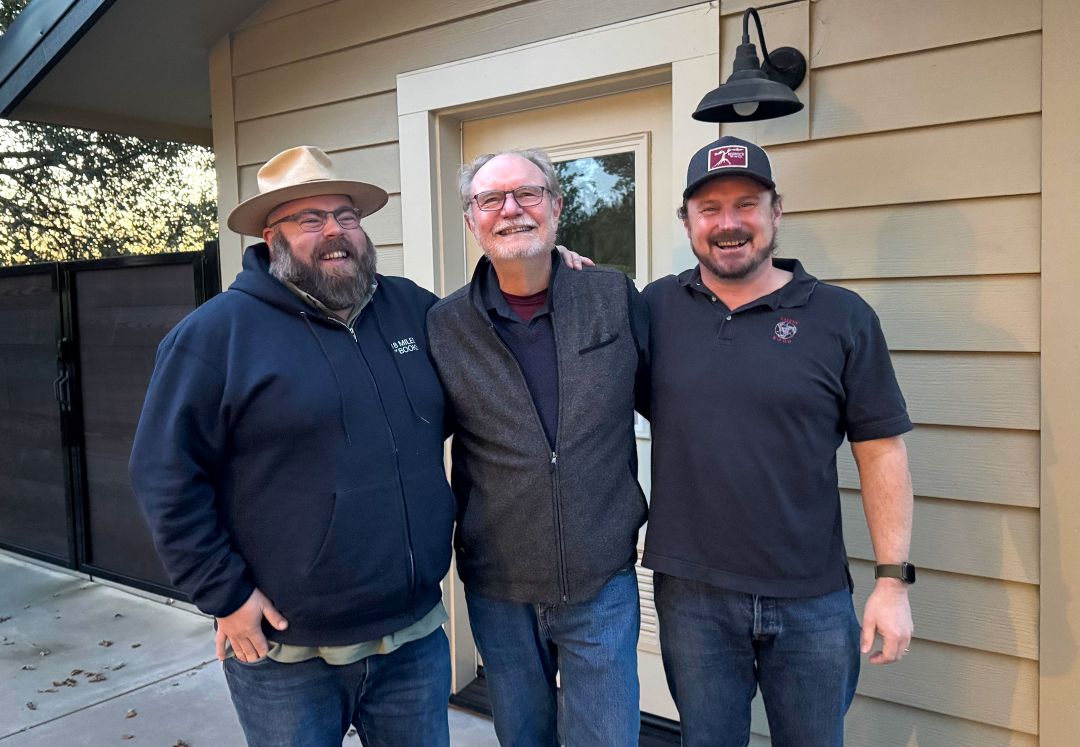
Joel Peterson (center), flanked by Consigliere Chris Cottrell (left) and son Morgan (right). The dynamic trio turned out compelling wines at Once & Future, Bedrock and Under the Wire.
2024 Pinot Noir: Fickle yet Alluring
Pinot Noir is the most variable grape in 2024. It’s common in wine criticism to look at weather and then attempt to extrapolate how those conditions mark the wines. Over time, I have started to believe that the most critical element in Pinot Noir is actually yields, which is of course related to weather, but also subject to other factors, such as virus. In tasting, the 2024 Pinots are inconsistent. Some wines are exceptional, especially where yields were low to moderate (either naturally or through thinning) and/or where cold sites benefited from a bit more heat than in 2023 (Arnot-Roberts, Donelan). Others are a bit light. Some producers bottled more of their appellation wines than normal (Rivers-Marie), others bottled some of their 2024 Pinots on the early side (Littorai, DuMOL), choices that reflect a vintage in which some wines are on the lighter side. That does not necessarily mean the wines are inferior, just lighter in structure.
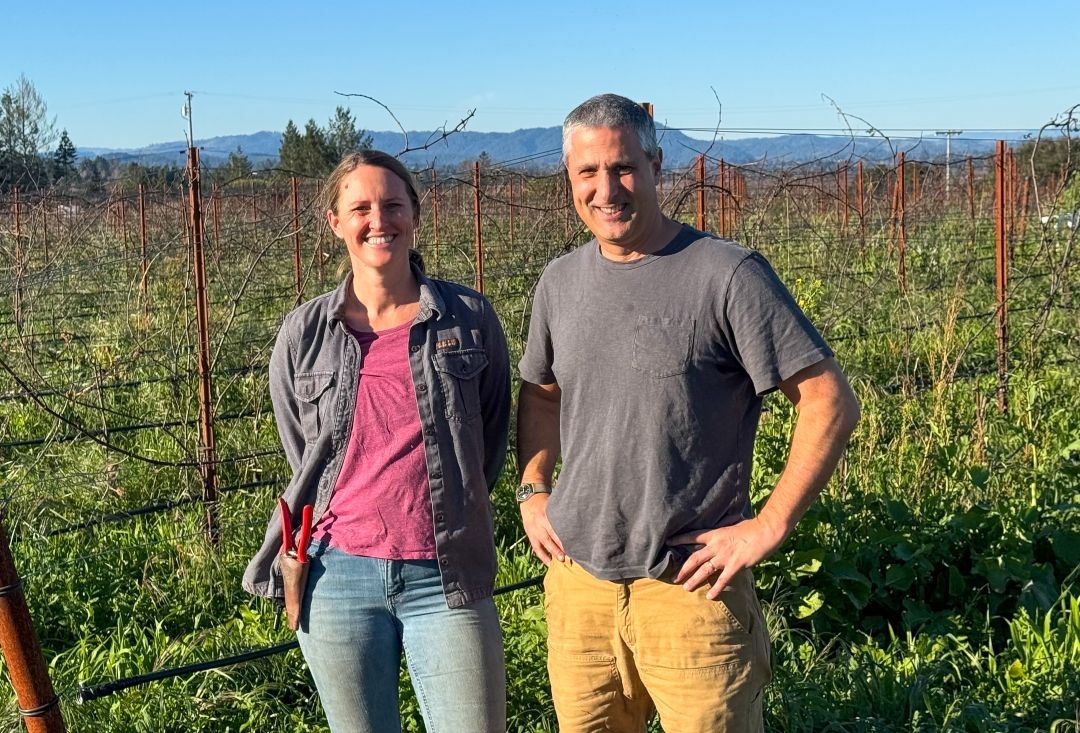
Jamie Kutch (right) with Assistant Winemaker Melissa Peabody (left) at his estate vineyard in Sebastopol, a labor of love that is expected to yield its first full crop in 2026. Kutch's 2024 Pinots are his finest yet.
Looking Back at 2023
A few later-release 2023s show just how special the vintage is in the right hands and in the right places. Harvest was a month later than in most years. Extended hang time gave producers ideal conditions to achieve full phenolic ripeness at relatively modest sugars. But 2023 was not easy everywhere. In the most marginal sites, fruit did not ripen fully, resulting in wines that are harsh, strident and vegetal. That is the case once again in 2025, as some producers have already told me they won’t be bottling certain wines. Even so, 2023 is an outstanding vintage across the board.
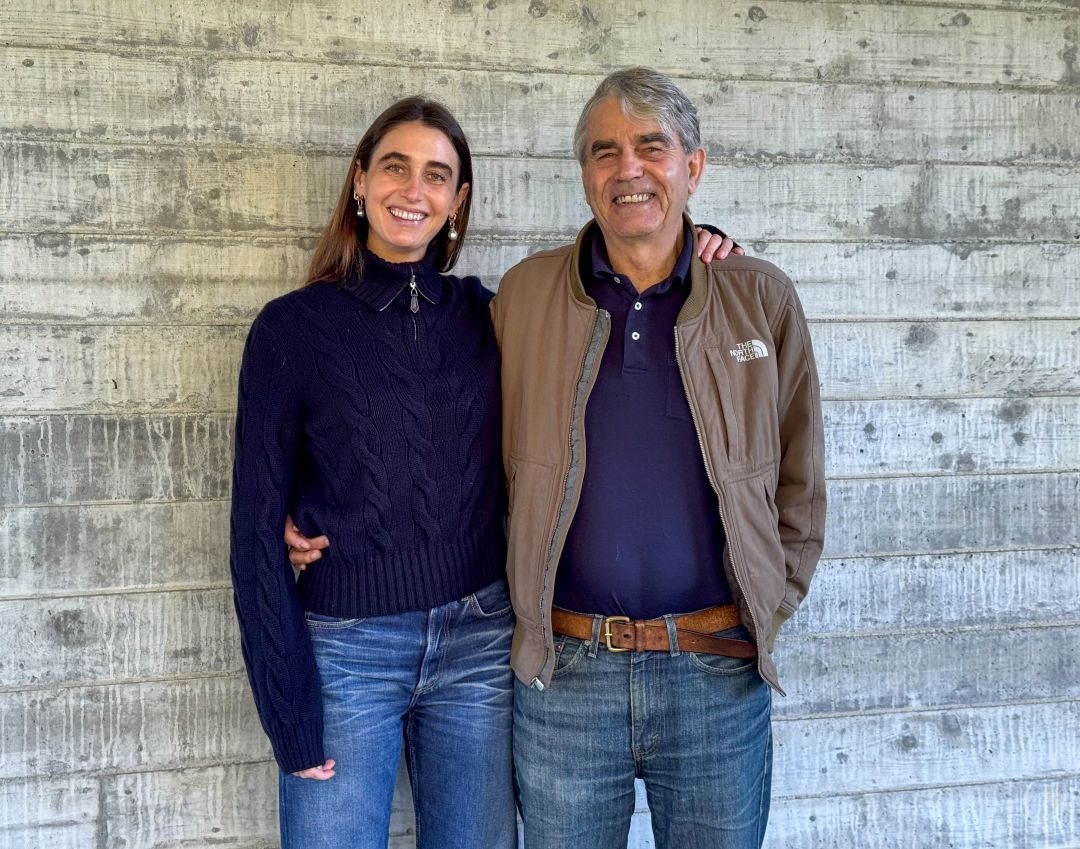
Catherine and Steve Kistler presented a magnificent collection of Pinot Noirs at their Occidental Estate.
The State of the Market
It’s impossible to ignore the current challenges facing the wine industry. Consumption patterns are changing, and there is clearly an oversupply of quality wine. Some producers have announced plans to wind down. These include Arista, Ernest and Carlisle. Others are making less wine. Producers who used to buy fruit are buying less, and some who never used to sell fruit are making fruit available. There’s a feeling of negativity in the air in some places.
As I have written in other articles, it’s not all gloom and doom. New projects keep popping up. Some wineries reported positive results in 2025. The US Government’s recently published guidelines on the benefits of moderate consumption of alcohol that are far more positive than the position taken by the World Health Organization. Interestingly, there seems to be much less concern over the health risks of processed foods, carbonated soft drinks, sugar and other food products, but that’s a discussion for another time.
It is human nature is to overcompensate. I have seen that before in previous corrections, although admittedly, that is much easier to say from a distance when one is not directly living through hard times day to day, with all the implications that can have for a business, its employees, suppliers and customers.
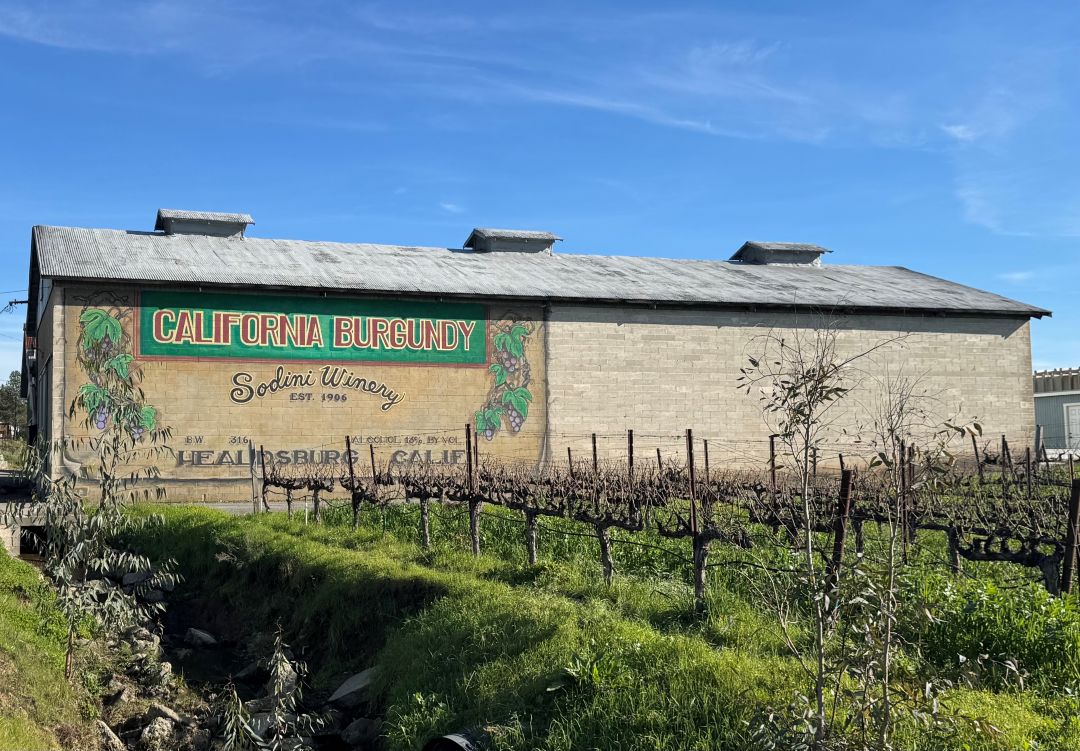
The colorful sign at Sodini is a reminder of Sonoma's early days and its rich, immigrant heritage.
Today’s winemakers are highly conscientious. They understand the importance of long-term vine health far more than their predecessors did. These producers want to pursue various forms of sustainable farming, whether that is organic, biodynamic, regenerative or something in the middle, perhaps formally certified or not. All these approaches entail higher farming costs per acre. At the same time, focusing on sustainable farming often results in lower yields. Increasing farming costs, reduced production, and an inability to increase prices in a weak market are a perfect storm, conditions that are putting many wineries under considerable financial stress.
I am especially concerned about California’s historic vineyards. When I visit one of these sites, most of which were planted in the late 1800s or early 1900s, I don’t see a piece of land with vines. Instead, I see a historical landmark, a place that represents deep cultural value, a living piece of American history. Unfortunately, vineyards aren’t protected by law like buildings and other historic places. Anyone could buy a vineyard, even one like Monte Rosso that has rich historical significance, rip out the vines and build condominiums. That may be an extreme example, but it is an accurate depiction of the current state of affairs. Without very careful long-term thinking and investment by smart people, we are going to lose some of these sites. And when they are gone, they are gone forever. The Historic Vineyard Society has done a tremendous job in cataloguing California’s heritage vineyards, but it does not have the power to do anything more than spread the word about its mission. That’s a lot, but it's not enough.
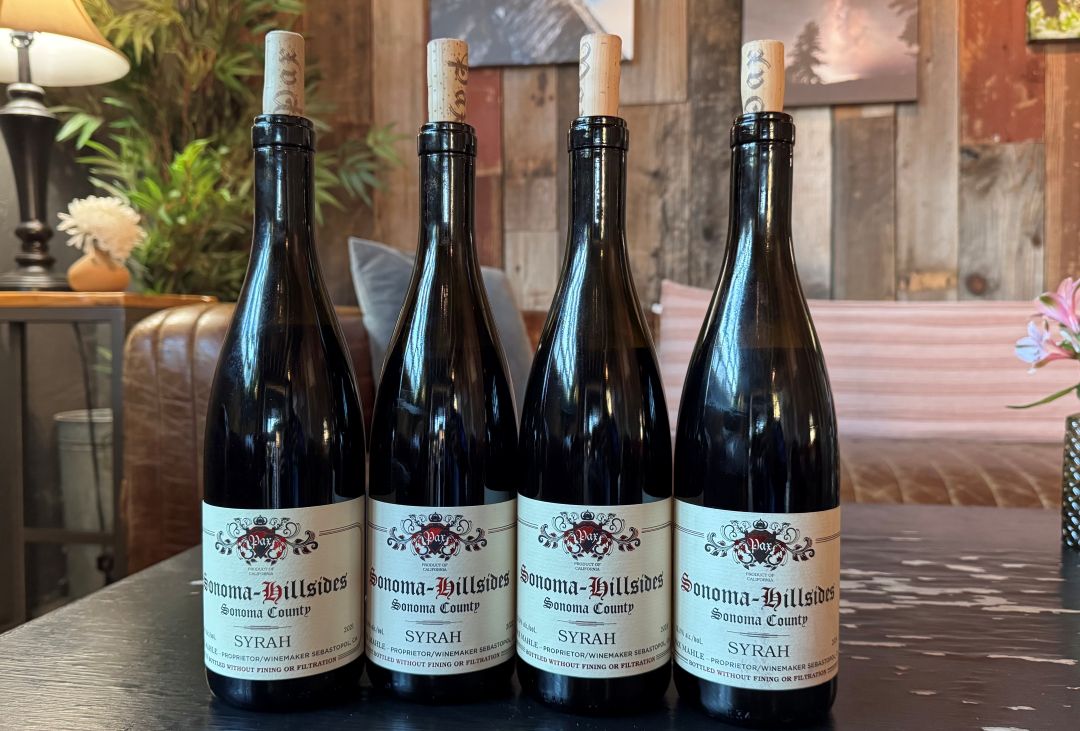
An instructive mini-vertical of Pax Mahle's Syrah Sonoma-Hillsides, one of the most important Syrahs in the United States.
About this Report
In 2010, Robert Parker asked me to assume coverage of California wine from him at The Wine Advocate. “Your biggest challenge will be keeping up with the pace of change,” he told me. He was right then, and he is still right today. Specific to this report, Sonoma is an incredibly dynamic region. While some wineries are shutting down (as addressed above), there are also plenty of new projects springing up that merit attention. Offering in-depth critical reviews on Sonoma producers and wines at the level our readers expect has become too big a job for one person alone. Editor Billy Norris visited several dozen producers and contributed a significant number of reviews to this report. Billy has traveled with me extensively for the last two years and recently began covering a few regions for us, including the Santa Cruz Mountains, Santa Barbara, Santa Lucia Highlands and the Finger Lakes.
Even with the best intentions, the sheer size of Sonoma and neighboring appellations makes it impossible to taste everything and write comprehensive reviews in one shot, while also being timely. We will be publishing additional reviews in the coming weeks and months. For more, readers might also want to take a look at my recent features on Littorai and Marcassin. We tasted all the wines for this report in January 2026, with additional follow-up tastings in our offices. This year, we also included notes on a handful of older wines for further reference.
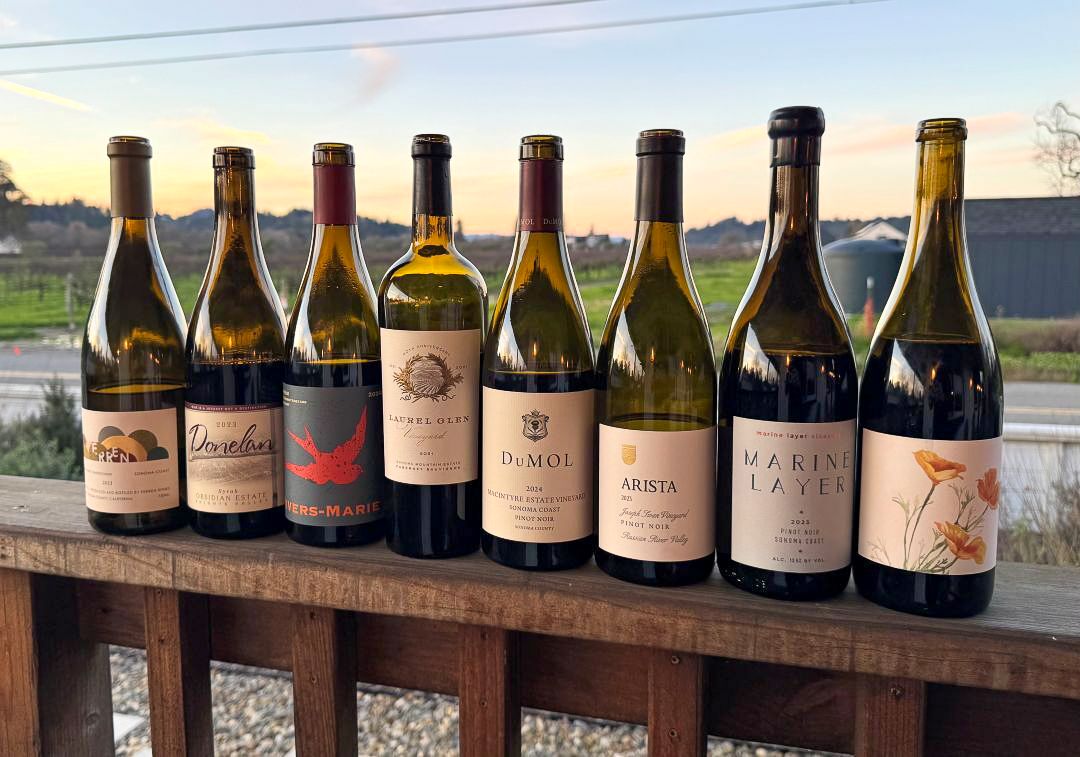
Readers will find many highlights in this year's new releases.
© 2026, Vinous. No portion of this article may be copied, shared or redistributed without prior consent from Vinous. Doing so is not only a violation of our copyright but also threatens the survival of independent wine criticism.
You Might Also Enjoy
Sonoma and Neighbors 2022 & 2023: Opposites Attract, Antonio Galloni, January 2025
The Marcassin Mystique, Antonio Galloni, January 2026
Littorai: The First Thirty Years, Antonio Galloni, July 2025
2022 Sonoma: A First Look, Antonio Galloni, January 2024
Sonoma’s Sensational 2021s, Antonio Galloni, August 2023
Show all the wines (sorted by score)
- Aesthete
- Allen Vineyards
- Alma Fria
- Anaba Wines
- Anakota
- Anthill Farms
- Aperture
- Arista
- Arnot-Roberts
- Arrowwood
- Aubert
- Auteur Wines
- Bedrock Wine Co.
- Blaine
- BloodRoot
- Blue Farm
- Bob Cabral Wines
- Bohème
- Bruliam Wines
- Bucher Wines
- Carlisle
- Centennial Mountain
- Cep
- Ceritas
- Charlie LaRue
- Chenoweth
- CHEV
- CIRQ
- Cobb Wines
- Comunità Wines
- Copain
- County Line Vineyards
- Darling Wines
- Day
- Dehlinger
- Desire Lines
- Devil Proof Vineyards
- Domaine Anderson
- Donelan Family Wines
- Donum
- DuMOL
- Enfield Wine Co.
- Failla
- Ferren
- Flowers
- Freeman
- Freestone Vineyards
- Gail
- Goldschmidt
- Gros Ventre
- Hanzell
- Hanzell Farm
- Harper's Rest
- Hartford
- Hartford Court
- Hirsch Vineyards
- Idlewild Wines
- Innumero
- Jolie-Laide
- Jordan Vineyard & Winery
- Joseph Swan Vineyards
- Kanzler Family Vineyards
- Kistler
- Knights Bridge Winery
- Kobler
- Kosta Browne
- Kutch
- LaRue Wines
- Las Jaras Wines
- Laurel Glen
- Leo Steen
- Limerick Lane
- LIOCO
- Littorai
- Lombardi
- Maggy Hawk
- Maître de Chai
- Marimar Estate
- Marine Layer
- Martinelli Winery
- Matanzas Creek
- Mauritson Wines
- Mauritson Wines - Rockpile Winery
- Merriam Vineyards
- Merry Edwards
- Morét-Brealynn
- Nelsen Barter
- Occidental
- Once & Future
- Overshine Wines
- Patz & Hall
- Pax Wine Cellars
- Pax Wine Cellars (Wind Gap)
- Peay Vineyards
- Peter Michael
- Phelan Farm
- Platt Vineyard
- Prophet & Poet Wine
- Radio-Coteau
- Raen
- Ramey
- Red Car Wine Company
- Reeve Wines
- Ridge Vineyards
- Rivers-Marie
- Rochioli
- Roederer Estate
- Ryme
- Sandlands
- Saxon Brown
- Scharffenberger
- Scherrer Winery
- Siduri
- Sign of the Dove
- Silver Oak
- SingleThread
- Skipstone
- Sojourn Cellars
- Sphaerics
- Stonestreet
- Texture
- The Setting
- Three Sticks
- Trail Marker Wine Co.
- Ultramarine
- Under the Wire
- Valette Wines
- Valravn
- Vérité
- Violet's Paradise
- Volterre
- Walter Hansel Winery
- Wayfarer
- Ways of Wayfarer
- Williams Selyem