
Browse using the new Vinous website now. Launch →
Printed by, and for the sole use of . All rights reserved © 2015 Vinous Media
Learn from the Best: Méo-Camuzet 1991-2013
BY NEAL MARTIN | MAY 21, 2026
Mr. Hart struck fear into every pupil at Westcliff High School for Boys. Woe betide anyone he caught with their shirt hanging out or running down the corridor. I only have a vague recollection of how he looked. Bouffant hair, thick-rimmed spectacles, a penchant for purple shirts with ill-matching flared polka-dot ties and his pungent cologne that presaged his entrance around 30 seconds before he marched into the classroom. He was also a truly brilliant French teacher. Le mieux.
Foolishly, I quit languages at 16. After all, when would I ever need to know French irregular verbs? Nine years later, I landed my first job in wine. Thankfully, time had not corroded my French vocabulary. That was because I had a teacher par excellence.
Putting the final touches on this article on Domaine Méo-Camuzet, I realized that its central theme is not simply a clutch of wonderful Pinot Noirs, but rather the impact of a great teacher. This was supremely evident in my conversation with Jean-Nicolas Méo. The intergenerational transfer of experience and knowledge undergirds the tenets and practices at Méo-Camuzet today and shapes the wines in this article.
History
Walk around Vosne-Romanée and you can spot stone plaques dedicated to Jean-Nicolas Méo’s forebears, signifying the importance they played in the formation of Burgundy. Paradoxically, the domaine has only existed since the early 1980s.
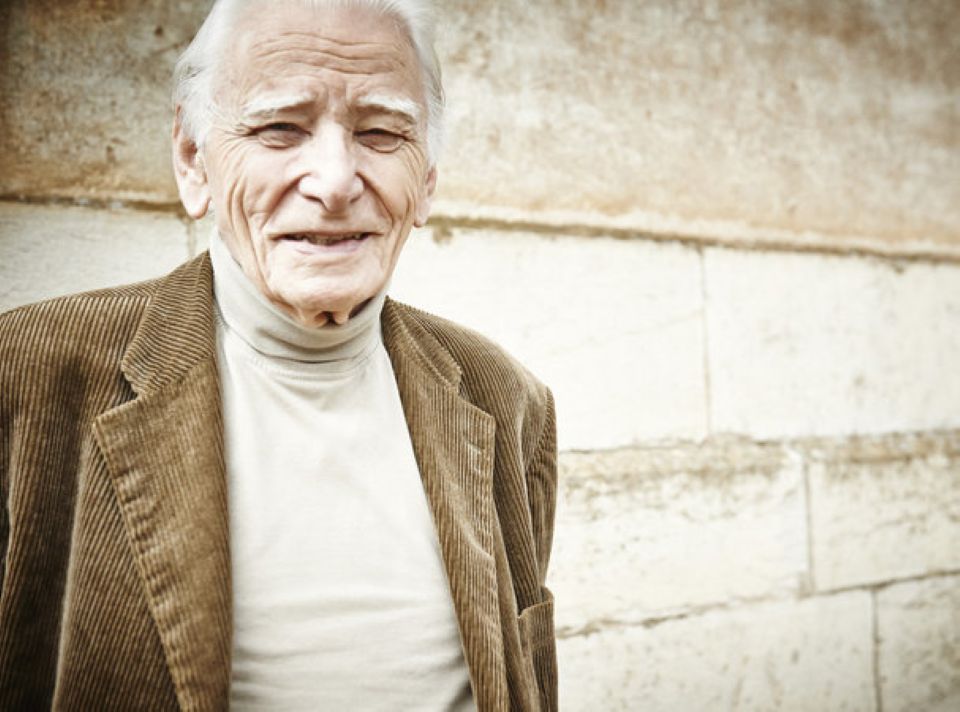
Jean Méo quickly realised the need to pass his holdings on to Jean-Nicolas to keep them in the hands of the family.
The Méo family hails from the village of Selongey, north of the Côte d’Or. This region has long bid adieu to its vines, but in the nineteenth century it was home to some 300 hectares of vitis vinifera. Jean Méo, Jean-Nicolas’ great-grandfather, settled in Nuits-Saint-Georges and embarked on a teaching career. His son, Gaston, became a civil engineer and married Marcelle Lamarche-Confuron, whose granddaughter, Nicole, runs the namesake domaine. Marcelle’s son, also called Jean, was born in 1927. Despite starting out as a mining engineer, he pivoted to politics and enjoyed a distinguished career, serving in President Charles de Gaulle’s cabinet in the late 1950s as well as the European Parliament and Council of Paris.
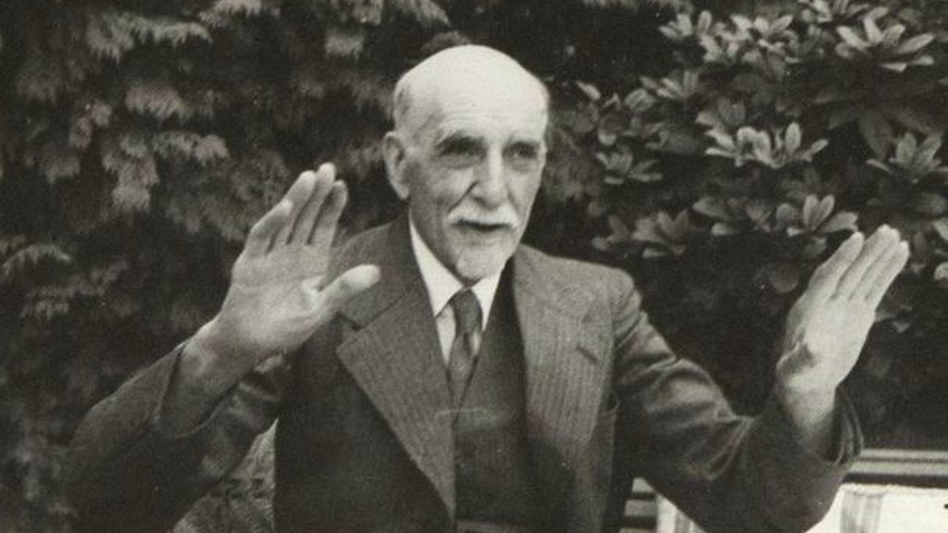
Etienne Camuzet played a vital role in the formation of the Côte d’Or.
The Camuzet branch of the family was more rooted in viticulture. Etienne Camuzet served as député for the Côte d’Or between 1902 and 1932 and was instrumental in achieving the Chamber of Deputies’ ratification of the Appellations d’Origine in 1919. Camuzet purchased around 20 hectares of vineyards in Clos Vougeot from Léonce Bocquet’s widow in 1920, including the historic Château du Clos de Vougeot. In November 1944, the château (and all but three hectares of vineyard) was sold to the Confrérie du Tastevin so that it could serve as a venue for banquets, which continue regularly to this day. Around the same time, Camuzet approached a young winemaker to look after the parcels in Nuits-Saint-Georges Aux Brûlées and Les Murgers on a métayage basis.
That man was Henri Jayer.
Jayer was not the only person appointed to work the Camuzet holdings. Two other métayage agreements with Louis Faurois and Jean Tardy were made for plots in Clos de Vougeot and Vosne-Romanée respectively. These three winemakers were allowed to keep half the crop, with the rest going to the Camuzet family, though it was almost entirely sold off in bulk. (As an aside, I have been privileged to taste a couple of bottles from their tiny cache. They were sublime.)
When Camuzet died in 1946, the parcels passed on to his daughter, Maria Noirot-Camuzet. The arrangement with tenant farmers continued throughout the post-war period, with Jayer replanting a fallow parcel of Cros-Parantoux (see below). Maria had married a local négociant, and, after she died childless in 1959, the holdings and métayages passed on to Jean Méo. Since Méo was based in Paris and tied up with politics, he remained an absentee landlord.
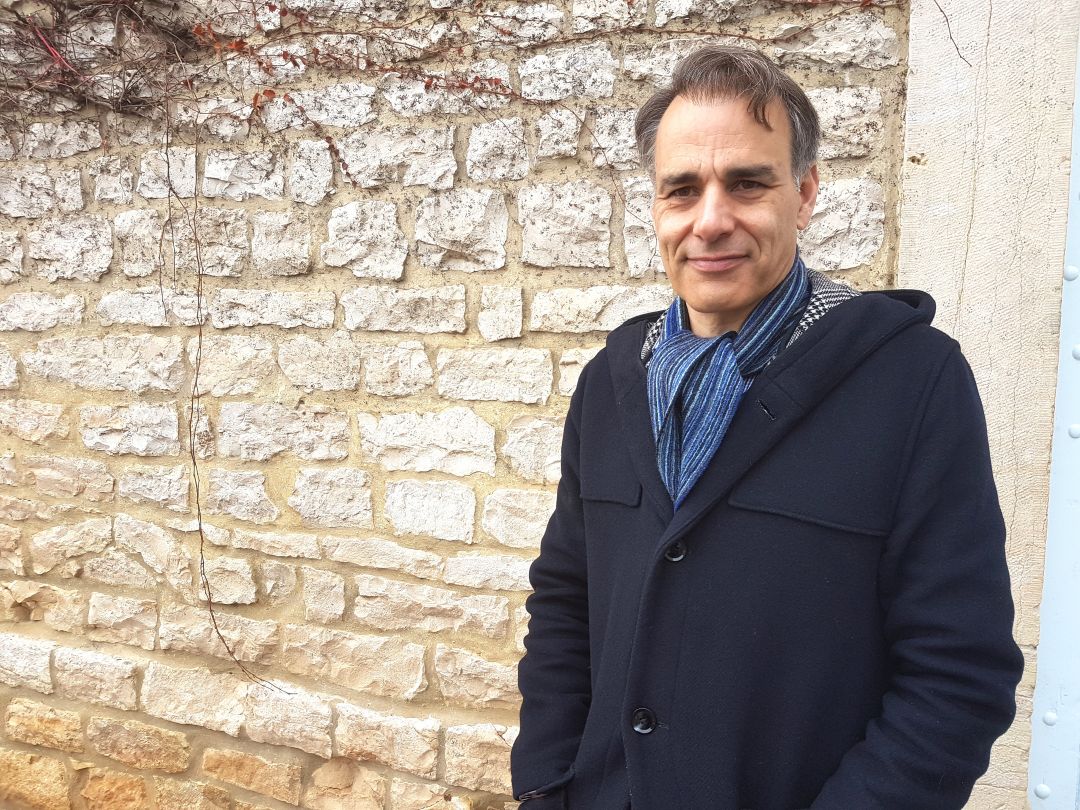
Jean-Nicolas Méo outside the winery in 2018.
Things began to change in the 1980s. Jayer was gaining a reputation for the wines under his own name, bottling the Cros-Parantoux separately beginning with the 1978 vintage. This is where Jean-Nicolas Méo enters the story. We have met and tasted together countless times over the years, from my earliest forays into the region. A slender and youthful-looking man, Méo’s Parisian upbringing makes him a little more urbane than his peers—a little like, say, Guillaume d’Angerville in Volnay. Méo is certainly very different in personality from Emmanuel Rouget, the other co-owner of Cros-Parantoux. Perhaps Méo’s upbringing also fomented a less parochial mindset, one that ultimately begat his joint venture in Oregon, Domaine Nicolas-Jay.
“My grandparents on my father’s side had retired in Vosne-Romanée. My father inherited the domaine in 1959, but he already had a career in public service in Paris. As the domaine was run by métayages, he did not have to worry about day-to-day operations, and it was also practical for him to have his parents on site to keep an eye on things. I went to Vosne-Romanée to see my grandparents quite often, and this was how I connected to Vosne at the time. Sometimes my grandparents would take me into the vineyards, though not at harvest time since school term had already begun. I would go during school holidays and when there was a Paulée with the métayers in November. It was not a formal training, but I was aware of what was going on. I was not really considering it as a job, and my father was not really considering handing it over to me. Maybe he thought that it would be something good for retirement?” said Méo.
He continued, “Two things changed that. Firstly, people were telling my father to sell and bottle the wine himself instead of selling in bulk. However, that demands more work. Secondly, the tax system changed and made it more difficult for absentee or part-time owners to keep hold of domaines. My father realised that he needed someone to take over. It could not be him because you need to be approved and go through a commission, especially if you have tenants and want to take back your holdings. If you say there is a 55- or 60-year-old guy who is going to take over, it doesn’t work. So, my father told me that he needed me at the helm of the domaine, otherwise we didn’t have a chance of getting it back. He said that if I didn’t like it, he only needed me there for three years, at which point the takeover would be complete and I would not have to stay. Somebody else could run it.”
How did Jean-Nicolas react to that news?
“I was not prepared. I thought we had some time. Why the haste? There was no emergency. But my father was always a quick decision-maker. Now I see that it was a correct analysis of the situation. Who knows what would have happened if he had not done that?”
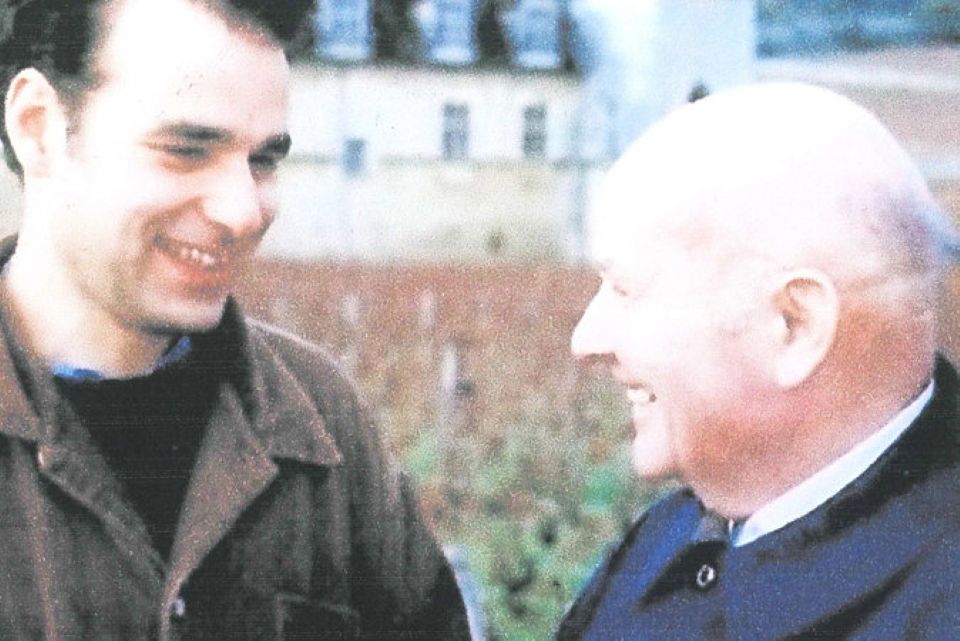
A photo that says it all: Henri Jayer with a young Jean-Nicolas Méo.
“This was 1984, and I was only 20 years old. Nevertheless, I had time to finish my business studies at ESCP Business School and complete an oenology diploma in Dijon at the same time. Plus, I went to America to study at the University of Pennsylvania. It was not until the beginning of 1989 that I would have come to the domaine, so it was not overnight. Plus, Henri Jayer still had four years remaining of his tenancy. We made a deal with everyone that they could continue to work until their retirement, rather than when their contract expired. So, while the decision was quick, the transition was not, which gave us time to prepare. Henri became a kind of mentor to me in terms of winemaking, as did Christian Faurois for viticulture. Christian was my right arm, teaching me how to work the vineyards. Henri was a bit old to do that and did not really want to go into the vines each day to teach me how to prune and so on. I was surrounded by two solid advisors.”
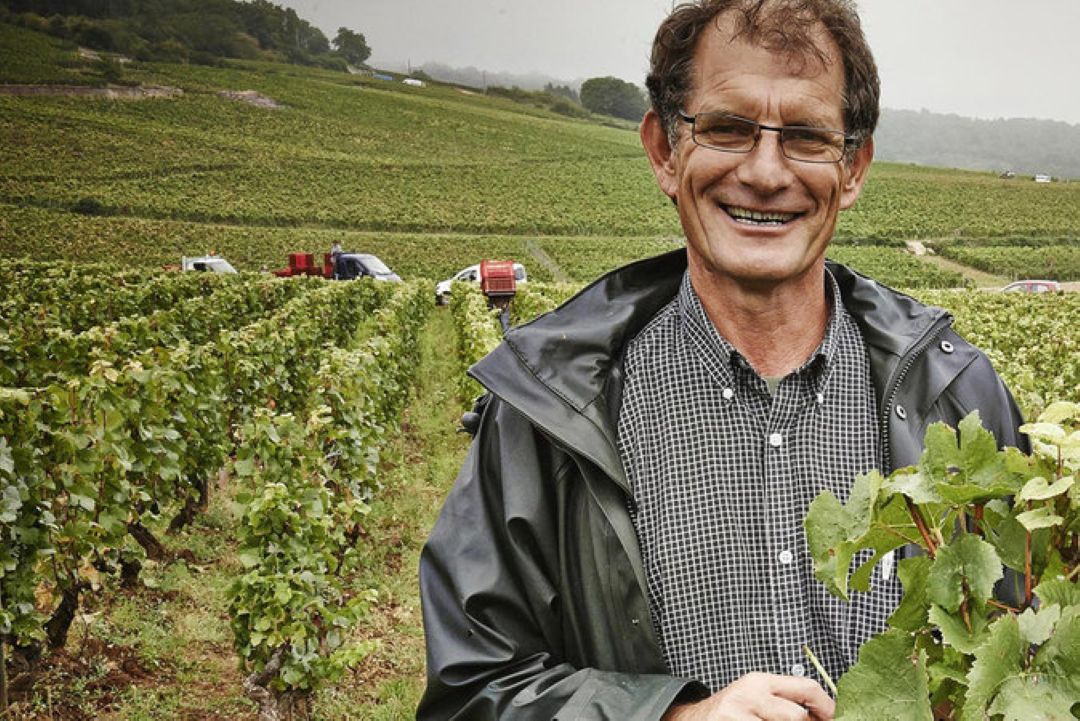
Christian Faurois played an important role in passing on his viticultural knowledge.
The Vineyards
There is that famous quote attributed to Henri Jayer, as translated by Jacky Rigeaux, that Vosne-Romanée Cros-Parantoux “is a thankless vineyard. You have to use explosives to blast a hole to use for a replacement vine.” In the nineteenth century, the vineyard was considered one of the region’s finest. Over subsequent decades, it gradually contracted due to a scourge of phylloxera, two world wars and economic crisis until it eventually lay fallow. During the war, the land was planted with Jerusalem artichokes because families needed something to eat. Annoyingly for Jayer, they kept popping up after he planted vines.
“It is undoubtedly Henri who made that vineyard,” Méo continues. “He was extremely talented as a winemaker. While I would not say he was alone, he was definitely a shining star in an era when there was a lot of mediocrity. Success did not come overnight. I don’t think even Henri thought he was going to make an exceptional wine from Cros-Parantoux; I don’t think he had that plan in mind. He just did what he thought was a good thing to do. Perhaps today, he would not work the terroir the way he did, but the results are in the bottle. There was no lack of good wines in Henri’s cellar, and he told me that it was only after 1985 that he regarded Cros-Parantoux as better than his Echézeaux. By then, Cros-Parantoux had acquired a special status.”
During the dinner that gave rise to the tasting notes accompanying this article, Méo made some interesting remarks about his Richebourg and Cros-Parantoux, which are often compared to one another. He noted that the latter used to require lots of time in bottle to develop elegance, but that global warming has mitigated that need. Thereby, the two cuvées are now on a more equal footing.
Asked about the approach in the vineyard, Méo explained, “I farm organically without being officially certified. We did the conversion early on, around 1992. I have stopped short of biodynamics because after experimenting with these practices in the 2000s, I observed that the wines were a bit harder, more austere, more vertical in the first few years. That is not something that I want.”
“I have not really made changes in terms of vinification. I still follow Henri Jayer’s principles. When I began, I had very little knowledge or experience with wine, which is why he was willing to train me. I had no preconceptions. When we did our first vinification together in 1989, I basically applied what he had taught me. Our tastes were aligned despite the generation gap, so I’ve seen no reason to change. In the 2000s, when whole cluster came back into fashion, I was experienced enough to experiment, which I did between 2004 and 2014. In the end, it was not really to my taste. It could sometimes impart an extra layer of complexity, but I felt that it was depriving the wines of something. The only exception is the Corton-Perrières, which does benefit from a little bit of stem addition.”
One curio in this report is a white Vosne-Romanée from 1976. “I don’t really know the history of it,” Méo said. “Looking back in the archives, there was a scattering of small plots everywhere, five or six ares here and there. I believe the plot in question was in Les Réas. It must have been planted with either Pinot Blanc or a degeneration of Pinot Noir. Everybody made a bit of white in the 1970s, perhaps to share with family or workers.”
The Wines
This article stems from a Méo-Camuzet dinner held at the Arbor restaurant in Hong Kong in September 2025. It was the perfect format for various reasons: firstly, Arbor’s sommelier service is top-notch, and secondly, there were a limited number of wines, which allowed attendees to focus on each and monitor their evolution. Limiting the wines to four mini-verticals was an inspired move, with contrasting vintages of Clos de Vougeot, Vosne-Romanée Aux Brûlées and Cros-Parantoux, then finally Richebourg. All of the wines had between 12 and 35 years of maturity, which is vital when it comes to drinking Méo-Camuzet. These wines require time to subsume their new oak and translate their respective terroirs. I have augmented my tasting notes from this dinner with additional wines that I encountered in Burgundy a few weeks later, including that white anomaly.
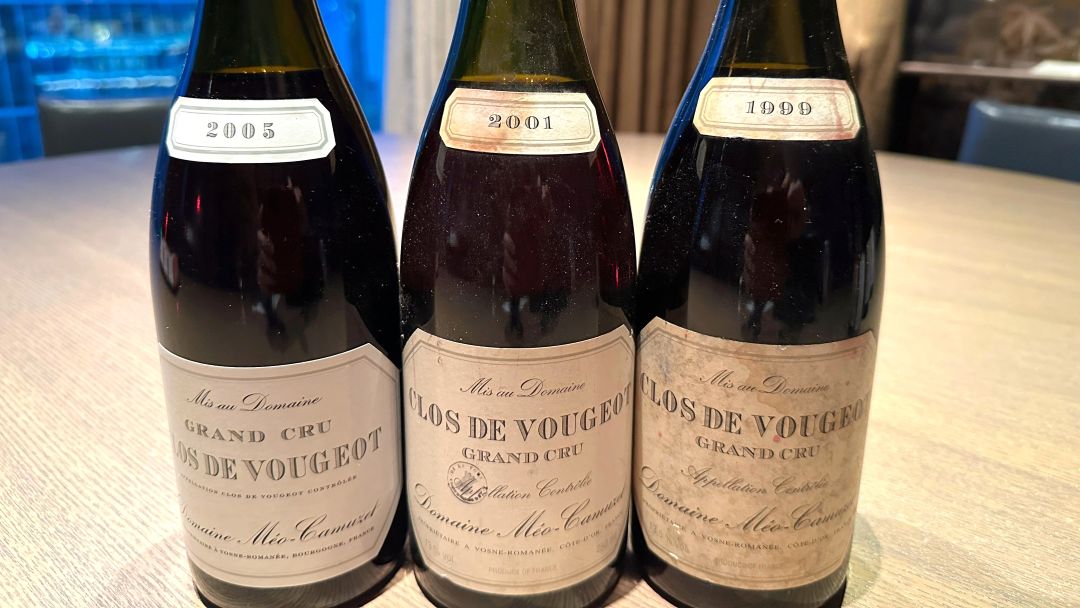
The 3.03 hectares of vineyard in Clos Vougeot comprise about one-third planted in 1920, another third in the 1960s and the remainder in the late 1990s and early 2000s. These lie on a shallow topsoil in the higher reaches of the famed walled vineyard, next to the château. On rare occasions, the two parcels are split and a separate cuvée is produced (Près Le Cellier). The tasting included three vintages. The sublime 2001 Clos de Vougeot is at peak, with wondrous transparency and minéralité. By comparison, this bottle of 2005 Clos de Vougeot is a little obdurate, even if endowed with more weight and density than the 2001. The pick of the trio is the 1999 Clos de Vougeot, thanks to its disarming sensuality, fluidity and grace, particularly towards the finish. I also tasted the 1999 Clos de Vougeot Près Le Cellier at The Arches in March of last year. Poured blind, the 1999 presents an entrancing bouquet with precocious, luscious, pure red fruit alongside incense and potpourri notes of superb complexity. The palate dials everything back to reveal a sublime, cracked black pepper-tinged finish. Divine.
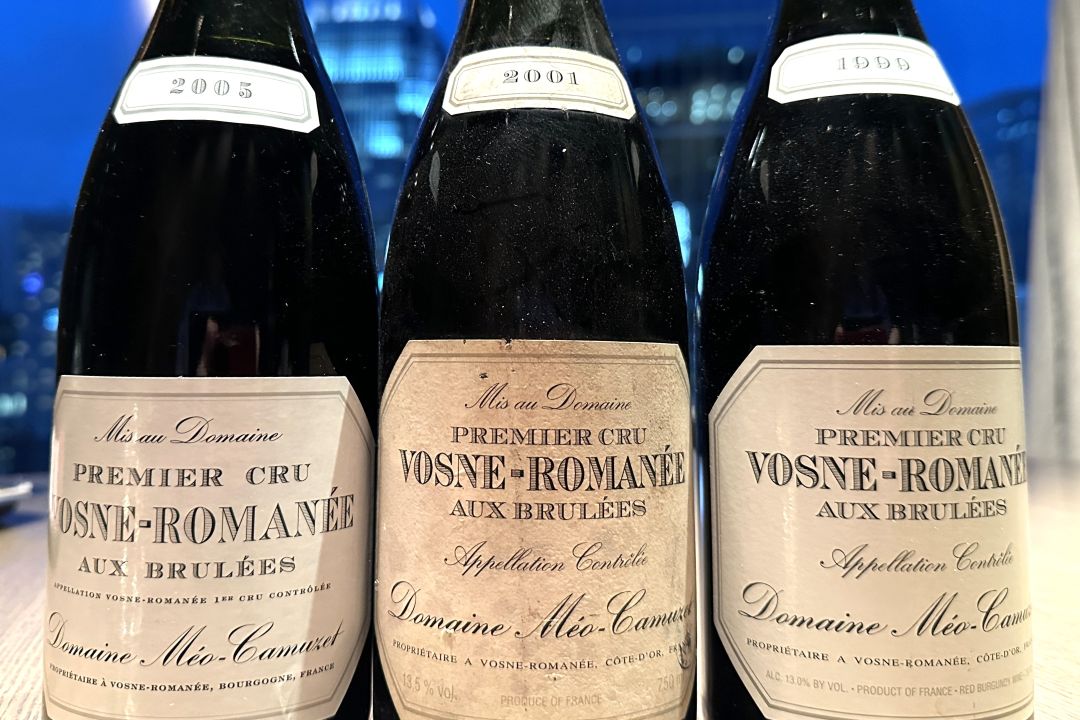
The 0.73-hectare parcel in Vosne-Romanée Aux Brûlées, located just below Richebourg, was planted in the 1930s. It tends to produce millerandé berries that yield more concentrated wines. Like the Clos de Vougeot, the 2005 Vosne-Romanée Aux Brûlées is quite swarthy and still conveys a patina of wood, though there is plenty of density underneath. Surprisingly, given its maturity, the 2001 Vosne-Romanée Aux Brûlées still shows some reduction but has wonderful complexity on the nose, with grainy tannins and impressive depth, considering 2001 is not known as a powerful vintage. The 1999 Vosne-Romanée Aux Brûlées has a beguiling, beautifully defined, floral nose, the palate so expressive with a mellow, caressing finish. Outstanding.
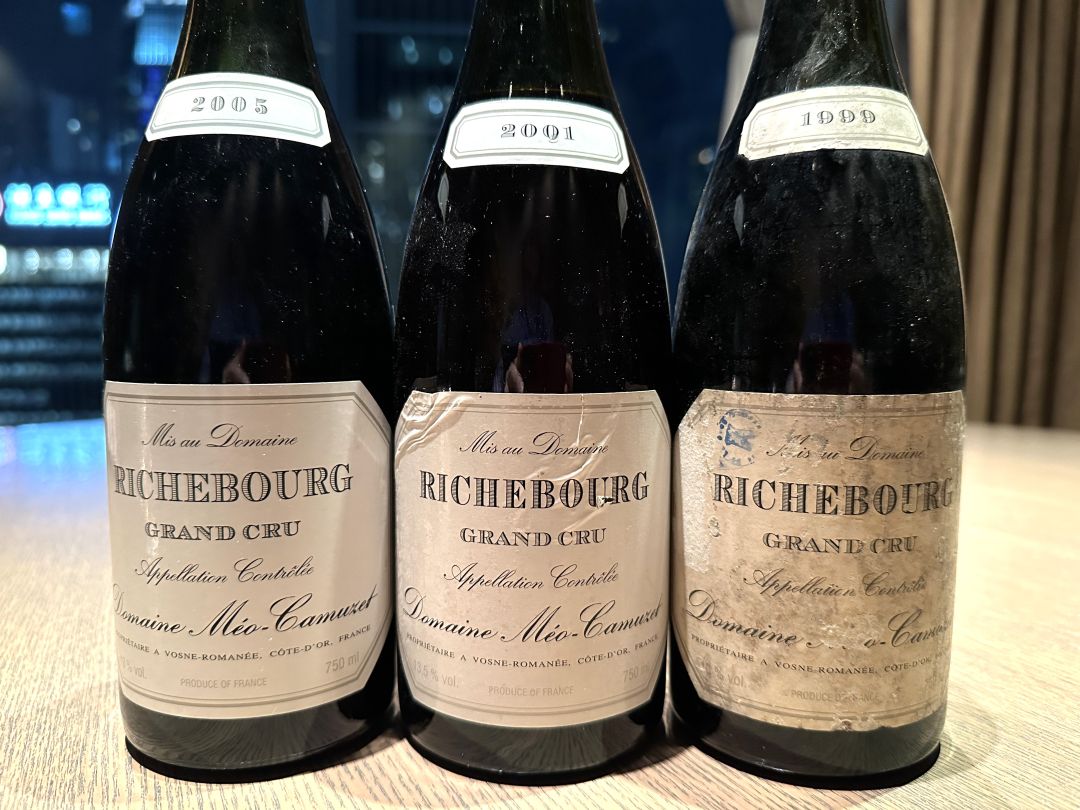
Méo-Camuzet’s holdings in Richebourg consist of parcels in the lieux-dits of Les Véroilles and Les Richebourgs, the latter tucked just below Cros-Parantoux. Together, they make up 0.35 hectares. Most of the vines were planted in the 1950s in rows that run north to south, offering protection in hot years. The 2005 Richebourg has a fabulous nose, constantly evolving in the glass, with a hint of orange rind in the background. Unlike the other 2005s, this seems a little more malleable on the palate, with a long finish imbued with grandeur. I would be tempted to give the 2005 more time in bottle. The 2001 Richebourg is magnificent—explosive aromatics, sumptuous palate, everything is here. The crescendo, superb finish and prolonged aftertaste are wonders to behold. There might have been a touch of TCA on the 1999 Richebourg—if so, very minor. The palate is framed by filigreed tannins with a sleek, refined finish, though on this occasion, the 2001 took the honours.
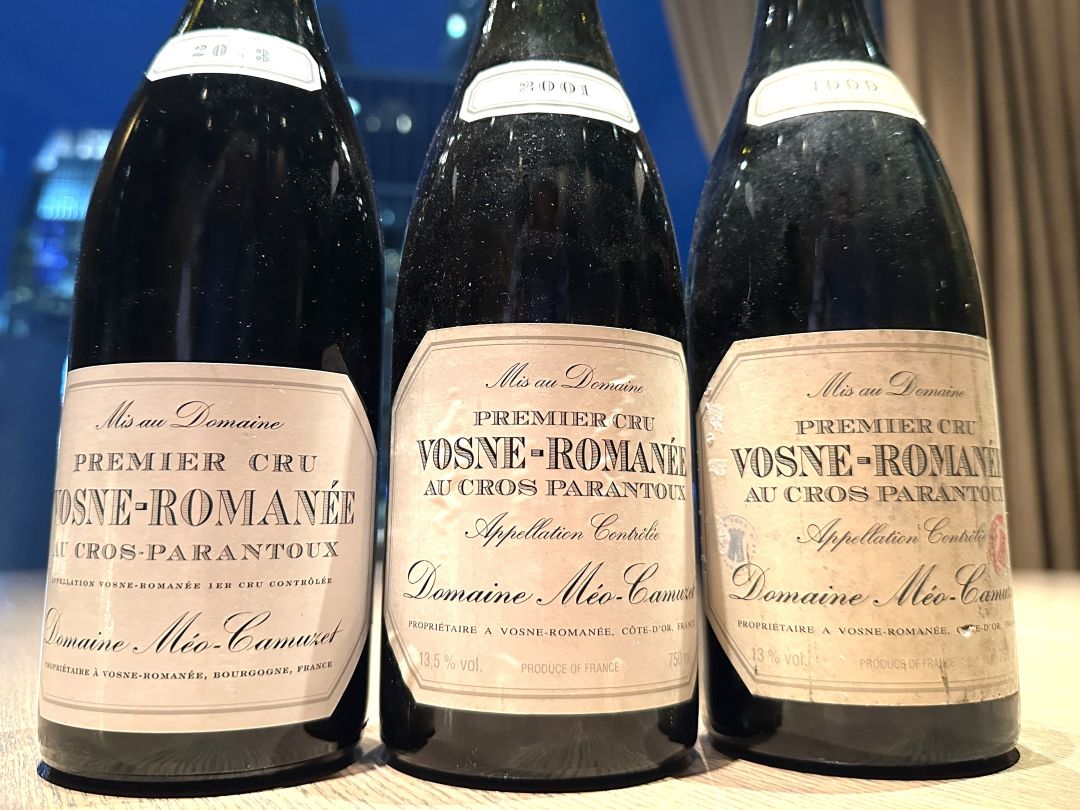
Finally, three vintages of Cros-Parantoux. This vineyard only has two owners, Méo-Camuzet with 0.30 hectares and Emmanuel Rouget (Henri Jayer’s nephew) with 0.72 hectares. Méo’s plots occupy a slightly cooler microclimate with more limestone. Méo-Camuzet first bottled the Cros-Parantoux in 1985. The 2013 Vosne-Romanée Cros-Parantoux transcends the vintage with a complex, absorbing bouquet. Though initially a little angular, the palate eventually unveils sublime harmony and poise. The 2001 Vosne-Romanée Cros-Parantoux is Pinot Noir in excelsis—so vivacious on the nose, with so much minéralité and tension. The palate is surprisingly structured, with the perfect degree of sapidity to tempt you back for more. The 1999 Vosne-Romanée Cros-Parantoux shows subtle clay-like scents mixed with Christmas cake and crushed stone, the palate grainier in texture than the 2001, with a dash of black pepper on the peacock’s tail finish. This is at its peak but will cruise at a high altitude for many years.
Final Thoughts
It was a magical evening in Hong Kong. Everything just came together—the food, the company, the lively conversation, but at the epicentre, the wines. They made a deep impression and even surpassed expectations. One takeaway was how Méo-Camuzet’s top cuvées need time to open. As such, I wager that too many bottles are either consumed too early or without sufficient decanting, but those allowed the appropriate amount of time are simply gorgeous wines replete with complexity, individuality and deliciousness.
Jean-Nicolas Méo makes a style of Pinot Noir that he himself enjoys. Whole bunch, infusion and minimal oak might be in vogue, but that does not guarantee superiority. Embrace the fact that two schools of thought coexist: Méo-Camuzet and Grivot eschew the use of stems, while Leroy and Domaine de la Romanée-Conti embrace whole bunch; others pledge allegiance to both. Christian Faurois and Henri Jayer passed their philosophies on to Jean-Nicolas Méo during his formative years. Perhaps both old hands saw Méo as a blank canvas upon which they could paint their ideas, to which he has remained steadfast and true. Such is the lifelong impact of a great teacher, be it Jayer, Faurois or whoever you nominate as yours.
© 2026, Vinous. No portion of this article may be copied, shared or redistributed without prior consent from Vinous. Doing so is not only a violation of our copyright but also threatens the survival of independent wine criticism.
You Might Also Enjoy
Burgundy 2024: One Battle After Another, Neal Martin, January 2026
Burgundy 2024: The State of Play, Neal Martin, March 2026
The Lord Giveth…Burgundy 2023, Neal Martin, January 2025
Burgundy 2023: The State of Play, Neal Martin, January 2025
Now, For My Latest Trick: Burgundy 2022, Neal Martin, January 2024