
Browse using the new Vinous website now. Launch →
Printed by, and for the sole use of . All rights reserved © 2015 Vinous Media
Curse of the Fours: Bouchard Père 1861-2014
BY NEAL MARTIN | MARCH 3, 2026
Superstitions are deeply ingrained in Japanese culture. Many have evolved over centuries, be they religious or pagan, animist or supernatural, autochthonous or foreign. Even as I pen this paragraph, my Tokyo-born wife is rustling up roasted butternut squash because doing so on the winter solstice will supposedly bring the family luck. She will then pop upstairs for her yuzu bath to top up her good fortune. So, if either of us wins the lottery in the next few weeks, now you know why.
A couple of months after I first arrived in Tokyo to ruin the English skills of a nation, my Japanese teaching colleague recoiled when I uttered the number four (四).
“Shi,” I innocently said, and noticing her reaction, wondered if I had unwittingly unleashed an ancient curse. She told me that the number four is unlucky because it is a homophone for death (死). The Japanese circumvent this by using the Chinese-derived word “yon,” which sounds nothing like death. Even so, some hotels and lifts skip the number.
At Bouchard Père’s tasting of vintages ending in “four,” there were no tetraphobic Japanese attendees. On reflection, I suppose that the curse arguably does extend to Burgundy growing seasons ending in that dreaded number. Decennial fours are littered with hexed vintages: 2004, 1994, 1984, 1974, 1954 and 1944. On the other hand, such underdogs have a tendency to yield pleasant surprises. Lowered expectations can cast wines in a more favourable light. Personally, I looked forward to investigating less-trodden years. Aside from 1984 and 1994, it became clear that these vintages are bejewelled with fascinating wines, the best of which represent some of the most memorable of my career.
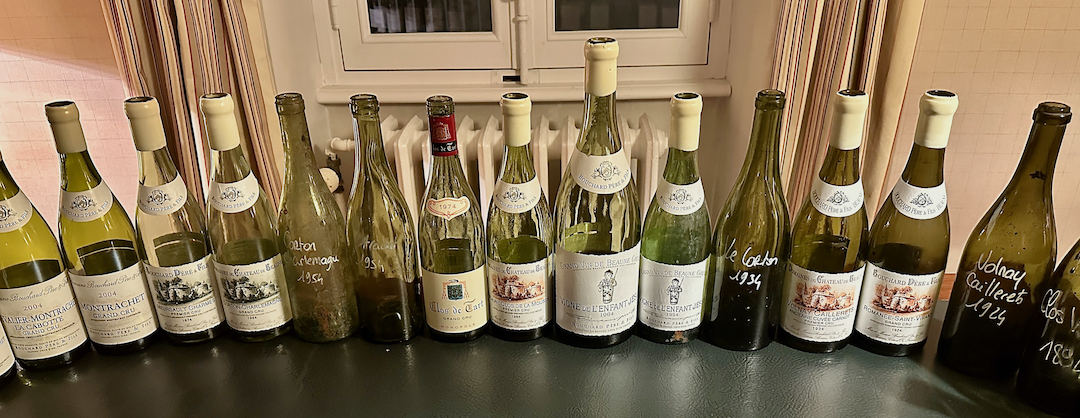
This article draws from two consanguineous tastings hosted by Frédéric Engerer and Head Winemaker Frédéric Weber in November and December 2025. Engerer’s view is that no wine lasts forever, so why not open them or offer them for sale? A majority of the Bourchard Père library consists of négociant bottlings, wines from purchased fruit or finished wines that, irrespective of quality, no longer fit within the domaine-exclusive portfolio that itself is split between Domaine de Cabotte and Domaine Bouchard Père (and also augments Domaine d’Eugénie). The first dinner focused on vintages ending with the number four. The second was a warm-up for a Christie’s auction that saw record-breaking prices: 1886 La Tâche fetching a cool £325,000, 1861 Romanée-Saint-Vivant a “snip” at £68,750. You will find the latter in this report.
These prices seem ludicrous. You would need a lot of butternut squash and yuzu baths to win the lottery and afford them. However, considering that these bottles had lain in the same cellar since they were placed there over 150 years ago, never moved except for re-corking or inspection, one can understand why these wines occupy the pecuniary realm of fine art rather than fermented grape juice. Are these wines irrelevant to the average consumer? Not necessarily. Scout around and you’ll find older bottles of Bouchard Père & Fils on merchants’ lists, often listed for competitive prices vis-à-vis domaine bottlings because—erroneously in my view and disproven herein—they are not as revered by cognoscenti.
As usual, I hope that my tasting notes speak for themselves. The culmination of the tasting in Beaune was like seeing your favourite band in concert, each encore raising the roof higher. Because these were blind tastings, nobody had any idea when the final flight was being served. I was not alone in assuming that the 1924s were the final stop, when in fact there were still six decades to go. These wines are a testament to Pinot Noir’s longevity. Most importantly, they remind us that neither market price nor prestige can govern the greatest vineyards.
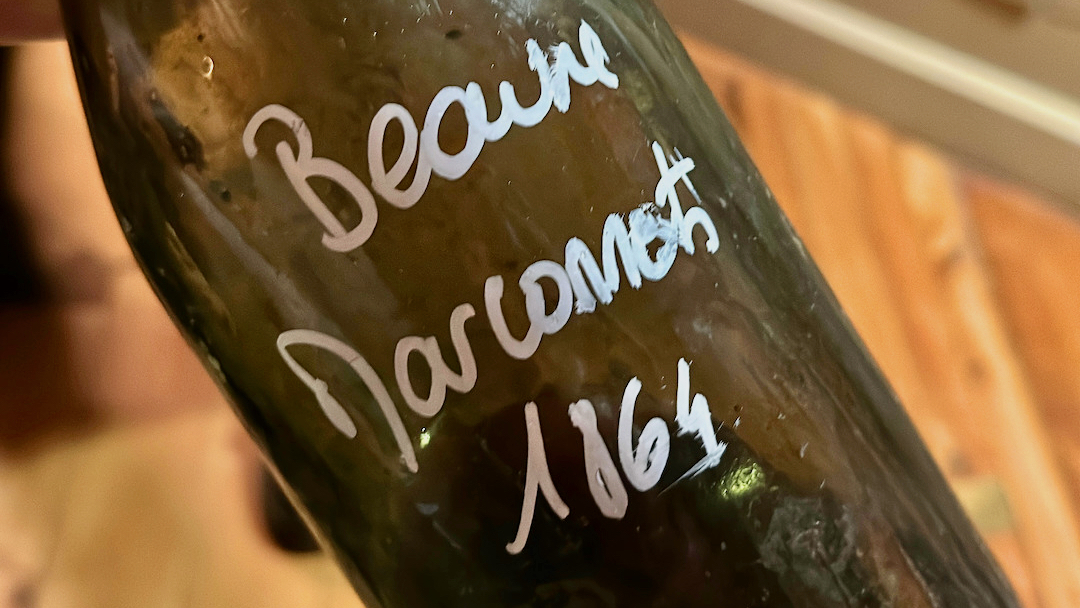
The 1864 Beaune Marconnets was the most profound wine of these tastings, not only because it had survived, but because it was so spry after 161 years. It came from a difficult season, with vines beset by beetles (écrivains, or “writers,” due to the letter-shaped markings left on leaves) and fungal disease. These wines did not attract instant acclaim and were immediately eclipsed by the revered 1865s. Don’t get me wrong, the 1864 Montrachet was a wonder to behold. But it could not shrug off a sense of entropy, whereas the Marconnets nonchalantly defied it. Surely these would be my oldest bottles in 2025…
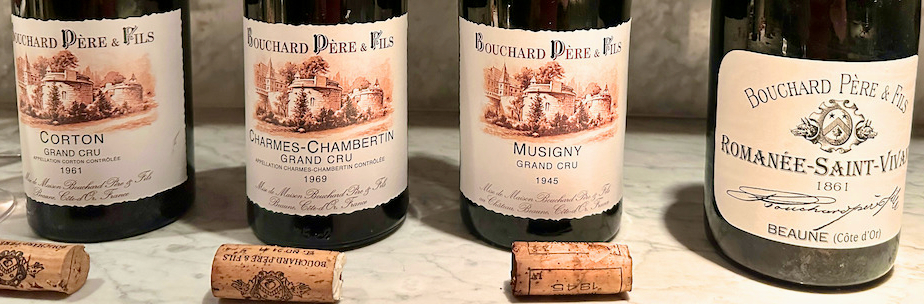
Just three weeks later in London, a dinner culminated with an 1861 Romanée-Saint-Vivant, a wine born the same year as the start of the American Civil War and the release of Charles Dickens’ aptly titled “Great Expectations.” The year also marked the first-ever weather forecast in The Times newspaper. Burgundy winemakers must have envied such clairvoyancy, given this frost-affected year with an extremely dry, hot summer. The heat probably caused vines to shut down, since picking only began on September 30. According to Duvault-Blochet, alcohol levels in Romanée-Saint-Vivant and its environs reached 13.25%. The bottle I tasted in December was an ineffable, spectral beauty that continues to glisten.
There were several other highlights across both evenings. Of the older bottles, I would namecheck the 1904 Richebourg and especially the 1924 Volnay Caillerets Ancienne Cuvée Carnot, which audaciously overtook the none-too-shabby 1924 Romanée-Saint-Vivant on the inside lane. Likewise, the 1934 Le Corton tasted like it was a third of its actual age, while the 1945 Musigny lived up to expectations. As I’ve written in the tasting note, this is technically de Vogüé’s Musigny, as records state that Bouchard Père bought the finished wine in barrel.
Highlights within the post-war period included a magnum of 1964 Beaune Les Grèves Vigne de L'Enfant Jesus that punched well above its weight, once again disabusing the idea that the Beaune appellation does not contain vineyards equal to those in the Côte de Nuits. This was just magnificent. The 1954 Montrachet and Corton-Charlemagne both surpassed expectations, given that it was a cool vintage that struggled to ripen a relatively large crop—both testify to how head winemaker Joseph Bouchard took the wines to high levels during this period. The 1957 Bâtard-Montrachet was another treat that wowed its audience, particularly in terms of its length. In the sixties, the wine that stood out for me was the 1966 Puligny-Montrachet Les Pucelles, once it had shrugged off a bit of funk. With regard to the most recent vintages, I enjoyed a quartet of wines from Vosne-Romanée Aux Reignots, which the Liger-Belair family owned at the time. Surprisingly, it was the 1997 that won unanimous praise, outflanking the 1999. The 1985 was also an absolute delight. Moving towards the present, the 2014 Chevalier-Montrachet La Cabotte is a stunning wine that just pips their Corton-Charlemagne.
Final Thoughts
These two dinners were a privilege to attend. I hope that there is at least some vicarious pleasure in reading about them. As I mentioned, these bottles do crop up for sale because they essentially were Burgundy at the time, as domaine bottlings were in the small minority and even frowned upon.
At the risk of sounding like a broken record, drinking wines shaped by time is a profound experience. I do not begrudge anyone for consuming wines in their flush of youth. I do it myself. But I never kid myself that it provokes the same degree of thought as imbibing wine that rested silently through revolutions, wars and societal upheaval, eventually to be martyred for me. Provenance played a crucial role in each bottle’s performance, but what I really enjoyed was that highlights were not necessarily from the most revered places or years. More’s the pity that the escalation of Burgundy prices has reinforced such hierarchies when, in reality, plenty of future legends are crafted in Burgundy’s less coveted locales.
Thankfully, despite focusing on the cursed number four, there were no fatalities at either tasting. As far as I am aware, everyone who attended has continued to enjoy their lives without misfortune.
The only casualty was that out-of-condition 1894 Clos Vougeot. Maybe this bottle missed its yuzu bath?
© 2026, Vinous. No portion of this article may be copied, shared or redistributed without prior consent from Vinous. Doing so is not only a violation of our copyright but also threatens the survival of independent wine criticism.
You Might Also Enjoy
Burgundy 2024: One Battle After Another, Neal Martin, January 2026
Pinball Number Count: Bouchard Père 1923-2013, Neal Martin, April 2025
Oldies But Goldies: Bouchard Père 1892-2012, Neal Martin, April 2024
No Alarm: 2023 Domaine de la Romanée-Conti, Neal Martin, February 2026
It’s Rousseau’Clock: Grand Crus 1967-2019, Neal Martin, February 2026