
Browse using the new Vinous website now. Launch →
Printed by, and for the sole use of . All rights reserved © 2015 Vinous Media
Teal by Sally Abé
52 Wilton Way
Hackney, London E8 1BS
The Food:
Brawn Scotch Egg |
Dorset crab cream, Flourish tomatoes and basil |
Corn-fed chicken, summer vegetables and verjus |
Buttermilk pudding with English strawberries |
Penny lick |
The Wines:
2024 Casa da Passarella Dão Colheita Branco Somontes | 88 |
1962 Latour | 98 |
Creative people crave freedom. Whether you are an artist, interior designer, photographer, musician or, dare I say, wine scribe, to do whatever you want is a rare luxury. The end result depends, of course, on talent combined with inspiration at that specific moment. For every Pet Sounds there is a Metal Machine Music; for every Sagrada Família, a J. Edgar Hoover Building. With regard to chefs, there is always tacit pressure from owners or investors to bend a menu to their predilections. Sometimes one can get the impression that a chef has had to compromise their vision or creativity in order to hold their position — not necessarily a bad thing, since it is harder for a restaurant to break even today than ever before. Nothing is worse than an overly complicated dish that looks better than it tastes. But compromise can result in a menu that lacks cohesion, with superfluous ingredients crowding out a chef's culinary heritage.
I have eaten in four restaurants helmed by Chef Sally Abé over the years: The Ledbury and Harwood Arms, where Brett Graham served as both boss and mentor; The Pem; and last year, The Bull in Charlbury. Concurrently, Abé has gained a degree of celebrity since appearing on the BBC's Great British Menu, though she is certainly no "celebrity chef." She has now opened Teal by Sally Abé, the first restaurant to bear her own name, as well as that of a dabbling duck (for what it's worth, the duck came before the colour). The menu does not aspire to earth-shattering artistry or ingredients flown in from the other side of the world. And yet, upon departure, I was convinced that Abé is finally realising her own vision without compromise on every plate that leaves the kitchen. This was the finest I have enjoyed from Abé, and there are more to come.
Teal opened this spring in Hackney, a hotbed of talent since many chefs can ill afford central London's astronomical overheads. Call it an eastward migration of men and women in their whites. Teal is a bijou restaurant that, on the night of my visit, was able to use outside decking for some welcome al fresco dining, doubling covers otherwise limited to around 25. The small side street has a Mediterranean vibe that you would never find in central London. Obtaining a reservation is not easy since Teal’s popularity comfortably outsizes its number of seats.
The interior is homey and classy: olive green walls, comfy seating and a small marble counter where I was afforded a direct view of Abé through a portal. In an era when a chef's physical presence in the kitchen can hardly be taken for granted, Abé's beady eyes were inspecting every single plate.
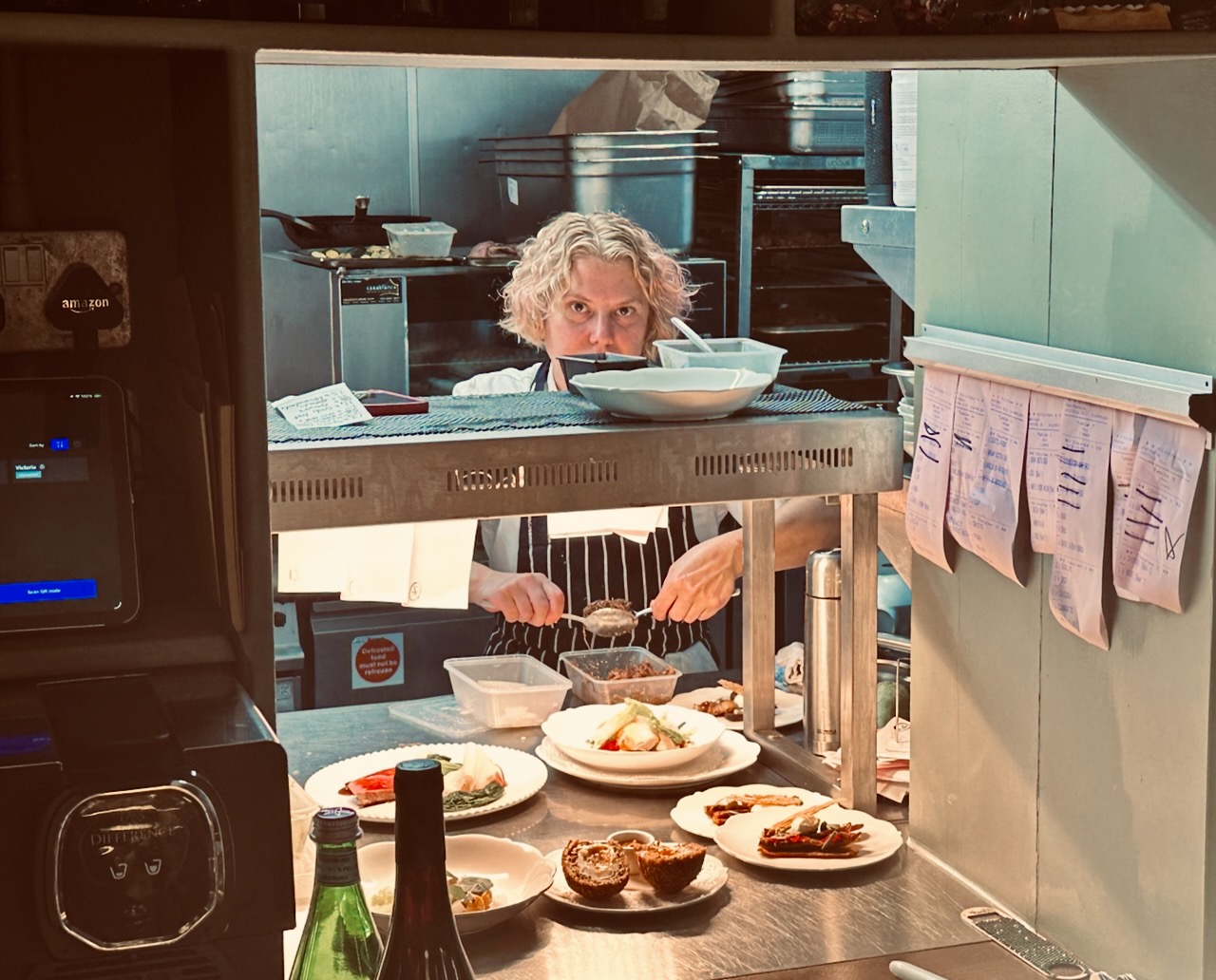
Chef Sally Abé in the kitchen.
The menu is based around seasonal English produce with a novel twist. There are several references to Victorian dishes that piqued my curiosity. What is “locket’s savoury?” And “penny lick?” There is a choice of four or five dishes per course, plus a selection of five “Savouries,” which are served before starters.
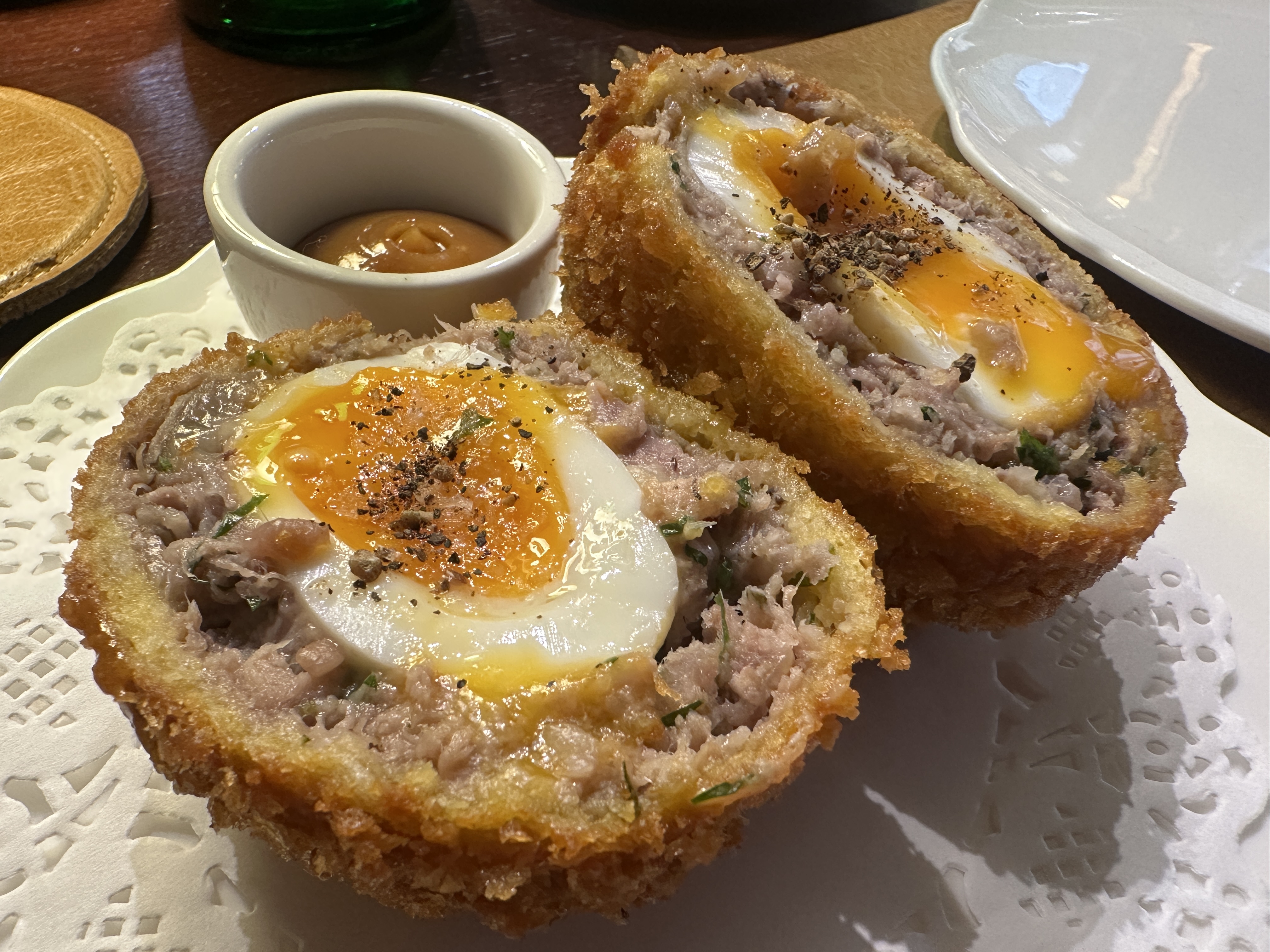
100-point Scotch egg. Insanely delicious.
The Savouries include the brawn scotch egg, which I unhesitatingly order since Abé nailed that dish during her stint at the Harwood Arms. It is brilliant, the brawn lending a depth of flavour you cannot obtain using solely sausage meat. The egg is lurid yellow and the yolk perfectly runny. Simple, yet mouthwateringly delicious.
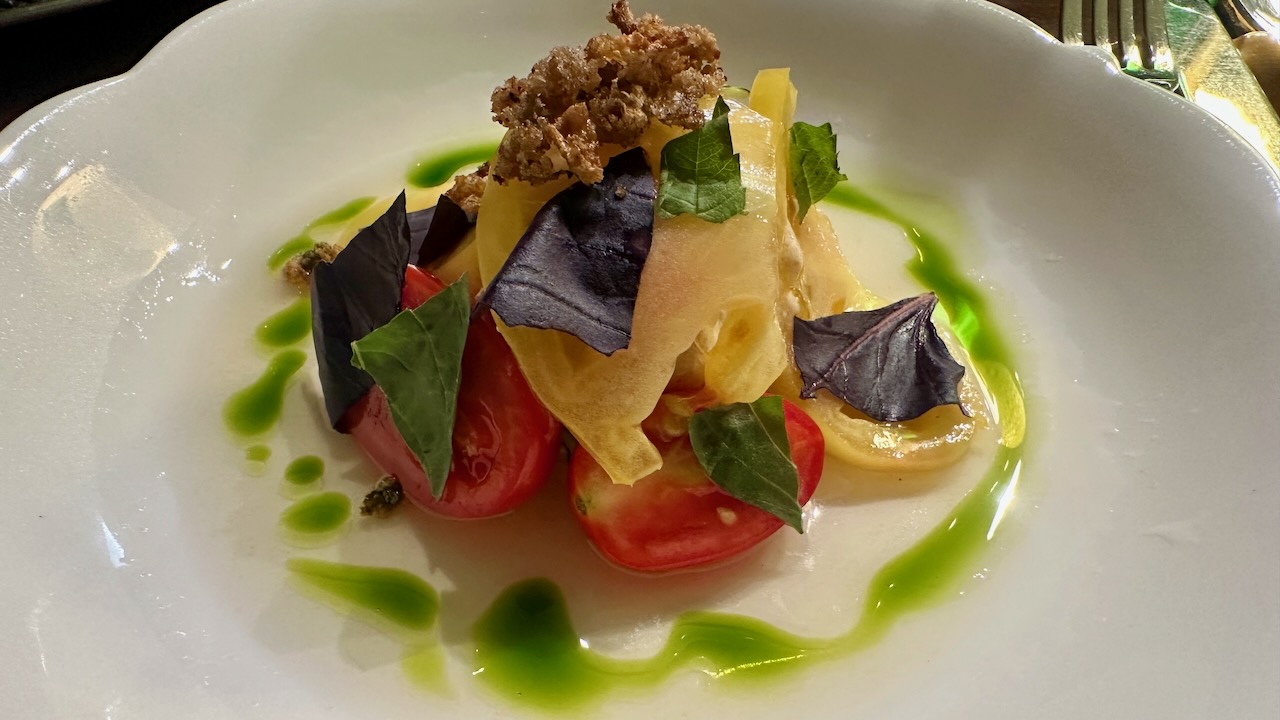
Dorset crab cream, Flourish tomatoes and basil.
I choose the Dorset crab cream, which comes with Flourish tomatoes and basil. The crab cream is very pure and nuanced. Perhaps my one niggle is that I like my tomatoes soft and juicy — I think mine needed another couple of days ripening on the vine, scrummy though they were.
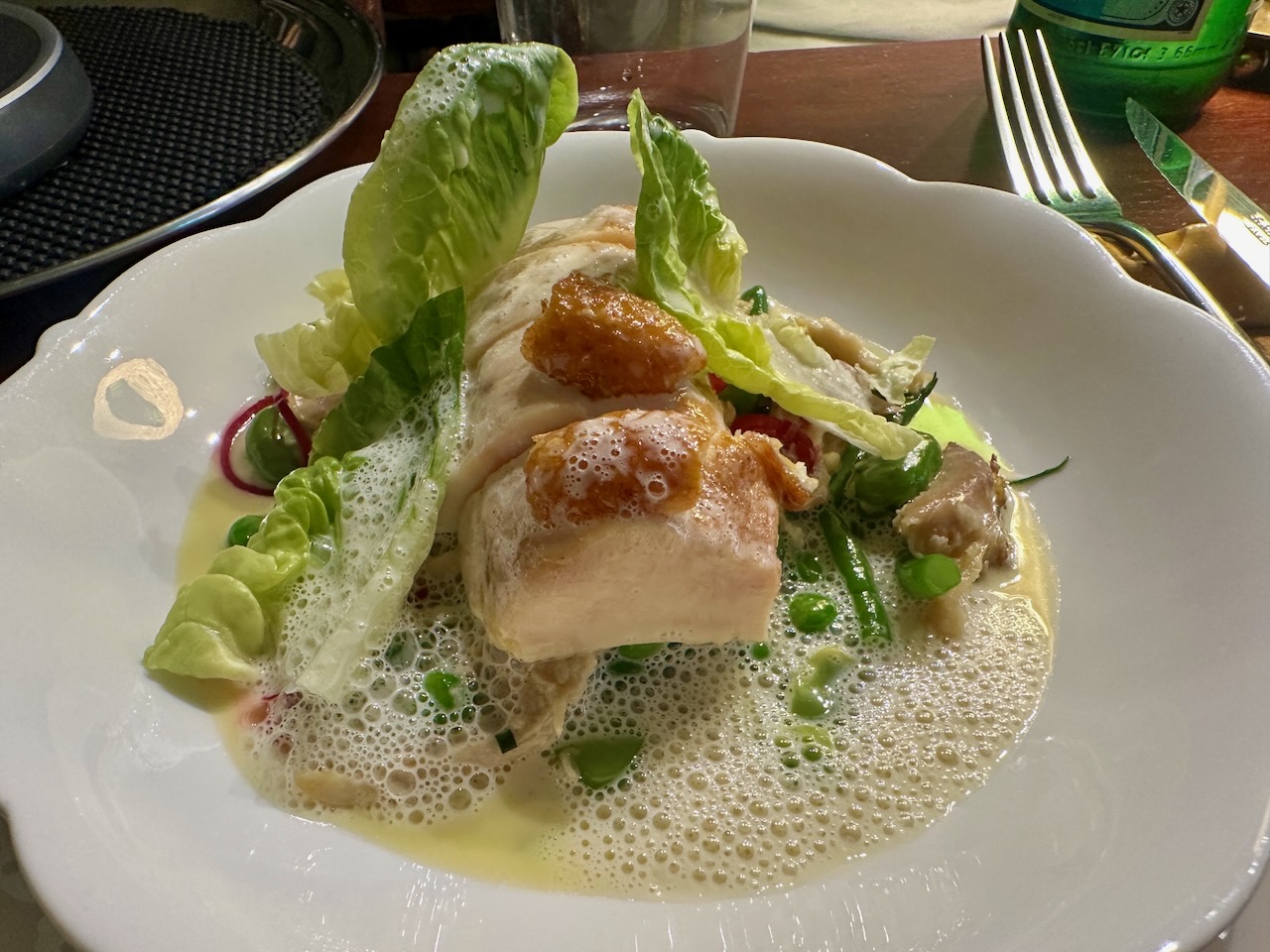
Corn-fed chicken, summer vegetables and verjus.
For the main: corn-fed chicken, summer vegetables and verjus. Wow. This is a dish I have eaten countless times, but there is a depth of flavour and finesse to Abé’s take that is mesmerising. The verjus is perfectly balanced and the chicken so moist and juicy that I ask if we could elope.
This was the moment when I really felt that Abé is cruising at a high altitude. There was nothing superfluous, nothing showy or otiose. Just a perfectly executed plate of food.
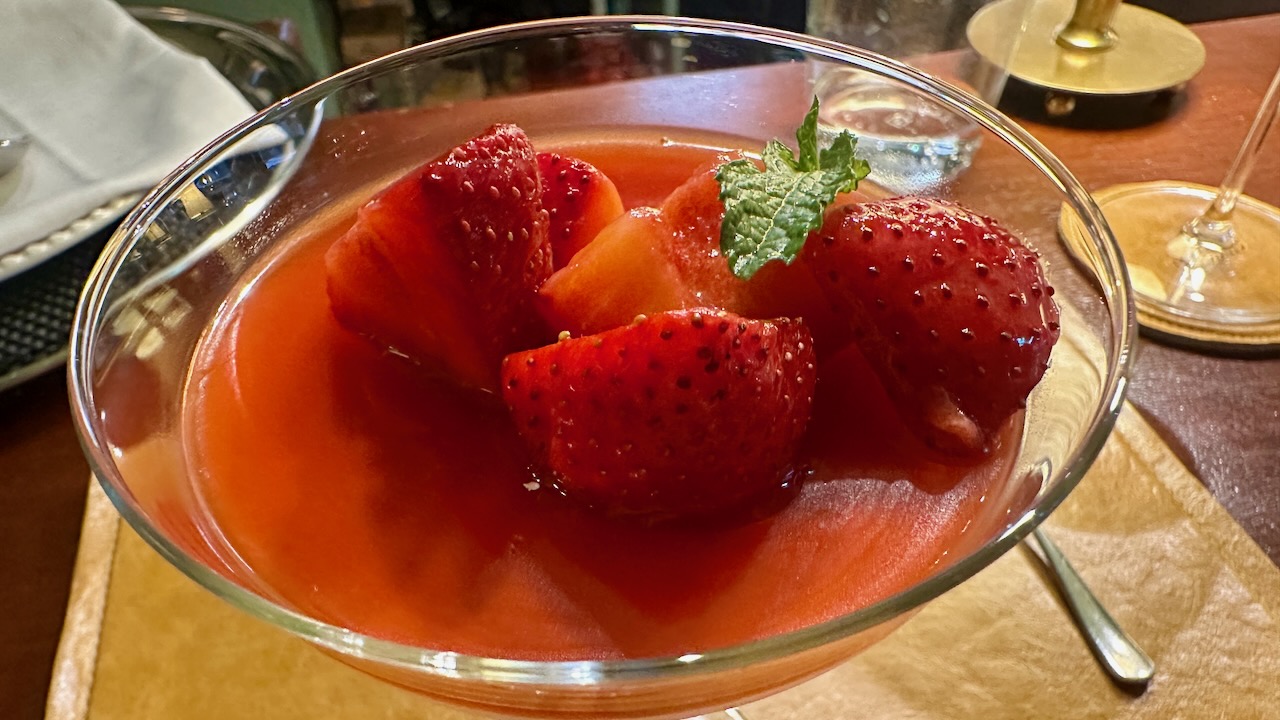
Buttermilk pudding with English strawberries.
The buttermilk pudding with English strawberries is stunning. The pudding itself is so pure and refined, the strawberries perfectly ripe with just a little piquancy. Again, nothing outlandish, just perfectly formed.
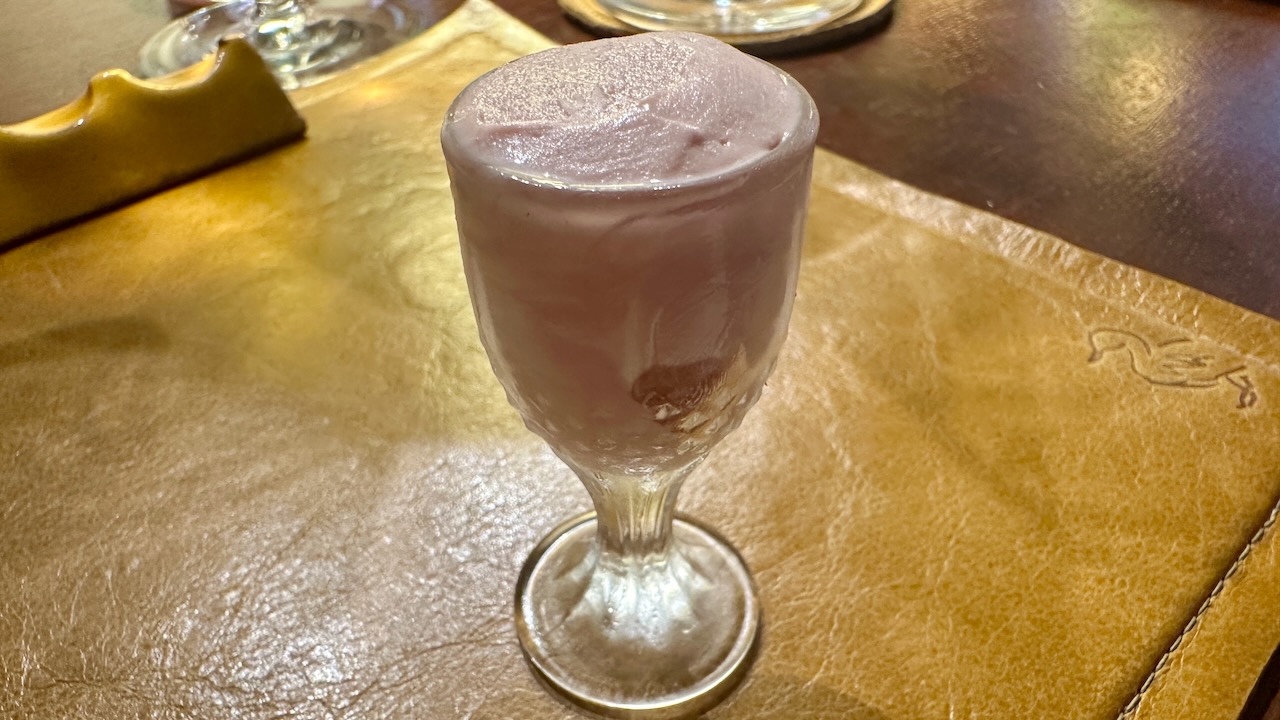
Penny lick.
We finish with the aforementioned “penny lick” that turns out to be a tiny glass bowl of strawberry ice cream. It costs a quid, with the money going to charity. No spoon, as it is too small, so you lick it out with your tongue, which made me feel a bit…rude. Delicious though.
The wine list is not the largest, but it’s well chosen by business partner Abe Drewry, with reasonable mark-ups for London. Plus, they are open to corkage. I start with a glass of 2024 Dåo Colheita Branco Somontes from Casa da Passarella. Glistening with a silvery hue, the 2024 has a taut nose of freshly squeezed lime and lemon zest, the palate quite tensile and built around a silver bead of acidity. On this hot evening, it serves as a perfect thirst-quencher.
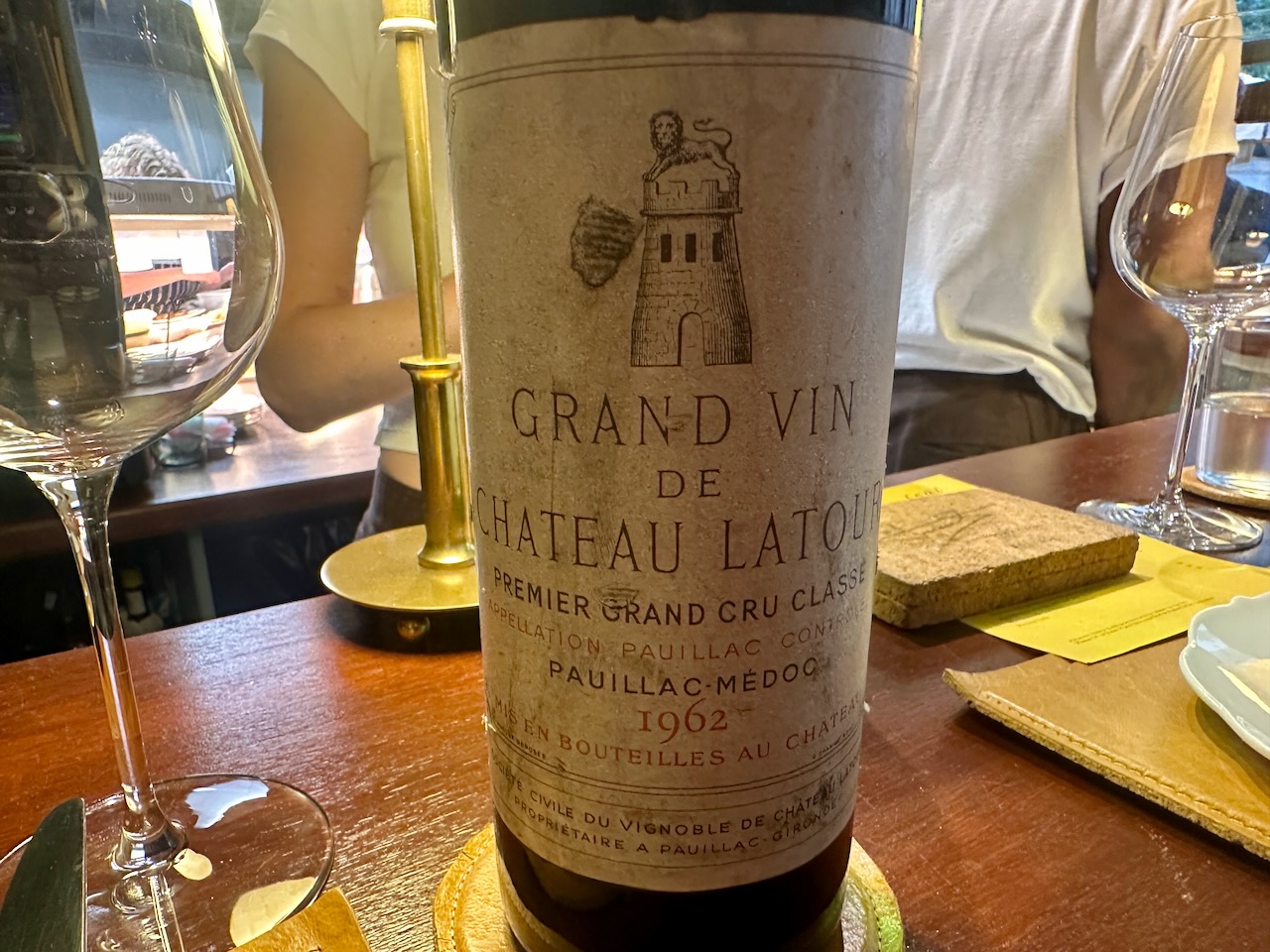
My dining partner had promised to bring something “fun.” “Fun” turned out to be the 1962 Latour. A couple of recent bottles have not replicated a run of sensational examples I drank around 20 years ago. Due to the baking hot weather, I knew that serving temperature was crucial, so I asked Drewry to chill it below room temperature and keep it in a steel cooler. Just one or two degrees makes a huge difference. This is exactly how the ’62 Latour should be: old-school scents of cigar box and tobacco on a nose that has an almost Burgundy-like allure, hints of pencil shavings merging with the black fruit, all delivered with wonderful clarity. The palate retains the backbone one expects from this First Growth, although after 64 years the tannins have fully mellowed and the wine caresses rather than grips the mouth. So fresh and vibrant, this is what mature claret is all about and on this night, I preferred drinking this more refined 1962 than the more structured 1961. Yeah…it was more “fun.” As “fun” as Latour can be.
Teal is a welcome addition to London’s thriving restaurant landscape. Abé is now the master of her domain, and it shows. The menu is a precise reflection of what Abé wants to do and the standards she is striving to achieve. A little quirkiness counterbalances dishes shorn of unnecessary frills that might otherwise detract from or obscure flavours. Well-sourced ingredients, deft execution and a dash of playfulness. Teal doesn't take itself too seriously, and the restaurant is all the better for it. Teal is now a duck, a colour and a superb London bistro.
© 2026, Vinous. No portion of this article may be copied, shared or redistributed without prior consent from Vinous. Doing so is not only a violation of our copyright but also threatens the survival of independent wine criticism.