
Browse using the new Vinous website now. Launch →
Printed by, and for the sole use of . All rights reserved © 2015 Vinous Media
Hot Body, Cold Blood: 2025 Bordeaux En Primeur
BY NEAL MARTIN | MAY 6, 2026
Left Bank: Saint-Estèphe | Pauillac | Saint-Julien | Margaux | Moulis & Listrac | Pessac-Léognan & Graves | Left Bank Satellites | Sauternes (Sweet and Dry)
Right Bank: Pomerol | Saint-Émilion | Right Bank Satellites
The château manager gambols down the driveway, savouring the crunch of gravel beneath his navy moccasins and the heady scent of wisteria that blooms around the arched office entrance. He pauses to admire the manicured gardens bathed in morning light and the serenity of his surroundings. Life is good.
“Bonjour,” sings Cosette from accounts.
“Bonjour,” he replies, picking up the newspaper to scan the headlines…
Battalions of drones fighting over Ukraine had simply gotten bored and declared a bilateral end to hostilities. Peace in the Middle East was being celebrated by a regatta down the Strait of Hormuz. The recent peace summit in Pyongyang had ended with political leaders joining hands to sing a schmaltzy “Imagine” with a spontaneous conga line. Stock markets had not been this high since October 23, 1929, and the Artemis probe had just landed on Mars, with Elon himself planting a flag advertising the new driverless Tesla. Closer to home, Bordeaux wines are reaching unprecedented levels of popularity. Gen Zzzz has embraced slightly tannic red wine. Pinot Noir is now infra dig, Cabernet non plus ultra, especially among under-25s, glued to their smartphones and vacuuming up en primeur…even Sauternes.
“How has the market reacted to our latest release?” the château manager asks his sales director.
“Unbelievably. We increased our prices 100% and orders tripled. Since the last of the Californian vines were grubbed up, the US market cannot get enough Bordeaux. India is rocketing ahead since Merlot was confirmed a perfect match for spicier cuisine. Chinese importers have forgiven négociants for foisting them with overpriced 2010s. Even English merchants have stopped moaning. They persuaded King Harry and Queen Meghan to personally deliver a letter apologising for Bordeaux-bashing, filmed for a forthcoming documentary on Netflix.”
“And has the new 1855 reclassification been ratified?”
“Yes. We are officially a First Growth!”
“Hoorah!”
“…alongside 387 châteaux that also campaigned for promotion.”
“I knew they would water it down. How about the ‘Drink Bordeaux Young’ campaign?”
“Err…The message was misinterpreted. Bordeaux is now widely consumed in school playgrounds. Under-fives are forming wine circles, fighting over grafting techniques and which First Growth to spend their pocket money on.”
“Well, at least that’s our future market guaranteed. How is the current growing season?”
“Global warming was a blip. Hoorah! Marketing just confirmed that the next vintage has the elegance of 2016, volume of 1982, charm of 1985, structure of 1961 and since the Pyongyang peace accord, the historical magnitude of 1945. Some human critics have already scored it 100 points.”
“And the AI critics?”
“Monsieur Claude had to invent a radical numerical system because the score is so high. Nobody can understand it. Then again, since when has anyone understood scores?”
“How about whatshisname, Neal Martin?”
“Hoorah! He also gave our Grand Vin 100 points.”
“But that’s impossible…that can’t be true…”
The château manager’s vision begins to blur and crack like a shattered pane. He feels nauseous. He leans on his desk to stop himself from falling.
“Don’t tell me this has all been a dream…No. It can’t be…It can’t be!”
The château manager wakes up and finds his pillow covered in sweat. He feels crushed. Like a grape. His last vestige of optimism clings to one thing…
He is certain that his 2025 is going to be splendid. And not because marketing told him.
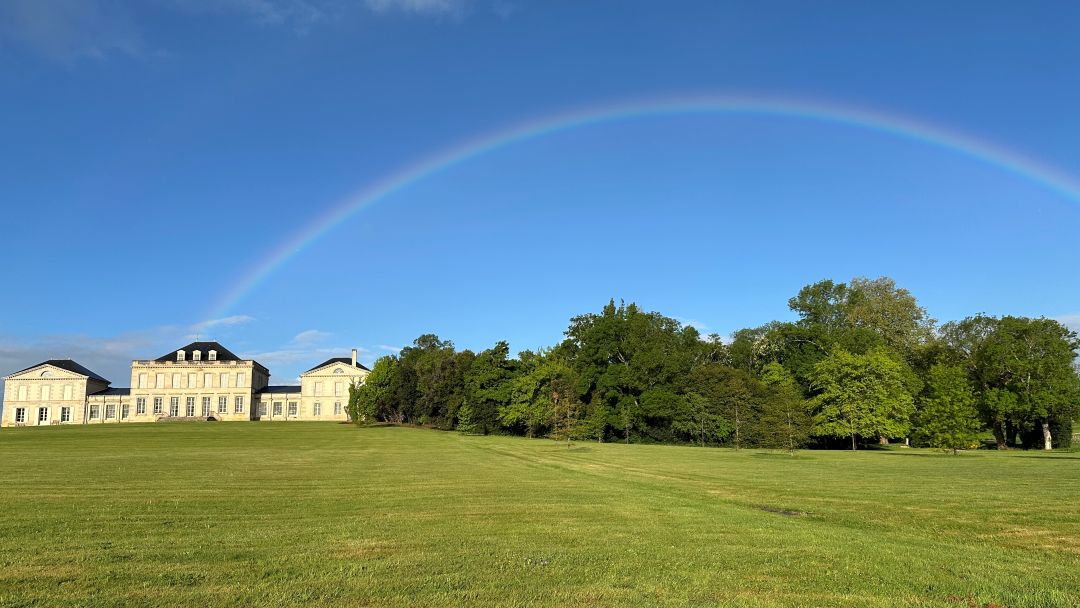
Driving towards Phélan Ségur in the morning, I stopped to take this photo and, of course, make a wish. So, let’s see what primeur prices are like this year…
The Growing Season
For readers short on time, in a nutshell, 2025 was like 2022 until the weather changed in August, thus engendering more classically styled wines that vary between locales. But it is worth a deep dive into the minutiae of this fascinating season to explain the interrelated factors that underlie both successes and intermittent failures.
As I have stressed previously, it is important not to treat any growing season as a separate entity. Apropos 2025, that is crucial because the annus horribilis of 2024 laid its foundations. For a start, thanks to the previous year’s rain, aquifers were full and gave vines a buffer for the summer drought. Secondly, the initiation florale (which governs the fertility and quantity of bunches the following season) was reduced, so a smaller crop was on the cards. However, there is a contradiction. Received wisdom is that vines seek to compensate for a small crop by over-producing the following season, but in 2024, the conditions were so dire that a knock-on effect was unavoidable.
The winter months of 2024/2025 were mild and dry, though short cold spells from February to mid-March squeezed the brakes and dissuaded vines from racing out of the blocks and exposing themselves to potential frost damage. As such, budbreak occurred during the first ten days of April. The Easter weekend saw some 70-80 millimetres (mm) of rain, which proved crucial. April was the last month to record above-average rainfall. Here we begin to see some disparity between appellations. Nénin in Pomerol recorded 130 mm of rain, while Las Cases in Saint-Julien tallied 85-90 mm. Two thousand twenty-five was a season where such minor differences had ramifications.
Towards the end of April, conditions turned drier, and many felt relieved that they would avoid the widespread rot that had plagued the previous vintage. On the contrary, it became so warm and dry so that vine growth galloped ahead, especially come the summer-like climes that bedded in from mid-May. The weather station at Mérignac recorded 57 mm of rain, compared to the 1991-2020 average of 71 mm, although again, figures vary between appellations. Temperatures averaged 23°C, compared to an average of 21.7°C. Flowering began in the earliest-ripening plots around May 15, about a week earlier than normal, passing rapidly without disruption for both Cabernets and Merlot with hardly any millerandage or coulure.
This early-season dry spell was a harbinger for the following four months, which saw nary a raindrop, save for localised thunderstorms in the Médoc and Entre-Deux-Mers. Between March and September, there was only 364 mm of rain, compared to 649 mm in 2024, though that is still more than 2022, which saw just 278 mm. The lack of rain meant that berries remained small. Figures from the University of Bordeaux show that one week after véraison, Merlot berries weighed 1.05 grams (g) compared to 1.78 g in 2021. There is also a disparity between varieties, with Cabernet Sauvignon averaging just 0.76 g at the same point. Many Médoc estates wanted to prioritise Cabernet Sauvignon because of the quality, yet the small berry size skews some blends towards Merlot in 2025.
The lack of rain impeded berry maturity and vine growth, especially after the first heat wave in early July. Bunches began to change colour a little earlier, around the third week of July. Véraison passed evenly over ten days, three weeks earlier than the previous year (for example, beginning July 14 at Lynch Bages). In some areas, véraison was accelerated by around 25 mm of rain on July 19 and 21. Chefs de culture strived to maintain foliage because leaves provide vital shade for the fruit. Biodynamic producers used preparations like kaolin and chamomile as a sort of natural sunscreen. Of course, there was no green harvesting given that a small crop was ineluctable.
By mid-August, many winemakers feared an even more extreme version of 2022. The first half of the month saw another heat wave with ten days over 35°C, peaking at 42°C. In fact, one château recorded 50°C on the surface of bunches directly exposed to the sun. Two thousand twenty-five is second only to 2003 in terms of days recorded over 35°C. What differentiates those two vintages is that in 2025, the nights cooled off and allowed vines precious hours to recover—a fundamental reason underlying the successful 2025s.
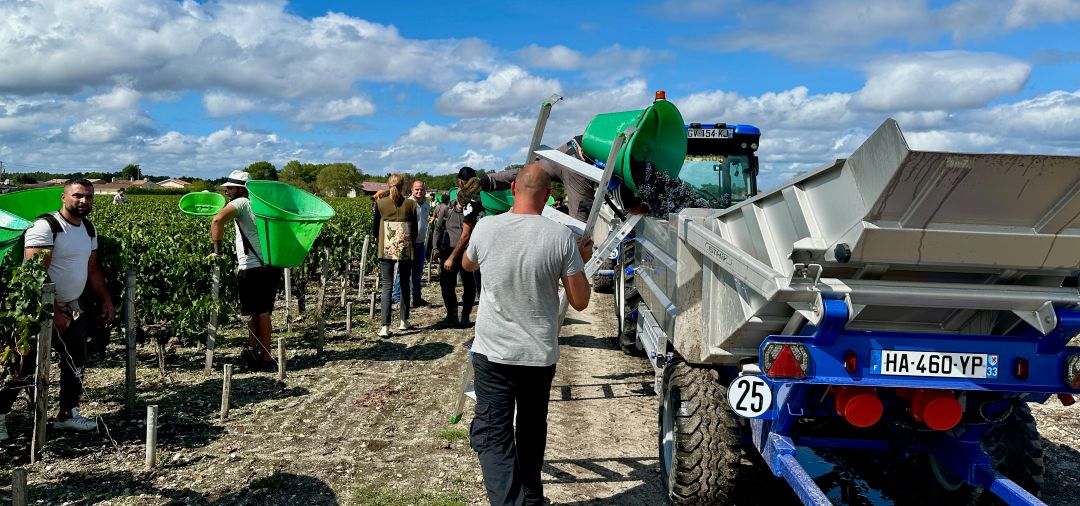
September 4 at Cantemerle. Harvest had just begun, with the fruit destined for their new vat room.
Nevertheless, some parcels began to show stress, especially younger vines on free-draining/heat-reflective gravel soils. Berries remained small, and since the drought had begun early and prior to bunches closing, they developed thicker skins to protect themselves from the heat. It meant that skins had less elasticity and stymied expansion, not that there was much available moisture to “plump up” the berry. Another heat wave between August 10 and 20 pushed the physiological ripening of the Merlots in particular, though acidity (pH) did not plummet as might be expected.
Then the growing season changed course. Heavy rain showers from the tail-end of Hurricane Erin whipped across the region between August 28 and September 2. Amounts varied, heavier in the most maritime-influenced northern Médoc, which saw around 70-80 mm, with around 20-30 mm on the Right Bank. At this point, the vintage spins off in different directions.
“The showers were heavier in Saint-Émilion than in Pomerol,” observed Château Séraphine’s Charlotte Krajewski, who farms vines in both. “If we had 5 mm in the former, there would be 10 mm or 15 mm in the latter,” she added. There were even variations with appellations, particularly in sizeable ones like Saint-Émilion. In Pauillac, the northern sector received slightly more rain than the southern part. This led to the heterogeneity of 2025, especially when you start factoring in the permeability of soils. Jean-Charles Cazes explained how Saint-Estèphe has more clay-rich soils than Pauillac’s free-draining gravel beds, which is why he cropped at 30 hl/ha at Lynch Bages and 35 hl/ha at Ormes de Pez. The rains were not enough to dilute the wines—too late and too little—but they usefully expanded berry size by around 10%, loosened the skins and slowed sugar accumulation that threatened to spin out of control. The rains also decreased potential alcohol by a degree or more while preserving acidity, so finished pH levels are lower than they would have been otherwise, and the wines are thus more stable.
Inevitably, it was an early harvest. Many of the dry whites were picked in mid-August, and the younger Merlot vines from the end of August (for those who felt that the grapes had reached phenolic ripeness), with a vast swathe of pickers going out around September 4-5. Some châteaux felt that the berries had achieved technical but not phenolic ripeness and chose to wait a few more days. Conditions were cooler, with sporadic showers that loosened the skins a little, preserving freshness that might otherwise have been burnt away. Some picked the Cabernets straight after the Merlot. Those with more variegated levels of ripeness, perhaps due to terroir or orientation, were obliged to longer pickings that extended over two or three weeks. Forecasters predicted more inclement conditions beginning September 20, which explains the proliferation of harvests that finished on Friday, September 19, though that inclement weather never really materialised. A minority decided to wait and finished around September 24, with some later-ripening Petit Verdot coming in towards the end of the month. All things considered, it was clearly very early.
Yields were down across all Bordeaux appellations. Touring Saint-Julien last September, winemakers forewarned small quantities, and this turned out to be the most acutely affected Left Bank appellation. Many châteaux recorded 25-28 hl/ha, sometimes less. Overall, yields in Saint-Julien were down around 27% from the ten-year average, closely followed by Margaux and then Pauillac. Saint-Estèphe was only around 17% below average, which can be attributed to the clay soils that retain water more efficiently than gravel. Pessac-Léognan was down 12%. On the Right Bank, Pomerol was far more impacted than Saint-Émilion, as vines in Pomerol often find it difficult to cope with hot vintages. Yields were down almost 30% from the ten-year average, compared to around 10% for Saint-Émilion.
Vinification
Given the dry conditions throughout most of the year, 2025 is a year when the optical sorting and densiometric machines did not work overtime. The fruit was relatively healthy. Some used a Tribaie just to get rid of any moisture from the recent showers or any desiccated berries. It was at this juncture that the shortfall in juice became clear. There just was not much pulp, and consequently, skin-to-juice ratios were high, around 50:50 in many cases. Châteaux aim for this ratio in normal years to gain structure and colour, but it came naturally in 2025.
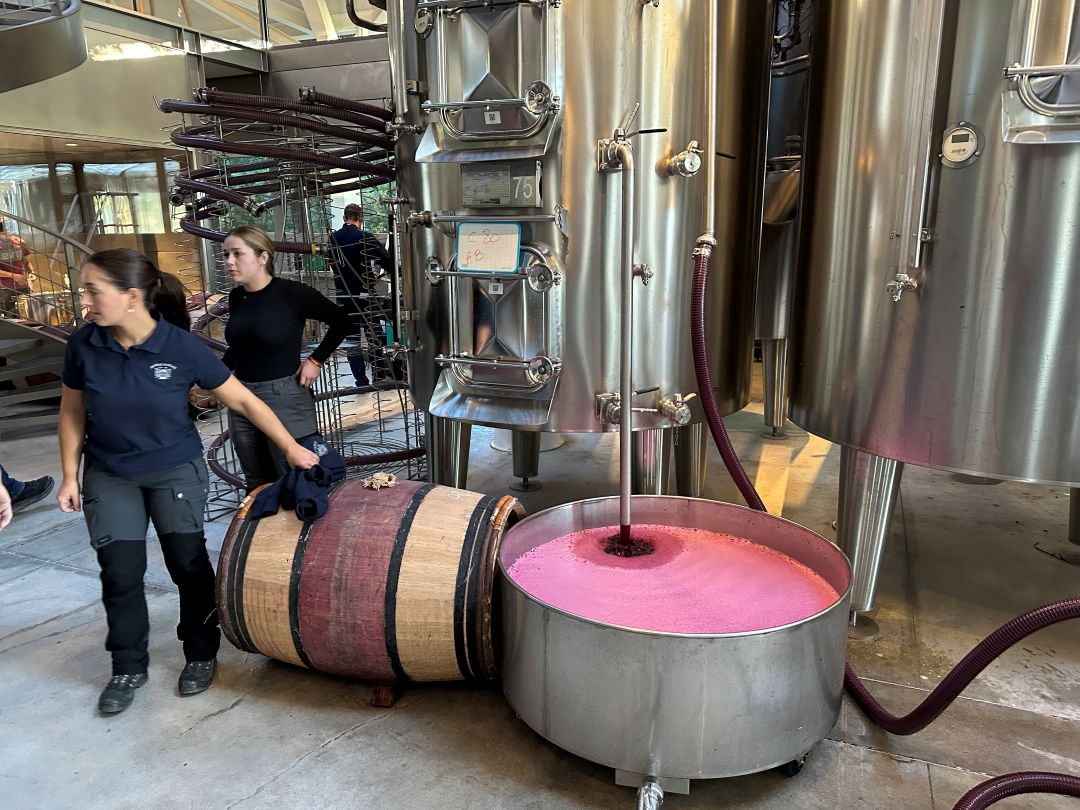
Workers in the vat room at Château Margaux in September 2025. This was one of the final picks.
Most winemakers opted for a gentler maceration: shorter, at lower temperatures and with fewer pumpovers. (Readers will find figures in the respective Producer Profiles.) The danger was that with high IPT (Indice de Polyphénols Totaux, a measure of tannin) levels, often over 100, winemakers could easily extract dry tannins. This was evident in my tastings. In some wines, the finish already feels austere and a bit hard. Guillaume Pouthier at Les Carmes Haut-Brion, ever the contrarian, suggested that the opposite approach was preferable, as lower alcohol levels mean that a wine is less solvent and demands more extraction, not less. Pouthier proposed that polyphenols are half as extractable at 12% than at 13.5% alcohol. For sure, you needed more fruit to make the same amount of wine as in other years. Olivier Berrouet at Petrus explained that in 2025, it required 190 kilograms (kg) of fruit to make 100 litres of wine, compared to the normal 150 kg.
In terms of barrel maturation, most winemakers with whom I spoke were unsure whether they would alter the regimen. Taste and see. Certainly, more are using amphoras and larger vessels with less wood influence—demi-muids and foudres. As an aside, matters have been extraneously complicated by the collapse of H&A Group, which leased barrels to many châteaux, including a couple of well-known names. It is mainly cooperages that have been left out of pocket, but there are also many estates exposed to claimants looking to claw back losses. Not what you really need at this point in time.
How The Wines Were Tasted
Counting on my fingers and toes, 2025 was my 29th primeur. Yes, I have been around the block a few times! All barrel samples in this report were tasted in Bordeaux between April 7and 22, the usual mix of château visits and broader portfolio tastings with consultants and négociants. I was strict in terms of parsing out barrel samples not perfectly fresh, checking dates of prélevement (when the sample was taken) and rejecting anything more than two days old or, in open tastings, below shoulder level. I tasted most of the top names three or four times.
One more thing…stemware.
For me, large, bulbous glasses are unsuitable for examining wine. Perfectly fine for clinking ‘n drinking, but these glasses diffuse aromas and can blur the details that I am looking for. At several châteaux, including Pavie, Angélus and Petrus, I requested a smaller glass that tapers inwards. It made a remarkable difference and indeed, provided food for thought for a couple of enlightened winemakers.
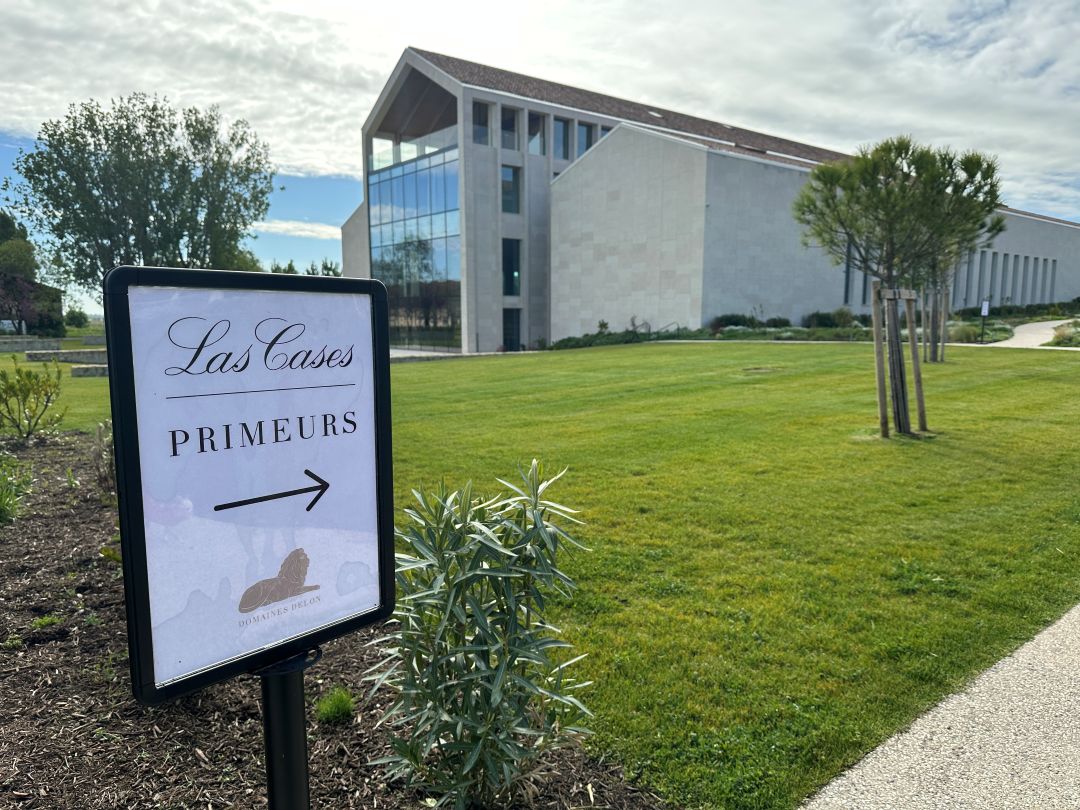
The new winery at Léoville Las Cases finally opened after several years of construction that was delayed by the pandemic.
The Wines
Twenty-five ranks amongst the great Bordeaux vintages. Its snow-capped peaks will be uttered in the same breath as legends gone by. Perhaps the Left Bank edges the Right due to the raft of superlative Cabernet. Then again, your palate might never forgive you for ignoring gems that bejewel the choicest parts of Pomerol and Saint-Émilion. The caveat is that 2025 is complex, tricky to really understand, and not necessarily a “crowd-pleasing” vintage. It exaggerates vagaries between terroirs—whether limestone, clay, granite or sand—to create a patchwork of quality, also skewing appellations in different directions. Variations in rainfall paint many different pictures of Bordeaux.
Unlike 2022, the wines are not all curves and sumptuous fruit. Decadent? No. These are not Freddie Mercury in his full pomp and spandex, more Leonard Cohen at his poetic prime in a corduroy jacket. The wines can often feel tannic, edgy, more structured and sometimes drier, though it is absolutely crucial that any projection of unfinished samples factors in the influence of barrel maturation that will flesh them out. Many 2025s exhibit tropes of hot and cool growing seasons. I saw glimpses of this in 2020 and 2022, but this vintage takes that scintillating duality to its zenith. The best wines offer both sides with utmost clarity, like two musical instruments that should theoretically clash but somehow sound harmonious together.
Fruit profiles lean more towards black than red—more precisely, blackberry and bilberry rather than say, strawberry and cherry. There is plenty of freshness; acids cut sharper thanks to lower pH levels than anyone expected, so that the best wines possess éclat, or brightness. And hoorah! Alcohol levels are lower, more so on the Left Bank than the Right, though generally a degree (or more) in the right direction, even if they hover above what was the norm in the 1980s and 1990s. As mentioned, volumes are low, especially in Saint-Julien and Pomerol, though with one or two exceptions like Cheval Blanc, not pitifully low. The degree to which that will be felt will, of course, depend on demand. This is not Burgundy, where buyers scrabble for odd bottles.
Twenty-five is a dialled-down and more precise 2010, remixed by the weather.
On the Left Bank, Cabernet Sauvignon underpins the pedigree of the finest wines. Such is the concentration…no, that is not the right word…intensity of Cabernet Sauvignon that this variety still dictates the wines’ aromatic/flavour profile and enhances their tactile sensation and potential longevity, even when the smaller berry size means that there is a lower percentage in the blend.
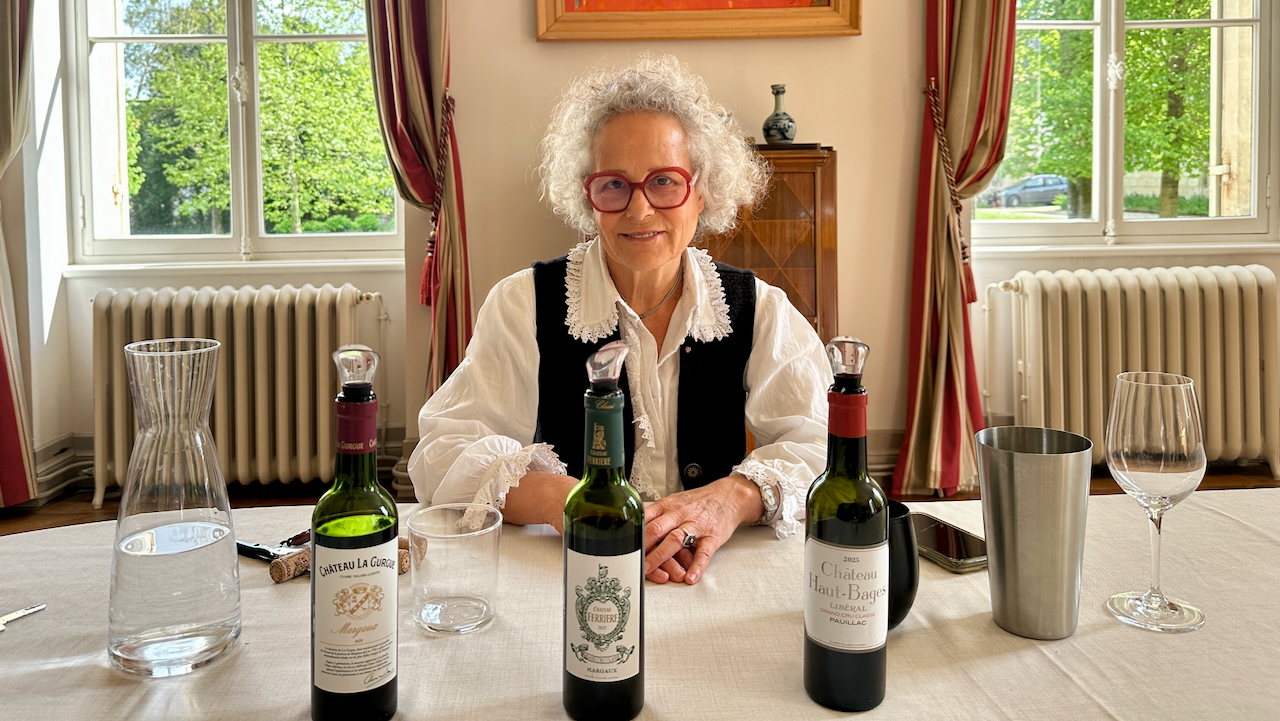
Claire Villars-Lurton is probably best known for Haut Bages-Libéral, but do not
overlook her Margaux estate, Ferrière, which also follows biodynamics. Behind
her smile, she was aggrieved by the loss of her chickens,
most likely eaten by a fox. The downside of
biodiversity.
One pleasing feature of the vintage is the impressive quality across the Margaux appellation. In 2025, think beyond the three or four famous names and cast your net wider, because their preternatural elegance is complemented by the structure derived from the skin-to-juice ratio. This imparts a thrilling sense of completeness. Basking in the glow of their phenomenal 2022, Brane-Cantenac maintains its sizzling run of form, while Rauzan-Ségla and Cantenac-Brown are both splendid. Siran and Kirwan are worth consideration and often represent terrific value. If you do want to splash out, then the 2025 Château Margaux will rank among the great wines under Philippe Bascaules. Its cashmere texture and unerring symmetry are already in place. Meanwhile, Thomas Duroux at Palmer, one of the growing number of estates using foudres (during the second year of élevage), oversaw a cashmere-textured, typically opulent yet controlled Grand Vin that will repay cellaring. Like everywhere, volumes in Margaux are smaller than usual, averaging 28 hl/ha.
Saint-Julien is as dependable as Manchester City winning the Premiership, though this year, the appellation suffered depleted yields due to drier summer months. The wines are fresh and sapid with bright acids, not as aristocratic as their Pauillac cousins yet invariably harmonious and sophisticated. Las-Cases and Poyferré are sublime and perhaps the standouts. There is a slightly wider gap between Léoville Barton and Langoa Barton this year, the former showing more sophistication and precision than a decade ago, partly thanks to their new winery facility. I also adored the 2025 Beychevelle, one of Philippe Blanc’s finest creations, likewise the ever-dependable and fairly priced Lagrange, Talbot demonstrating a little more ballast than previous vintages.
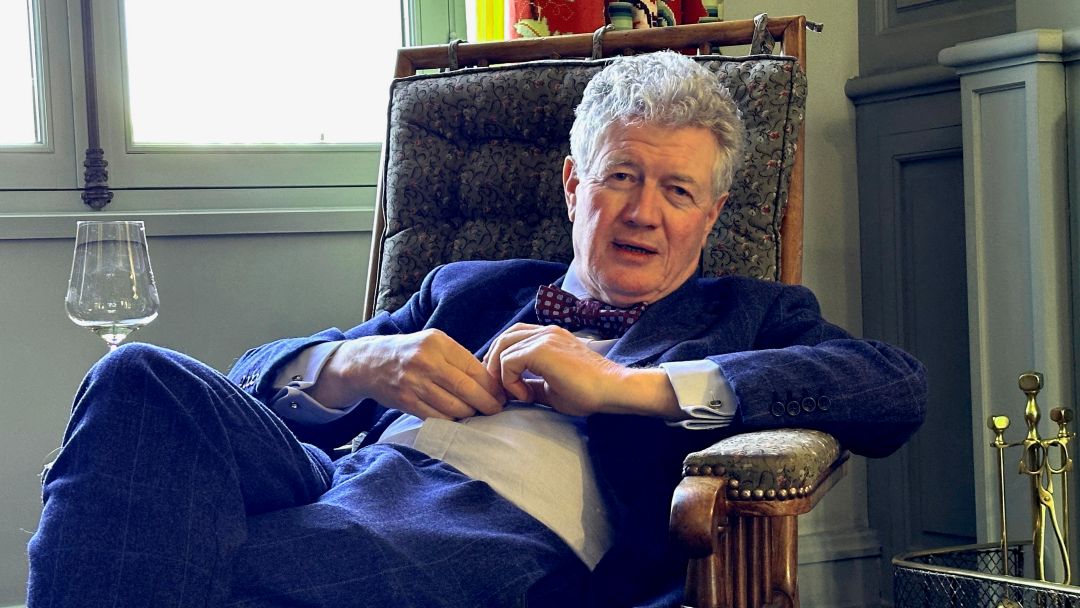
Christian Seely reclining in his chair at Pichon Baron.
Pauillac is atypical insofar that the northern half benefitted from slightly more rainfall and therefore potentially less stress than the drier southern half. That can make a crucial difference, although the means at châteaux’s disposal meant that most took it in stride. In 2025, I appreciate how the growing season accentuated the leitmotifs of Pauillac. If you relish those graphite/pencil box scents, then rest assured, I cannot remember a vintage where that character was so prominent. It lends the best wines real personality and distinction, distinguishing them as a true Bordeaux Cabernet in a way that nowhere else does better.
The standout in Pauillac and contender for wines of the vintage is Lafite-Rothschild, which overflows with the same elegant grandeur as the 1953, 1959 or 1982. Saskia de Rothschild and Eric Kohler make a formidable team, and this First Growth is flying high with a succession of enthralling wines—a purple patch that Prince would be proud of. Tasting on the same day as Latour and Mouton-Rothschild, I just put those two a small step behind, though the former will not be on the market for a few years. Elsewhere, Christian Seely and Pierre Montegut oversaw a brilliant Pichon Baron, Grand-Puy-Lacoste revels in classicism, and the 2025 Lynch Bages will vie with the stupendous 2022.
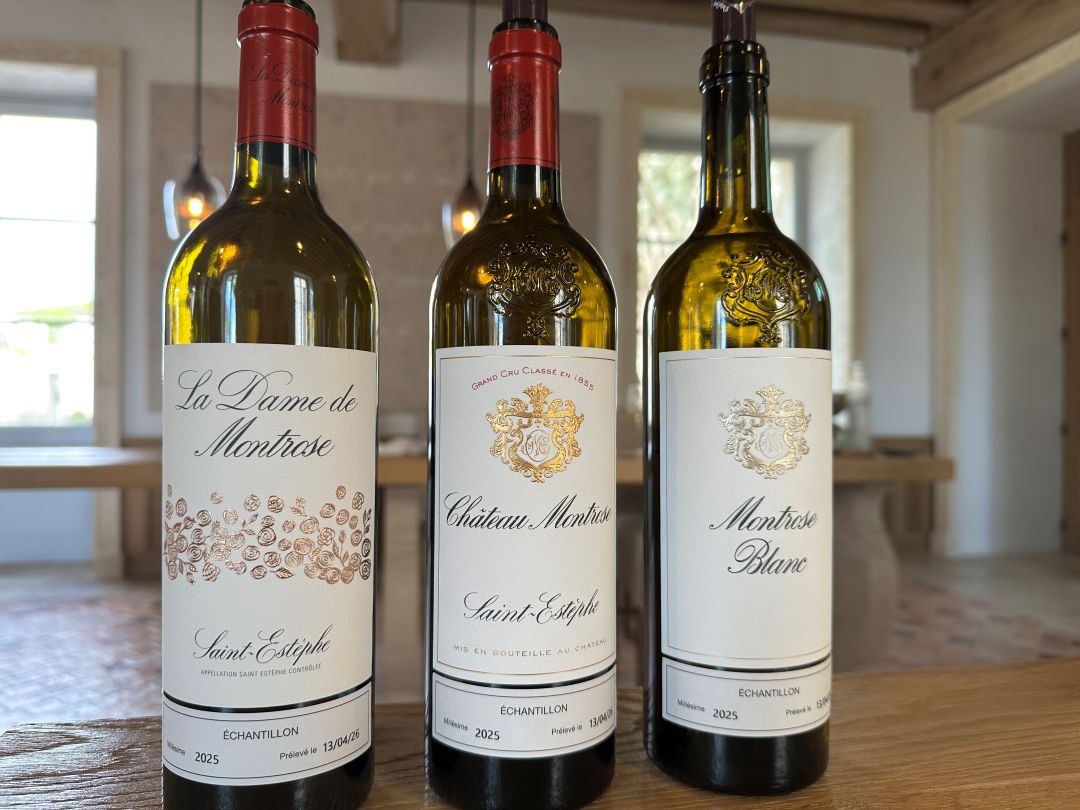
As Lafite-Rothschild crowns Pauillac, so Montrose rules in Saint-Estèphe. This estate has been strutting its stuff in recent years. The latest iteration blew me away with its complexity and symmetry, an unequivocally astounding Montrose that is among the best I have tasted over the years. It was tough keeping my poker face in front of CEO Pierre Graffeuille and Head Winemaker Vincent Decup. The clay-rich soils of the appellation benefitted the appellation in 2025, and unsurprisingly, I was charmed by Ormes de Pez and Calon Ségur. Cos d’Estournel is a bit like Palmer and channels a tad more ripeness and opulence, which will be refined during its élevage and bottle age. Another to look out for is a rejuvenated Phélan Ségur, often excellent value. Maybe the rainbow that I saw plunging into the château was a sign?
Pessac-Léognan is a little more variable among the reds, perhaps because the higher percentage of Merlot meant that the imprimatur of the hot summer is greater than in other appellations. That does not imply that Pessac is without impressive wines.
Leading the pack at this primordial stage is Haut-Brion. This year, it clearly has the upper hand over La Mission Haut-Brion. This is not a year when they are neck-and-neck. The historic First Growth is born with so much complexity that I kept returning to my glass just to check (and recheck) until, oops, it was empty. Haut-Bailly is one of the best editions I have tasted from barrel, a complete wine without a hair out of place, one that is going to give drinkers a lot of pleasure. My visit to Smith Haut Lafitte was tinged with sadness since the passing of Daniel Cathiard, though he would take pride in the red and—anomalous to the vintage—the white is even better. Domaine de Chevalier channels the classicism of 2025 more than any other Pessac-Léognan, though oddly, I found their second white wine, the L’Esprit de Chevalier Blanc, to be on par with the Grand Vin Blanc. There is no rule that one must be better than the other!
The dry whites were denied the electric line of acidity that the cooler previous year’s summer bestowed, though I appreciate that the warmth lent them texture and weight. Whilst not as complex or mineral-driven as dry white Bordeaux in full flight, the likes of La Mission Haut-Brion Blanc and indeed, the L’Esprit de Chevalier Blanc show what is possible to the extent that I occasionally preferred a château’s white to its red counterpart.
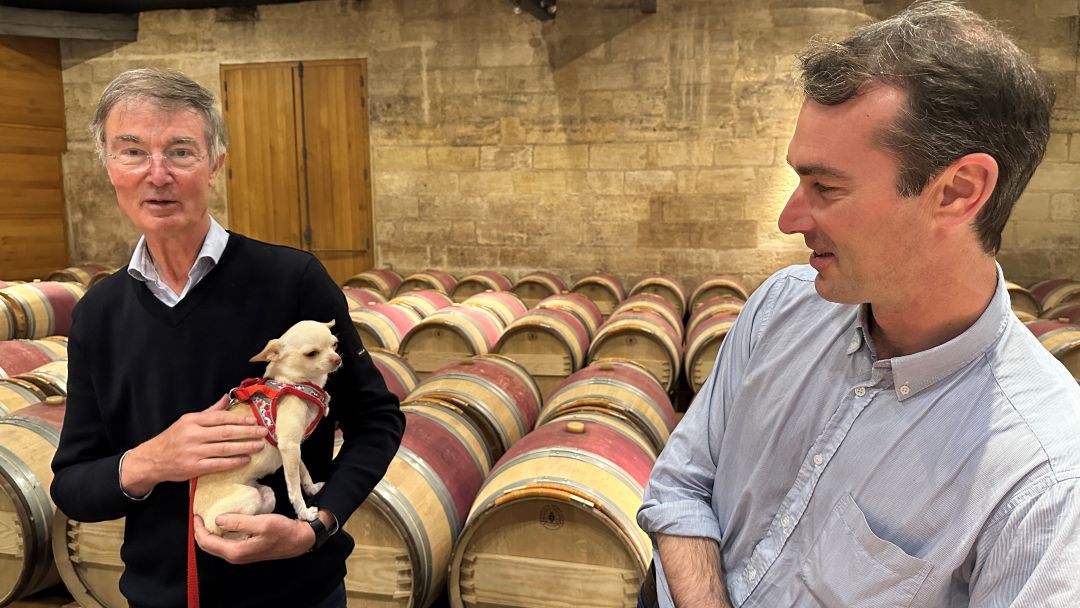
Alexandre and Guillaume Thienpont, plus chihuahua.
The Right Bank is more heterogeneous because of the stark differences in terroir. For example, in Pomerol and the western flank of Saint-Émilion, the vintage ruthlessly parses between those estates on the gravel plateau and those on sandier soils. “Gravel” is misleading, because really it is the water-retentive clay soils that advantaged those properties, not least the cluster on blue clay (smectite) in Pomerol, its molecular structure adept at holding moisture and drip-feeding it back to the root system. Ergo, Petrus and conjoining estates produced great wines, although anyone who could only afford 15 minutes to just sit and taste Petrus would not have sampled the real wine; I was nonplussed upon initial pour but scrabbling round for superlatives a quarter of an hour later. There are also outstanding wines from L’Evangile, La Conseillante, Vieux Château Certan and l’Église-Clinet (Pomerol), likewise Cheval Blanc and Figeac (Saint-Émilion).
Of course, there is one that, since 2025, is legally neither—Lafleur. The château’s decision to leave the Pomerol AOC and designate the wines Vin de France because they contravened appellation rules that forbid irrigation deserves a standalone essay. After speaking at length with Baptiste Guinaudeau, to say Lafleur irrigated their vines gives a false impression. This was not wanton watering or permanent rubber piping feeding water directly onto the vine. Guinaudeau explained that they “corrected moisture levels” in the soil, adding water indirectly so that it finds a natural and latent way to the root. Suffice it to say, the 2025 Lafleur delivers everything you want from this geographic Pomerol, albeit at a higher yield, though certainly not the highest encountered during my tastings. The moral question is another matter, especially if you are a fellow winemaker for whom such practices are an anathema. Trust me, I met a few. At the very least, it has sparked debate and the unseasonal balmy springtime weather throughout this primeur implies that their decision might be prescient and forward-thinking. Lafleur is still Lafleur.
Saint-Émilion is an interesting proposition this year. For certain, those estates on the limestone plateau produced wines that…for want of a better expression…taste calcareous: Beau-Séjour Bécot and Beauséjour J. Duffau-Lagarrosse, Canon, Berliquet, Troplong Mondot, Poesia, Laroque, just a handful in this category. I cannot recall a vintage where the limestone “pokes through” in such an untrammelled way, as if the wines were vinified in rock itself. The limestone imparts a tactile sensation, a nexus between wine and place, enhancing the wines’ cerebral nature. However, that may feel harsh to those seeking sumptuous fruit and velvety textures. Similarly, the more gravel-based soils below Cheval Blanc and Figeac also presented an advantage, whereas down on the plain and on sandier soils, quality is patchier.
As a sweet-toothed botrytized-wine lover, it
gives me immense pleasure to report that 2025 is fecund for great Sauternes. As
tradition dictates, I spent a day in the region, not only to taste the 2025s,
but to undertake verticals that will appear in the future. Guiraud hosted the
tasting that included both the dry and sweet Sauternes. The unusual ease with
which botrytis infected the vines (nowadays more due to the humidity caused by
rain than mists rising from the Ciron river) meant that pickers needed just two
or three tries into the vines, avoiding the stop-start, protracted
harvest that some seasons obligate. The purity of botrytised fruit illuminates
the most exceptional wines, not least Suduiraut, Lafaurie-Peyraguey, Doisy-Daëne,
Coutet and Guiraud. (Yquem and Climens no longer show the wines en primeur).
Sauternes has faced headwinds, not least consumer apathy towards sweet wines in
general. If priced realistically, 2025 might tempt buyers back.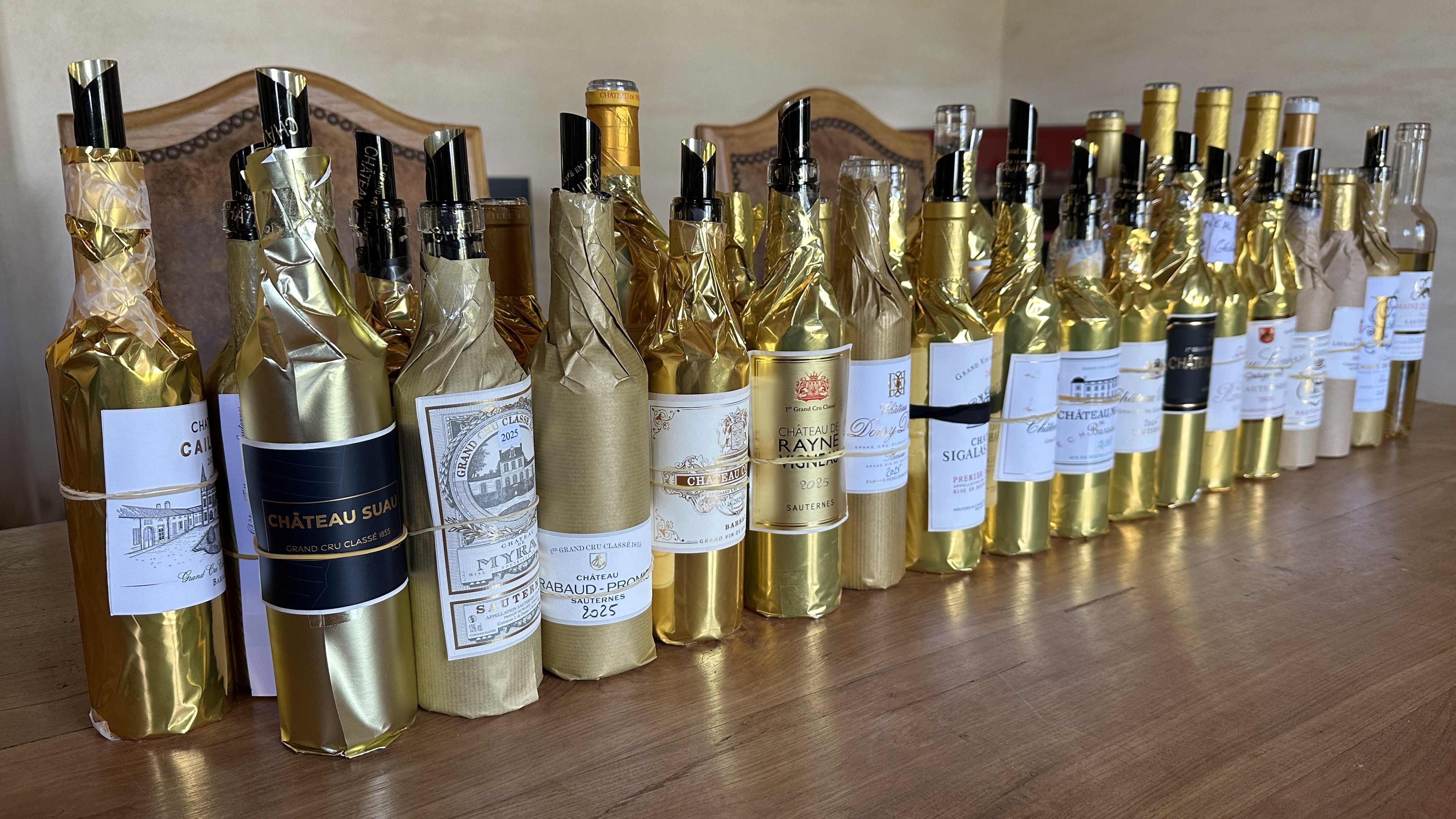
The Market
During these tastings, the positivity towards the 2025s was opposed by negativity surrounding the market, specifically, the en primeur system. Unease has been simmering over the last decade as problems fed through the distribution chain. Châteaux finally feel the impact. Up until now, they have been buffered by the system itself—just a couple of quick calls to négociants and job done. This risked complacency, epitomised by the confidence with which I was informed entire crops were sold within minutes, ignoring red flags from the front lines that hitherto loyal Bordeaux lovers were deserting. Cash-strapped négociants are finally declining allocations. Reality is hitting home. Knowing some owners for almost 30 years, I sensed the disquiet behind their cheerful facades.
The extent of the predicament depends on a property’s financial structure. Those owned by wealthy global conglomerates have a financial cushion, though the strong headwinds whipping across the luxury goods market mean these enterprises are more “sober” in their ambitions. Family-owned properties, not least those who borrowed from banks to construct new wineries when money was free, feel the cold winds. I heard that around 200 to 250 estates could simply run out of cash if primeur falls flat on its face. Many are small, relatively unknown estates, that, let it be said, are just as worthy as one of two well-known names whose financial woes are beginning. It is not as if they can diversify to recoup lost revenues. The best they can do is plant more white varieties and make use of the new Médoc Blanc classification, which, unfortunately, limits blends to classic Bordeaux varieties. You will see a handful of debut whites from Grand Cru Classés in this report, and why not?
The 2025 vintage is a watershed moment for en primeur. Arguably, the halcyon days of en primeur lasted from 1982 until now. I would argue that the decline began after 2016 and suffered a potentially fatal blow with the overpriced 2021s, a subject covered in last year’s opinion piece. A toxic combination of mispriced releases, accumulation of unsold back vintages, a stylistic trend away from red/tannic wines, the magnetism of Burgundy and the disenfranchising of an entire younger generation from Bordeaux, reduced end-consumer primeur sales to a trickle. Matters are made worse by the system prioritising First Growths, budgets set aside for the big names and spare change for everything else, including Second Growths. Financially logical, though the region suffers as a result.
The effects are already being seen. One Saint-Émilion grower noted that vines are being pulled up in the adjacent property. This is a Saint-Émilion Grand Cru, not in Entre-Deux-Mers. As depressing as that reads, this is the only way that Bordeaux is going to ensure its long-term survival: cutting out unprofitable vineyards to ultimately reach an equilibrium between supply and demand that crosses where consumers say, “Yes. I will buy.” Does that mean vines will disappear completely, like the coal industry in the UK or steel in northern France? Of course not. But it will not surprise me if Bordeaux shrinks to half its maximum size.
Sorry for the doom and gloom. Are there glimmers of light? Reasons for optimism?
Bordeaux has overcome challenges in the past and has the means and wherewithal to adapt. One example: In Sauternes, I was pleasantly surprised to see the bustling restaurants at Guiraud and Lafaurie-Peyraguey. The new visitor reception at Yquem is outstanding, ditto their proactive ambassador program to introduce their wines in restaurants. “We faced the crisis 10 or 15 years ago,” one proprietor told me, “so we had to do something.” Sauternes’ move towards oeno-tourism should be applauded, and yet this continues to be dismissed by many Médoc châteaux. The oft-heard excuse is “Well…We don’t really do that kind of thing.” Well, just look at the achievements of Florence and the late Daniel Cathiard at Smith Haut-Lafitte to see what can be done and how that can diversify income streams.
Wake up the rest! You have large estates that can easily make Bordeaux a more welcoming place. More restaurants. More hotels. Rebuild that link between wine and consumer directly. There have been moves in that direction, such as at Marquis de Terme, Kirwan, Giscours and Siran. Much more could be done, especially if châteaux can rekindle the cooperation that once existed between estates.
Secondly, though it might not have the kudos
of Burgundy, many people love Bordeaux, even if they’ve fallen out of love with
en primeur. There are pockets of strong demand in the United States (as
I saw for myself during the Vinous Icons in Miami) and to a devoted core of
Bordeaux lovers in the UK. It is foolish to think that everyone has
turned their back on the region.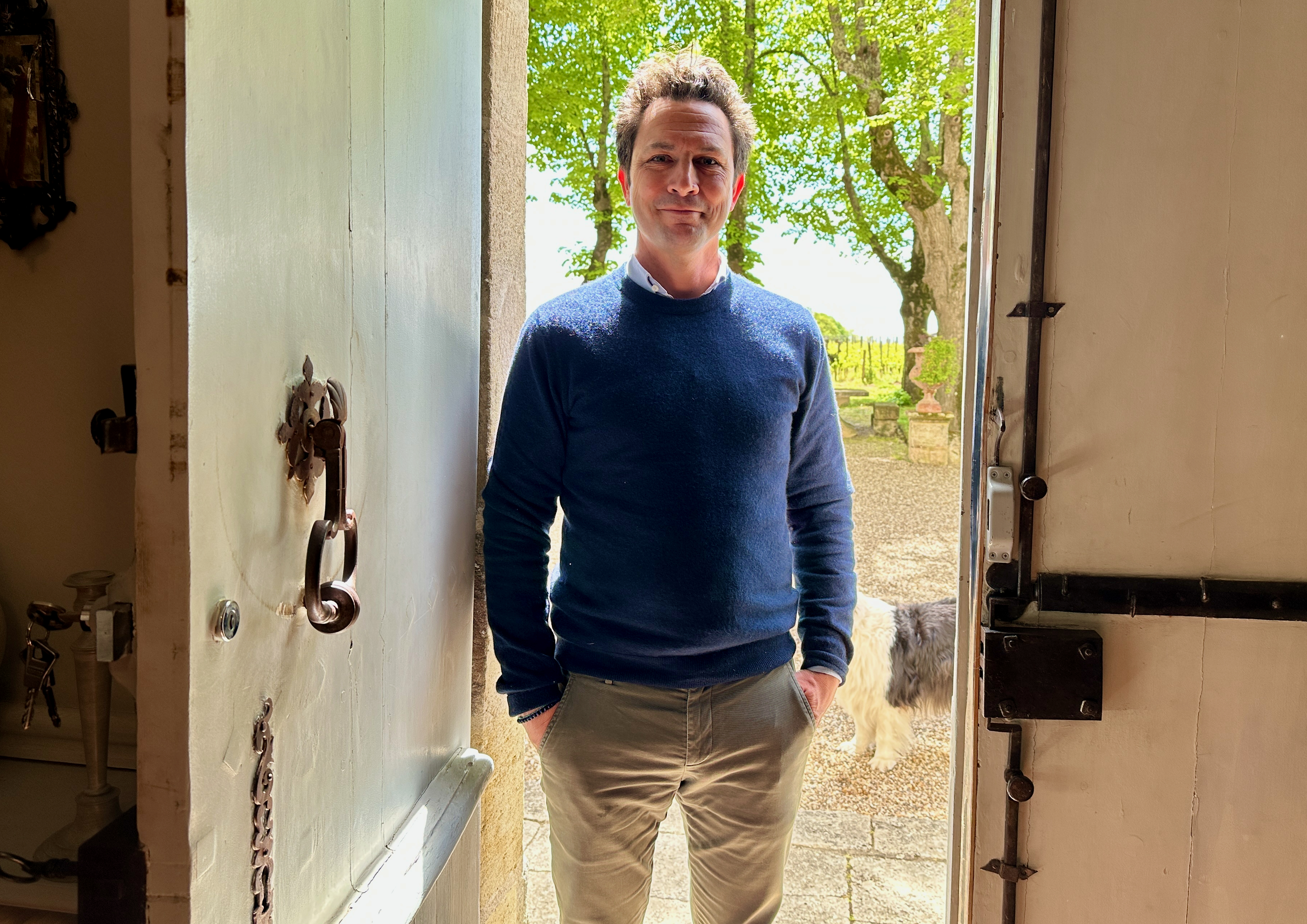
Mathieu Cuvelier at the doorway in Clos Fourtet.
In 2025, Bordeaux stands for terrific value. You can criticise the system that seems antiquated in this technological age. But it is much harder to claim Bordeaux wines are overpriced when you cast an eye towards Burgundy or California. Many châteaux have maintained reasonable prices; I can understand why, if a château has made a lauded wine, it must stick in the craw when told to resist price rises. The small minority of more avaricious châteaux must nip egregious price hikes in the bud. Brand positioning is null and void if your wine is gathering dust on shelves. Accept that you oversee a large volume of wine every 12 months, and—I cannot stress this enough—be proud of that accomplishment. Success is never measured by price. It is measured by the number of drinkers who enjoy your wine.
As a lifelong Bordeaux lover, I hope it is not too late for these estates to recover. But the Bordelais need open minds, stop thinking short-term (i.e., the next vintage) and be creative. Bordeaux bottles look boring. Line ‘em up. They look indistinguishable from each other. Outside top names, get more artistic with labels, grab consumers’ attention, as Beaujolais and South Africa are doing. Bordeaux is actually one of the hardest-working regions in terms of going out and pouring their wine for consumers, touring the world. I still think they could do more to attract a younger crowd, move away from glitzy dinners and so forth. Chateaux’s participation in the recent Vin et Hip-hop event in Los Angeles would have been unthinkable a while ago, but that is the right move, even if it is not a panacea for all their problems.
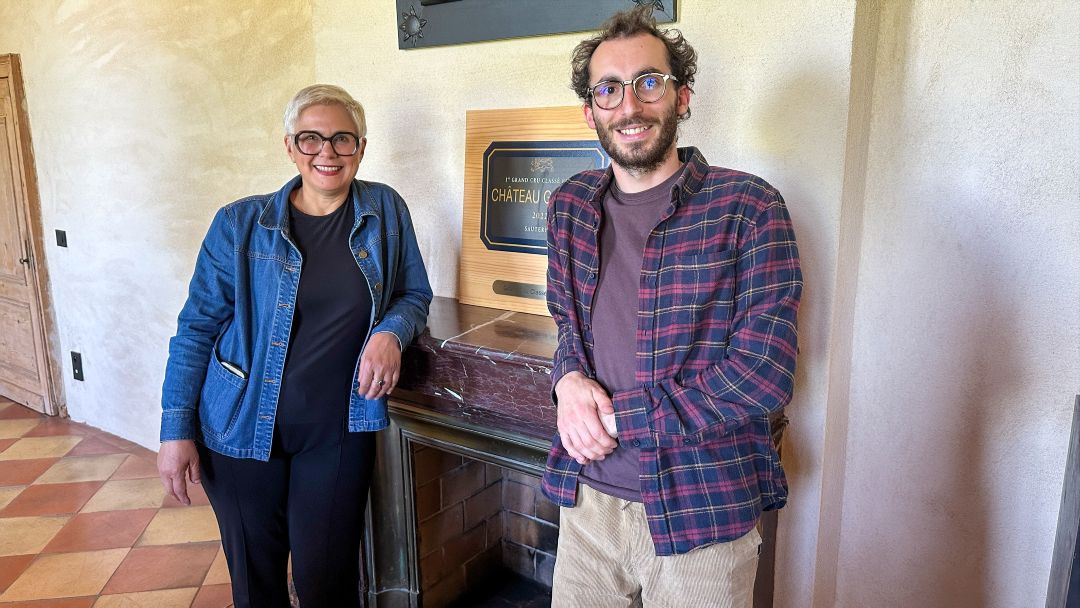
Sandrine Garbay and Cellar Master Matis Bouscarra at Château Guiraud.
Final Thoughts
The 2025 vintage represents a pivotal moment for Bordeaux, and the headwinds are strong. Whilst the context cannot be ignored, it must be set aside. Any single review is simply the projected quality of a sample as a finished wine, judging where 2025 fits within the panoply of vintages. That winemakers avoided a rerun of 2022 must come as some relief, and at least 2025 offers something different. The Venn diagram of 2022 and 2025 has a smaller intersection thanks to the late-season change in weather. The degree to which that altered the wines is remarkable; had it transpired in the past, I doubt the wines would have reached such quality, a testament to improvements in vineyard husbandry, vines adapting to global warming and particularly tannin management in the winery.
Tasting the 2025s was like tasting two wines coexisting in the same glass: a concentrated Bordeaux due to the hot and dry summer, and a classic Bordeaux thanks to rain and cooler temperatures. What is the interplay of these opposing yet complementary styles over the coming years? Will one supersede the other? Hopefully, they will continue to cohabitate, because that dichotomy tantalises the senses and lends the wines intellectual gravitas. The caveat is that quality is not evenly distributed. Terroir underpins success in 2025, and without that, the challenges of picking at precisely the right moment and dealing with high tannin levels could easily trip you up.
Will 2025 be the saviour that rides to winemakers’ rescue? Will it chime the death knell for primeur? Should you care? Primeur fulfilled a useful purpose, but the world has changed. Evolve or die. Institutions and structures must adapt to the current landscape, one where there is far more competition, where tastes have moved away from archetypal Bordeaux and the region’s image is perceived as stuffy and out of touch. How do you reconcile a region facing declining primeur sales with gleaming multi-million-euro wineries and glittering black-tie dinners? What message does that convey to Bordeaux wine lovers?
On the other hand, at a Bordeaux lunch in London, the day after my return from primeur, I heard warm words about the reliability and magic of Bordeaux’s wines, as if people were welcoming back an old friend. It might lack the FOMO, the artisan nature of Burgundy (even if that is being eroded), and yet the prosaic fact is that Bordeaux tastes delicious. Furthermore, no region approaches Bordeaux in terms of longevity, that kaleidoscope of secondary aromas and flavours that only come with time.
Bordeaux has succeeded in producing a vintage stacked with great wines. Producers must accept that the only correct price is one that consumers will pay. Nothing else. To their chagrin, that might be under the price they charged for 2024s, but admittedly, to my surprise, a couple of wise proprietors concurred and, who knows, may pitch their prices accordingly. They will likely reap long-term rewards. The ossified modus operandi of Bordeaux must change, and that change will be painful but necessary. The only guarantee is that in 12 months, there will be another Bordeaux vintage beckoning. Given 2026’s initiation florale, it will probably be a large crop.
See you then?
© 2026, Vinous. No portion of this article may be copied, shared or redistributed without prior consent from Vinous. Doing so is not only a violation of our copyright but also threatens the survival of independent wine criticism.
You Might Also Enjoy
2025 Bordeaux En Primeur: Le Freak, Antonio Galloni, April 2026
Bordeaux: The Crisis Laid Bare, Neal Martin, June 2025
2023 Bordeaux: Signed, Sealed, Delivered, Antonio Galloni, March 2026
Bordeaux 2023 in Bottle: Coming Around Again, Neal Martin, February 2026
Event Horizon: Bordeaux 2024 Primeur, Neal Martin, May 2025
2024 Bordeaux En Primeur: The Razor’s Edge, Antonio Galloni, April 2025
Show all the wines (sorted by score)
- Agassac
- Angélus
- Anthonic
- Ausone
- Badette
- Balestard de Tonnelle
- Barde-Haut
- Barrabaque
- Barreyres
- Bastor-Lamontagne
- Batailley
- Beaumont
- Beauregard
- Beauséjour
- Beau-Séjour Bécot
- Beauséjour J. Duffau-Lagarrosse
- Beau-Site
- Beauvillage
- Bel Air Eiffel
- Bel Air Gloria
- Bélair-Monange
- Belgrave
- Bellefont-Belcier
- Bellegrave du Poujeau
- Bellegrave (Pauillac)
- Bellegrave (Pomerol)
- Berliquet
- Bernadotte
- Bernon Bécot
- Bertrand Braneyre
- Beychevelle
- Beynat
- Bibian
- Biston-Brillette
- Blaignan
- Bonalgue
- Bourgneuf
- Bouscaut
- Boyd-Cantenac
- Branaire-Ducru
- Branas Grand Poujeaux
- Brande-Bergère
- Brane-Cantenac
- Broustet
- Brown
- Caillou
- Calon Ségur
- Canon
- Canon Chaigneau
- Canon La Gaffelière
- Canon Pécresse
- Cantelys
- Cantemerle
- Cantenac
- Cantenac Brown
- Cantin
- Capbern
- Cap de Faugères
- Cap de Mourlin
- Cap Leon Veyrin
- Carbonnieux
- Carcanieux
- Cardinal
- Caroline
- Carteau Côtes Daugay
- Castera
- Certan de May
- Chasse-Spleen
- Château Pauillac
- Chauvin
- Chemin Royal
- Cheval Blanc
- Cissac
- Citran
- Clarendelle Blanc
- Clarendelle Bordeaux
- Clarisse
- Clauzet
- Clerc Milon
- Clinet
- Clos Badon
- Clos Beauregard
- Clos Bon Air
- Clos Cantenac
- Clos de la Molénie
- Clos de la Vieille Eglise
- Clos de l'Oratoire
- Clos de Sarpe
- Clos des Jacobins
- Clos des Lunes
- Clos des Prince
- Clos Dubreuil
- Clos du Clocher
- Clos du Marquis
- Clos du Roy
- Clos Floridène
- Clos Fourtet
- Clos Haut-Peyraguey
- Clos La Bohème
- Clos La Gaffelière
- Clos l'Église
- Clos Les Grandes Versannes
- Clos Lunelles
- Clos Manou
- Clos Marsalette
- Clos Puy Arnaud
- Clos René
- Clos Roskam
- Clos Saint-Julien
- Clos Saint-Martin
- Clos Toumalin
- Corconnac
- Cos d'Estournel
- Cos Labory
- Côte de Baleau
- Coufran
- Couhins-Lurton
- Coutet
- Crabitey
- Croix Cardinale
- Croix de Labrie
- Croix de Rambeau
- Croix du Trale
- Croizet-Bages
- d'Aiguilhe
- Dalem
- Dallau
- d'Anglade
- d'Angludet
- d'Arche
- d'Arcins
- d'Armailhac
- d'Arsac
- Dassault
- Dauzac
- de Barbe Blanche
- de Brondeau
- de Camensac
- de Cartujac
- de Chambrun
- de Chantegrive
- de Clotte
- de Fargues
- de Ferrand
- de Fieuzal
- de Fonbel
- de France
- de Lamarque
- de Malle
- de Marsan
- de Myrat
- de Pez
- de Portets
- de Pressac
- de Rouillac
- de Sales
- des Bertins
- Desmirail
- Destieux
- de Viaud
- Deyrem Valentin
- d'Issan
- Doisy-Daëne
- Doisy-Dubroca
- Doisy-Védrines
- Domaine André Leclerc
- Domaine Andron
- Domaine d'Alliance
- Domaine de Cambes
- Domaine de Chevalier
- Domaine de la Solitude
- Domaine de l'Eglise
- Domaine Les Sadons
- Domeyne
- Doyac
- du Cartillon
- du Courlat
- Duhart-Milon
- du Mont
- du Moulin Rouge
- du Retout
- du Tertre
- Dutruch Grand Poujeaux
- Enclos de Viaud
- Enclos Tourmaline
- Escot
- Fage
- Faizeau
- Faugères
- Fayat
- Ferran
- Ferrande
- Ferrière
- Feytit-Clinet
- Figeac
- Filhot
- Finegrave
- Finet
- Fleur Cardinale
- Fleuron de Liot
- Fombrauge
- Fonbadet
- Fonréaud
- Fonroque
- Fontenil
- Fontis
- Fourcas Dupré
- Fourcas Hosten
- Franc La Rose
- Franc Lartigue
- Franc Mayne
- Franc Pipeau
- Gazin
- Giscours
- Gloria
- Godeau
- Goudichaud
- Grand Barrail Lamarzelle Figeac
- Grand Corbin
- Grand Corbin Despagne
- Grand Jean
- Grand Mayne
- Grand Ormeau
- Grand Puy Ducasse
- Grand-Puy-Lacoste
- Grand Village
- Grand Village Blanc
- Graves de Pez
- Greysac
- Gruaud Larose
- Guiraud
- Haut-Bages Libéral
- Haut-Bages Monpelou
- Haut-Bailly
- Haut-Batailley
- Haut-Bergeron
- Haut-Bergey
- Haut-Breton Larigaudière
- Haut-Brion
- Haut Brisson
- Haut-Chaigneau
- Haut Condissas
- Haut Coustet
- Haut de la Bécade
- Haut-Madrac
- Haut-Marbuzet
- Haut-Maurac
- Haut-Simard
- Hosanna
- Hyon La Fleur
- JCP Maltus
- Jean Faure
- JL Thunevin Les Confidentiels
- Joanin Bécot
- Kirwan
- Labégorce
- La Bessane
- La Brande
- La Branne
- La Bridane
- La Chenade
- La Clare
- La Clémence
- La Clotte
- La Commanderie
- La Connivence
- La Conseillante
- La Couronne
- La Création
- La Croix Bellevue
- La Croix de Pez
- La Croix des Moines
- La Croix du Casse
- La Dauphine
- La Dominique
- Lafaurie-Peyraguey
- Lafite Monteil
- Lafite Rothschild
- Lafleur
- La Fleur d'Arthus
- Lafleur-Gazin
- La Fleur la Mothe
- La Fleur-Pétrus
- La Fon du Berger
- Lafon la Tuilerie
- Lafon-Rochet
- La Fortune
- La France Delhomme
- La Gaffelière
- La Garricq
- Lagrange (Pomerol)
- La Grangère
- Lagrange (Saint-Julien)
- La Gurgue
- La Haye
- La Lagune
- La Louvière
- La Marzelle
- L'Ambroisie
- La Mission Haut-Brion
- La Mondotte
- Lamothe Guignard
- Lamothe Vincent
- La Mouline
- L'Amour
- Langoa-Barton
- Laniote Saint-Émilion
- La Patache
- La Pointe
- Larcis Ducasse
- La Révérence
- L'Argenteyre
- La Rivière
- Larmande
- Laroque
- La Roque de By
- La Rose Brana
- La Rose Pauillac
- La Rose Perrière
- La Rousselle
- Laroze
- Larrivaux
- Larrivet Haut-Brion
- Larruau
- Lascombes
- La Serre
- Latour
- Latour à Pomerol
- La Tour Blanche
- La Tour Carnet
- La Tour de By
- La Tour de Mons
- La Tour Figeac
- Latour-Martillac
- L'Aurage
- La Valière
- La Vieille Cure
- La Violette
- La Voûte
- Le Bon Pasteur
- Le Boscq
- Le Clos du Beau-Père
- Le Coteau
- Le Côteau
- Le Crock
- Lécuyer
- Le Doyenné
- Le Gay
- L'Eglise-Clinet
- Léoville Barton
- Léoville Las Cases
- Léoville-Poyferré
- Le Pin
- Le Prieuré
- Le Retout
- Les Carmes Haut-Brion
- Les Champs Libres
- Les Cruzelles
- Les Gravières
- Les Hauts-Conseillants
- Les Lattes
- Les Ormes Sorbet
- Lespault-Martillac
- Les Pensées
- Les Perrières
- Lestage
- Lestage-Darquier Grand Poujeaux
- Lestage Simon
- Les Trois Croix
- Le Thil
- L'Évangile
- L'If
- Lilian Ladouys
- Linot
- Liot
- Livran
- Lousteauneuf
- Lucia
- Lynch Bages
- Lynch-Moussas
- Lynsolence
- Maillet
- Malartic Lagravière
- Malescot St. Exupéry
- Malleret
- Mangot
- Margaux
- Marjosse
- Marquis d'Alesme Becker
- Marquis de Terme
- Martin
- Martinho
- Martin (Saint-Estèphe)
- Maucaillou
- Maucamps
- Mauvesin Barton
- Mazeyres
- Méjean
- Meyney
- Meyre
- Milens
- Monbousquet
- Monbrison
- Moncets
- Monregard La Croix
- Montaiguillon
- Montlandrie
- Montlisse
- Mont-Pérat
- Montrose
- Montviel
- Moulin de Blanchon
- Moulin de Canhaut
- Moulin de la Rose
- Moulin du Cadet
- Moulin-Galhaud
- Moulin Haut-Laroque
- Moulin Riche
- Moulin Saint-Georges
- Mouton Rothschild
- Moutte Blanc
- Nairac
- Négrit
- Nenin
- Noaillac
- Olivier
- Ormes de Pez
- Pabus
- Palais Cardinal
- Palmer
- Paloumey
- Pape Clément
- Partarrieu
- Pavie
- Péby Faugères
- Pédesclaux
- Perrin d'Hoge
- Petit Bocq
- Petit Faurie de Soutard
- Petit Gravet Ainé
- Petit Serin
- Petit-Village
- Petrus
- Pey La Tour
- Peymouton
- Peyrabon
- Phélan Ségur
- Pibran
- Piche-Liebre
- Pichon Baron
- Pichon-Longueville Comtesse de Lalande
- Picque Caillou
- Pierre 1er
- Plince
- Poesia
- Poitevin
- Pontet-Canet
- Porte Chic
- Potensac
- Pouget
- Poujeaux
- Prieuré-Lichine
- Puyblanquet
- Quinault l'Enclos
- Quintus
- Rabaud-Promis
- Rahoul
- Ramage La Batisse
- Rauzan Gassies
- Rauzan Ségla
- Rauzan-Ségla
- Raymond-Lafon
- Rayne-Vigneau
- Reignac
- Renon
- Reynon
- Rieussec
- Ripeau
- Roc de Bécot
- Roc de Cambes
- Rollan de By
- Rol Valentin
- Romer
- Romer du Hayot
- Roquetaillade La Grange
- Roudier
- Rouget
- Roylland
- Saamlong
- Saintayme
- Saint Bonnet
- Saint-Christoly
- Saint-Hilaire
- Saint-Pierre (Saint-Julien)
- Saint-Robert
- Samion
- Sansonnet
- Seguin
- Ségur de Cabanac
- Sénéjac
- Sénilhac
- Séraphine
- Serin
- Siaurac
- Sigalas Rabaud
- Sigognac
- Simard
- Siran
- Smith Haut Lafitte
- Sociando-Mallet
- Soudars
- Soutard
- Soutard-Cadet
- Suau
- Suduiraut
- Taillefer
- Talbot
- Tauzinat l'Hermitage
- Tayac
- Tertre Roteboeuf
- Tessendey
- Teynac
- Thieuley
- Tour Baladoz
- Tour des Termes
- Tour du Goua
- Tour Maillet
- Tournefeuille
- Tour Prignac
- Tour Saint Christophe
- Tour Saint-Fort
- Tour Seran
- Troplong Mondot
- Trotanoy
- Trotte Vieille
- Tutiac
- Tuyttens
- Valandraud
- Verdignan
- Vieille Dynastie
- Vieux Château Certan
- Vieux Château Saint-André
- Vieux Gabarey
- Villemaurine
- Vray Croix de Gay
- Yon-Figeac