
Browse using the new Vinous website now. Launch →
Printed by, and for the sole use of . All rights reserved © 2015 Vinous Media
2025 Bordeaux En Primeur: Le Freak
BY ANTONIO GALLONI | APRIL 28, 2026
Left Bank: Saint-Estèphe | Pauillac | Saint-Julien | Margaux | Moulis and Listrac | Pessac-Léognan and Graves | Left Bank Satellites | Sauternes
Right Bank: Pomerol | Saint-Émilion | Right Bank Satellites
After a problematic vintage in 2024, Bordeaux bounces back with the 2025s. It’s too soon to know where 2025 will land relative to most highly regarded recent vintages, but the finest 2025s are nothing short of thrilling. There is some inconsistency, which is to be expected in a large appellation and in a year with challenges that led to different approaches and decisions. While top names tend to get most of the attention this time of year, readers will find countless gems among Bordeaux’s lesser-known châteaux.
Margaux is the star of the vintage, although Pauillac is not far behind. Of course, it’s hard to say how much of the performance of an appellation is attributable to the vintage itself as opposed to properties that are raising the bar in terms of quality. I also tasted several truly extraordinary wines on Saint-Émilion’s famed clay/limestone plateau. Pomerol is the most uneven appellation, as I will explain later in this report.
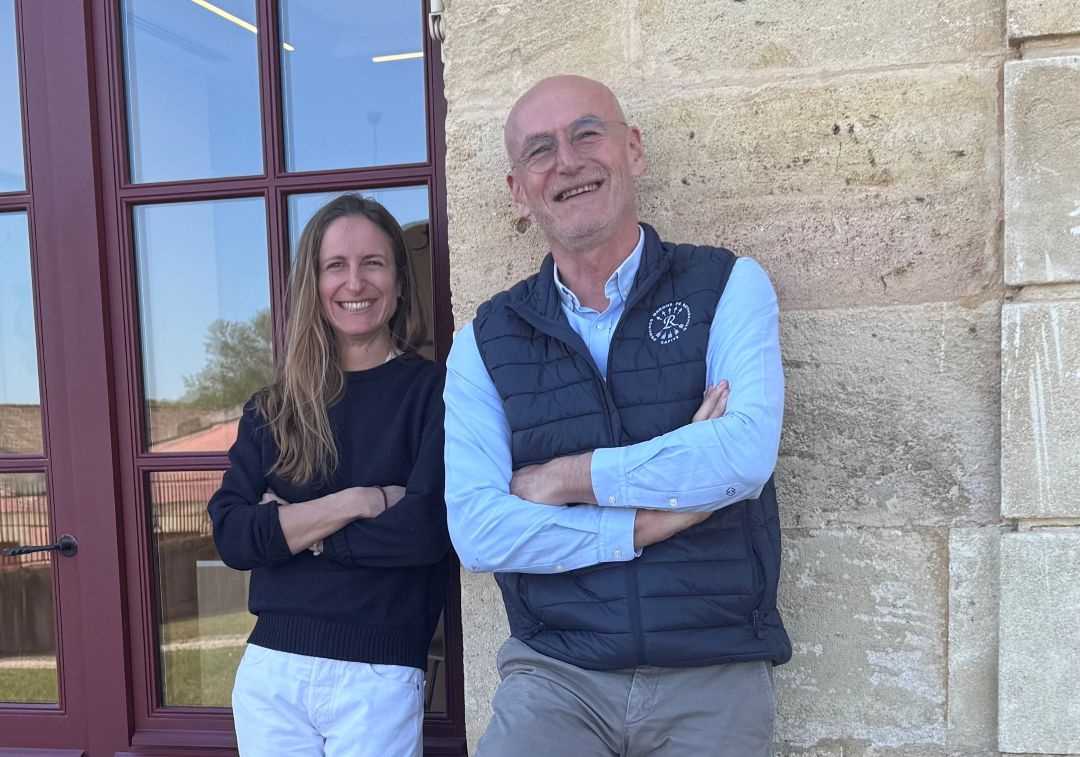
Saskia de Rothschild and Technical Director Eric Kohler at Lafite-Rothschild.
Two thousand twenty-five is a year marked by intense heat and drought. One of the most fascinating aspects of the vintage is that alcohols are lower than normal, and quite a bit lower than the norm these days in very hot, dry years. This is especially true on the Left Bank, where many wines come in at around 13% in alcohol. The differences from other hot dry years appear a bit less marked on the Right Bank. Even so, the signature of the finest 2025s is intense flavor and richness married with brisk acids. Many wines are also extremely aromatic. Tannins are generally silky. This last point is a key to understanding the vintage. While there was clearly some heat stress and slowing of ripening because of intense heat, the wines suggest that stress was moderate. Sugar ripening slowed at certain periods throughout the year, but physiological ripeness did not. That’s nothing short of a minor miracle, given that intense heat and drought almost always yield wines with huge tannins that did not fully ripen on the vine. Reading between the lines, it’s also clear some properties pulled back production by concentrating on their historic parcels and letting other satellite parcels that had been part of previous expansions fall by the wayside.
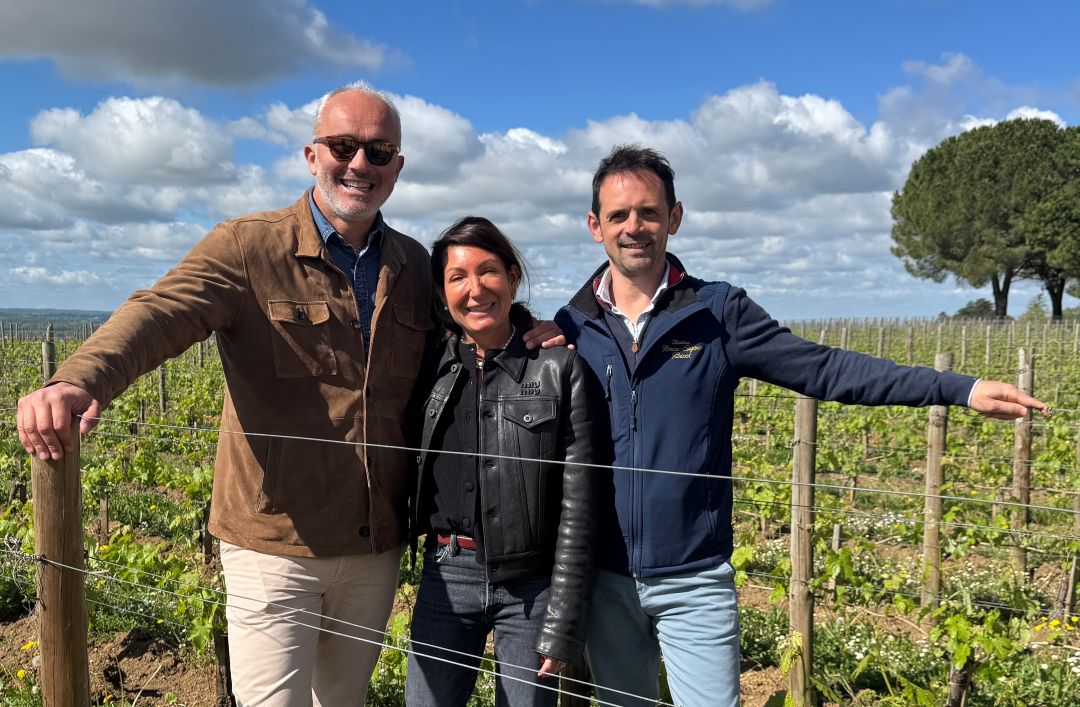
Proprietors Julien Barthe and Juliette Bécot, along with Technical Director Jean de Cournuaud, made one of the wines of the vintage at Beau-Séjour Bécot.
I suspect that more thoughtful farming (including the use of cover crops and canopy management), better sorting and greater experience in dealing with hot, dry conditions overall are all factors that also inform the 2025s. Many wineries are now equipped with smaller tanks that allow for smaller picks and that are especially well-suited to a vintage where yields were down at many properties. The combination of soaring aromatics, intense fruit, full, rich flavors, brisk acids and modest alcohols is something I have never seen in the red wines of Bordeaux.
Whites are surprisingly good for a warm, dry year, although whites are harder to judge than reds en primeur because the wines are often inherently less stable. The new Médoc Blanc appellation makes its debut with the 2025 vintage. It is no secret that consumer tastes increasingly favor white wine. Producers are responding with a bevy of new offerings. The best of these are distinctive and worth following, but some have little reason to exist, especially at a time when the market is becoming more selective. The Sauternes I tasted point to a good vintage, perhaps not exceptional, but solid. As always, my colleague Neal Martin will have a more comprehensive look at these wines.
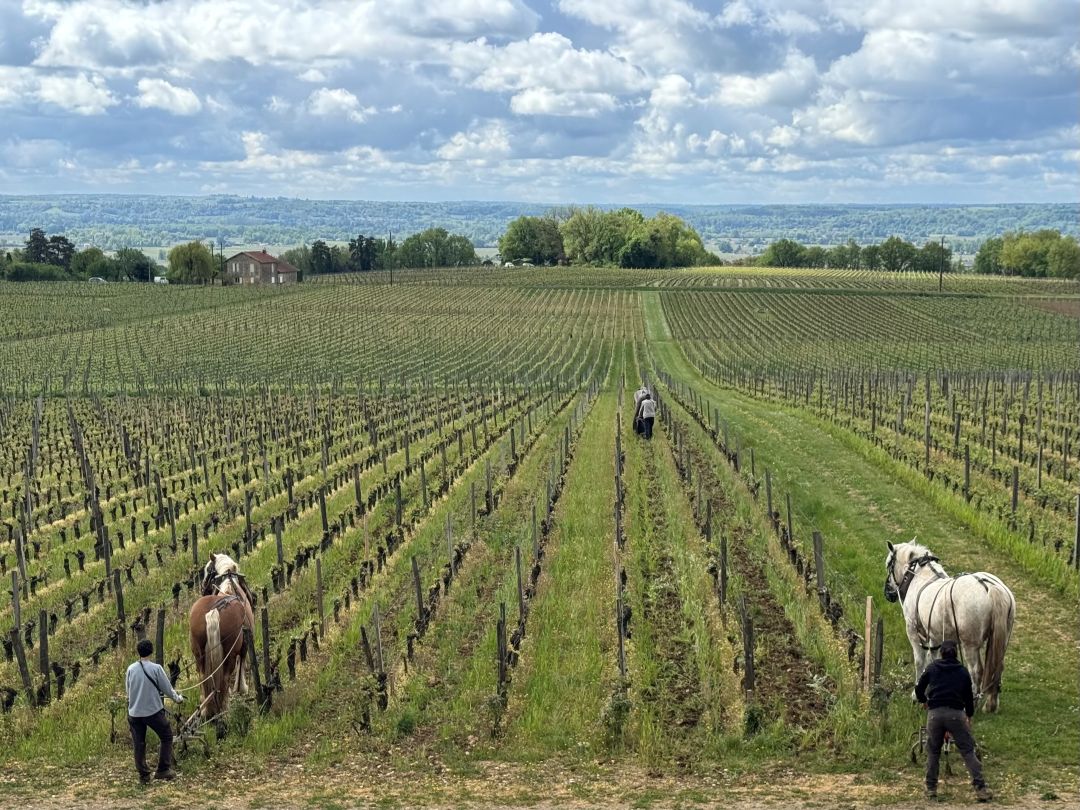
Springtime work in the vineyards at Troplong Mondot.
A Look at the 2025 Growing Season
Two thousand twenty-five is a year marked by very low yields throughout the region, for many estates the lowest since 1991, a season remembered for devastating frost. In 2025, reduced yields are directly attributable to two factors. The first is poor weather during the preceding summer, the time when the cluster primordia are formed. These embryonic clusters ultimately determine the potential yield for the following vintage. As a result, 2025 was poised to be a vintage with reduced yields from the outset. The second factor is intense heat and drought, which further lowered yields through dehydration and selection required to discard damaged fruit at harvest. On a more positive note, frost, hail and elevated disease pressure were not issues in 2025.
With that as a backdrop, let’s take a more in-depth look at how the growing season unfolded. The year got off to a mostly warm start. Budbreak was early, but not excessively so. There was some rain in April, more on the Right Bank than on the Left Bank, which was likely helpful in navigating the first heat spikes in June. Of course, rainfall always varies from place to place, as does the ability of soils to drain and/or retain water, so the impact of rain, especially at delicate times of the growing season, can be quite different from property to property and appellation to appellation.
Warmer-than-average temperatures resulted in early flowering that began towards the end of May and took place quickly and evenly under benign conditions with no shock events. A continued lack of rain and a heat wave in June created early expectations of a vintage that would be marked by high alcohols. Temperatures reached 37°C (98.6°F) or more. Young vineyards and those on less favorable terroirs began to show signs of stress.
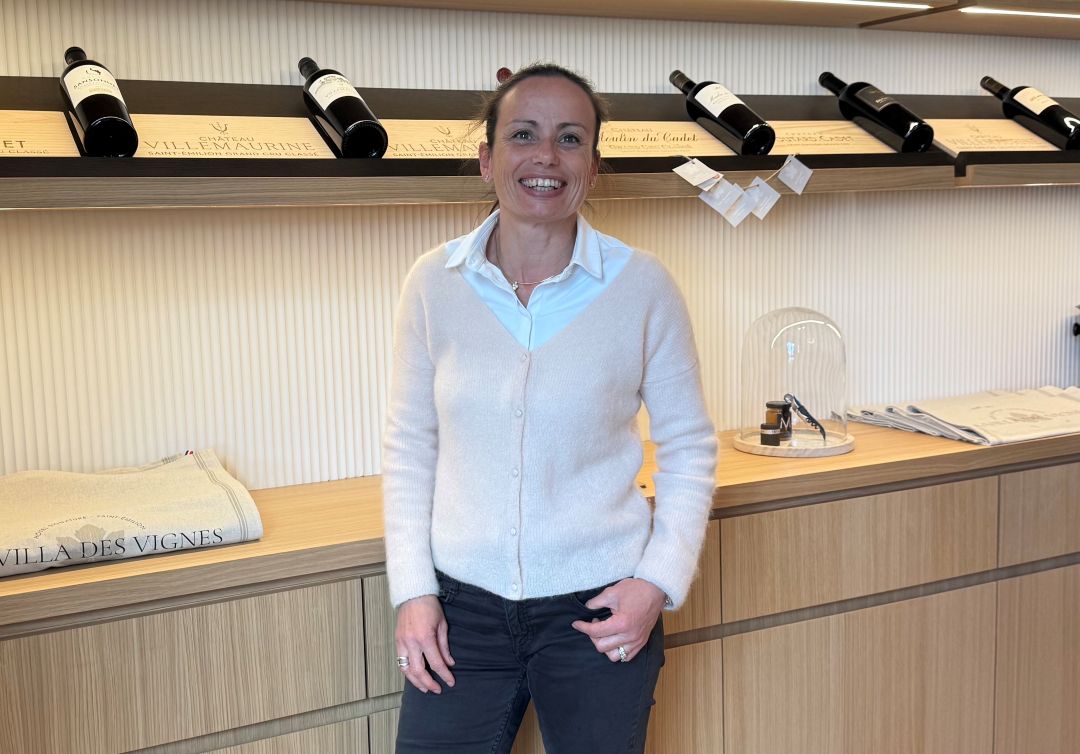
Marie Lefévère at Villemaurine, where she has made compelling wines for several years. In 2025, Lefévère made Valandraud alongside Jean-Luc Thunevin as a part of a long-planned transition in which Lefévère and her husband, Christophe, acquired the iconic Saint-Émilion estate.
At that point, the growing season began to diverge somewhat. Properties on the Right Bank saw virtually no rain for three months, all the way to August, but some parts of the Left Bank benefited from small showers on June 26 and July 20. Intense heat continued through July and well into August, when temperatures rose above 40°C (104°F), reaching and then surpassing previous historic highs.
The first whites were harvested in mid-August. Rain on August 20 proved to be a saving grace. On the Right Bank, it was the first rain since May 20. Water rehydrated berries and slowed down ripening. Reds were harvested from late August for the Merlots, through to September 19 and 20, when rain in the forecast led many châteaux to accelerate their final picks. A few properties harvested after the rains, but they are in the minority. Château Margaux is a notable exception. Harvest took place over 14 days from September 8-29, quite a bit later than most estates.
Yields were punishingly low, for many properties about half of normal. Younger vineyards and some sites on gravel seemed to suffer most. Yields are most often expressed as hectoliters per hectare, a measurement of wine volume per unit of land. As I have written in past reports, data must always be handled with care, interpreted rather than taken at face value. Hectoliters per hectare can be useful when comparing a château’s production relative to its historic average, or its production relative to the appellation. Broader comparisons—across appellations, for example—are more difficult because hectoliters per hectare does not consider vines per hectare and therefore production per plant. Moreover, some properties report hectoliters per hectare at harvest while others report the production after sorting at harvest.
Even so, as a rule of thumb, yields are variable and, in some cases, very low. L'Évangile in Pomerol provides a fascinating look at the vintage. “Yields were 35-38 hectoliters per hectare on sandier soils, in other words, fairly typical, but 28-30 on clay and only 15 or so on gravellier sections of the estate,” explained Technical Director Juliette Couderc. That, in a nutshell, is 2025.
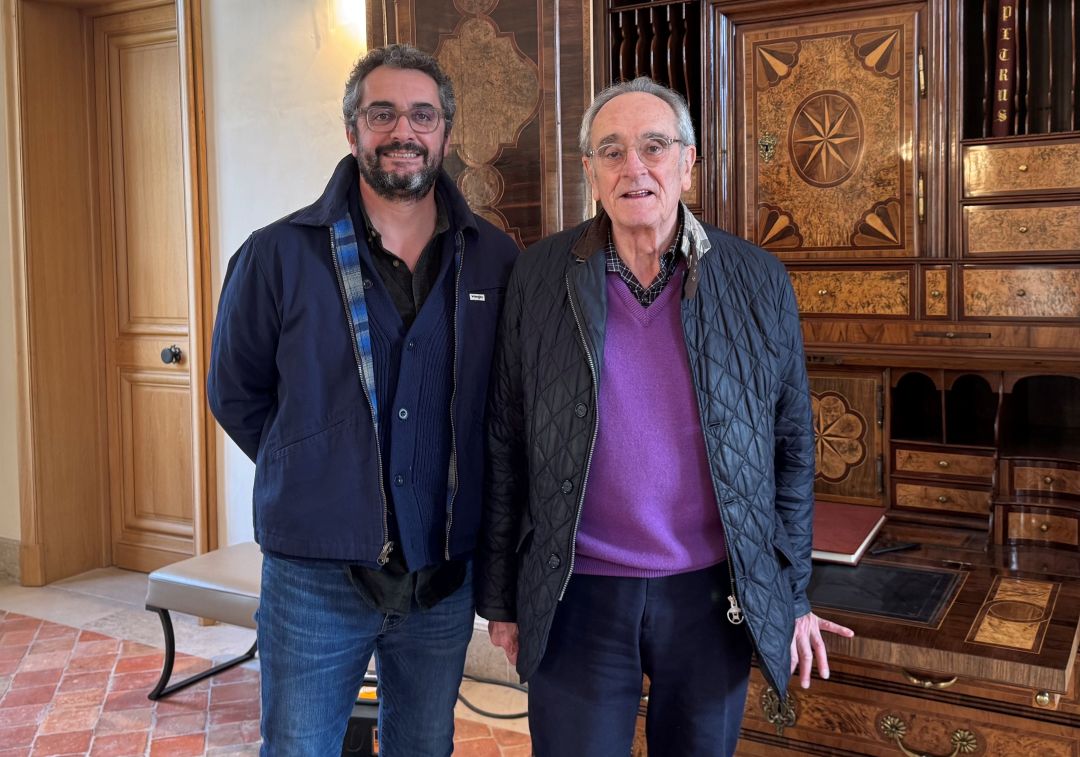
Father-and-son team Olivier and Jean-Claude Berrouet at Petrus.
Tiny berries with thick skins were the norm. “Consider that a typical Merlot berry weighs 1.2 grams,” Christian Moueix explained at Bélair-Monange. “In a wet vintage like 2024, that can go to 1.5 or 1.6 grams. By August, we had Merlot berries at 0.8 grams. That’s comparable to what we see in Napa Valley Cabernet Sauvignon in a year with intense heat stress. Then, we had 25 mm (1 inch) of rain on the evening of August 22, and that helped the berries swell to 0.9 or 1 gram, still low, but an improvement.”
Interestingly, winemakers made different choices in the cellar. Wary of potentially making huge wines, some technical director opted for shorter vatting times and gentler extractions. Others preferred longer times on the skins. "We did most of the extraction at the beginning of the fermentations," Thomas Duroux explained at Palmer, echoing the sentiments of many winemakers. "We lengthened vatting times considerably, but with lower temperatures," Technical Director Guillaume Pouthier explained at Les Carmes Haut-Brion. These choices are among the factors that explain differences in the wines. Some 2025s are on the lighter side texturally. These include Montrose, Petrus and the three reds at Smith Haut-Lafitte. It will be interesting to see how the wines respond to élevage. Others are quite a bit more powerful, including Cos d’Estournel, Haut-Brion and Léoville Las Cases. Cheval Blanc and Trotanoy are marked by pitifully low yields and imposing structures at this stage.
“It was an uneven year,” Managing Director Philippe Bascaules explained at Château Margaux. “Young vines suffered a great deal. We also had some parcels in cooler sites that did not ripen well with the cooler weather that arrived in September. Vatting times ranged from 13 to 28 days, a spread we have never seen before, while alcohols ranged from 13% to 15%.”
Blends are also a bit different this year. On the Left Bank, winemakers often favored Cabernet Sauvignon over Merlot and other blenders, which has become the norm in warmer years. For example, Mouton-Rothschild is 98% Cabernet Sauvignon, the most Cabernet ever in the Grand Vin, surpassing even the 2010 at 94%. At La Mission Haut-Brion and Haut-Brion, the whites strongly favor Sémillon, as Sauvignon Blanc was more heavily impacted.
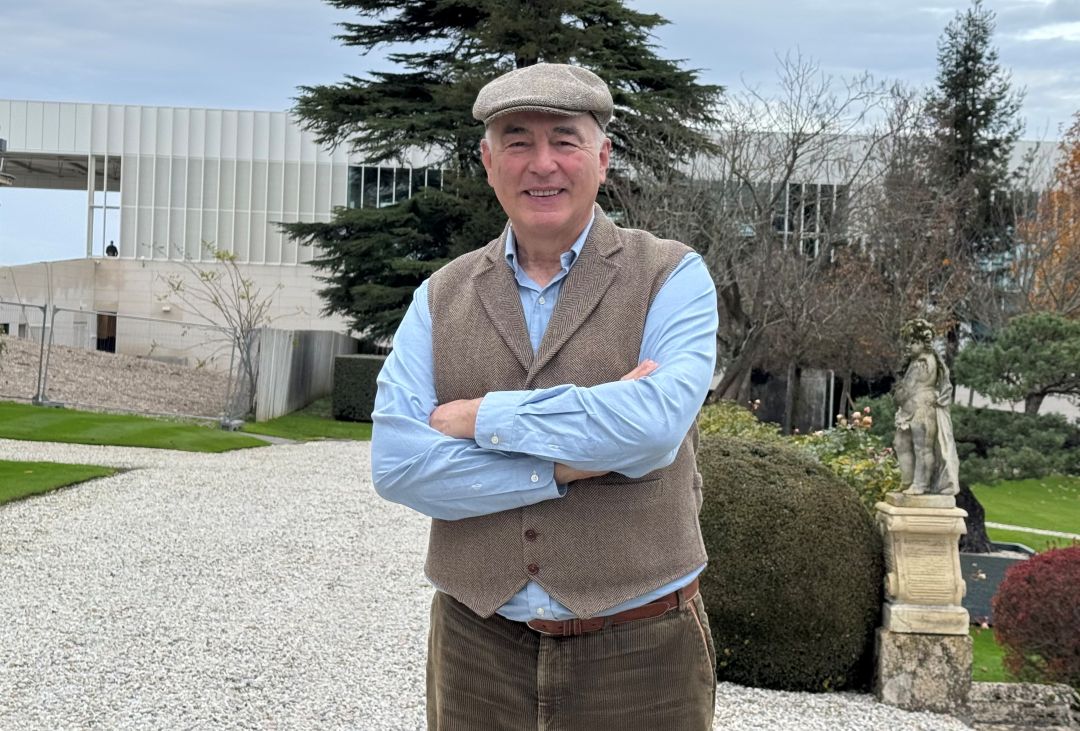
Bruno Borie and his team made one of the wines of the vintage at Ducru-Beaucaillou.
2025: Blow by Blow
Saint-Estèphe
Saint-Estèphe is variable. That may be because some wines, such as Montrose and Phélan Ségur, feel a bit light at this stage. Cos d’Estournel is magnificent. Calon Ségur is also very fine. As is often the case, Lafon-Rochet is the most elegant and Pauillac-like wine in the appellation. Capbern, Meyney and Pez are terrific values.
Pauillac
Pauillac is jam-packed with great wines in 2025. There are perhaps fewer surprises than in Margaux, as most of the top wines live up to their billing, including all the famous names. Lafite-Rothschild and Pontet-Canet are especially compelling. Lynch Moussas, Haut-Bages Libéral and Fonbadet are among the lesser-known names in Pauillac that dazzle in 2025. All three show off Pauillac’s more refined side. Fonbadet is especially fine.
Margaux
Margaux is the most consistently brilliant appellation of the vintage. Château Margaux and Palmer are both magnificent, but there are so many wines that are just behind. Lascombes is the most improved wine in Margaux following the arrival of Technical Director Axel Heinz in 2023. I was also very impressed with Marquis de Terme this year. La Sirène de Giscours, Ségla and Tour de Mons should all offer exceptional quality and value.
Saint-Julien
Saint-Julien has quite a bit to offer. Ducru-Beaucaillou is exceptional. I expect it will be one of the wines of the vintage once all is said and done. Léoville Las Cases shows the more powerful side of the year. Some of the wines where Merlot features heavily are quite voluptuous and racy. These include Beychevelle and Gloria. It’s hard to go wrong with any of the top names.
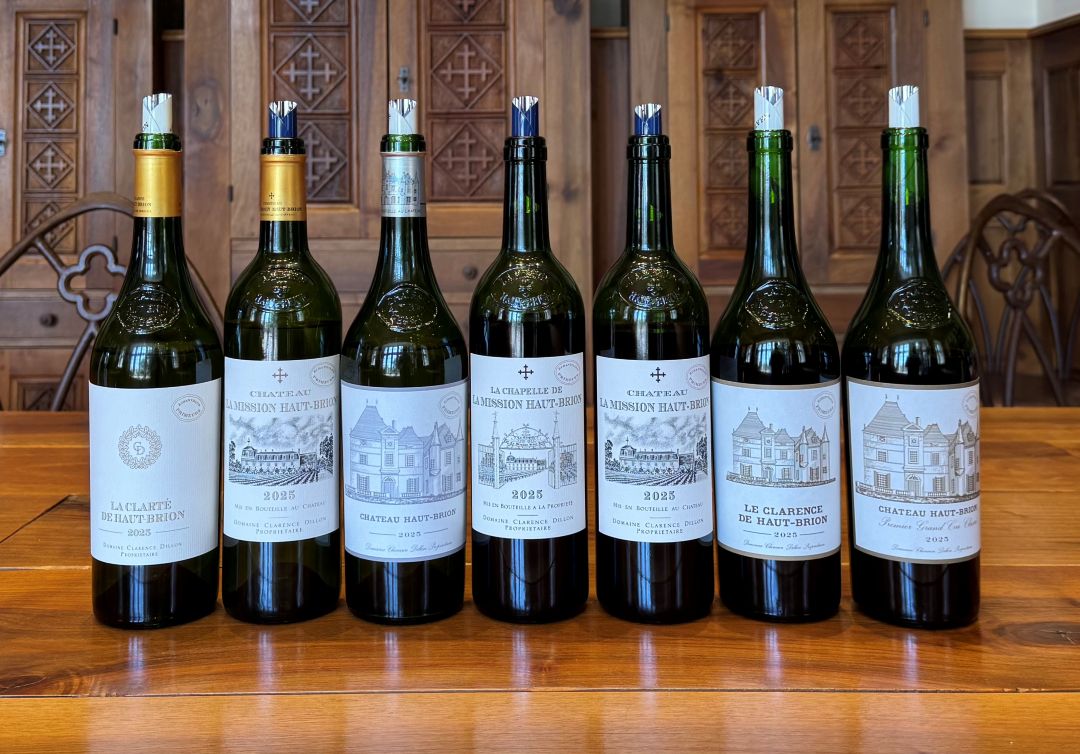
A stellar collection of 2025s at Haut-Brion and La Mission Haut-Brion.
Pessac-Léognan
I found some inconsistency in Pessac-Léognan, admittedly a large appellation that should really be split into two. La Mission Haut-Brion is fabulous, as it handled the rigors of the growing season so well. Guillaume Pouthier’s exploits at Les Carmes Haut-Brion are no longer a surprise, but Les Carmes continues to impress. The three reds at Smith Haut Lafitte are on the lighter side. I look forward to revisiting them in barrel. Pape Clément, in both colors, is the most changed wine in the appellation. Readers who have not tasted Pape Clément in a few years might be shocked by a style today that exalts freshness, tension and verve. Among the whites, Domaine de Chevalier and Pape Clément Blanc lead the way, with Smith Haut Lafitte not too far behind. Clos Floridène, La Garde and La Louvière are fine choices for readers in search of budget-friendly options.
Pomerol
Pomerol is the most inconsistent appellation in 2025. It is the warmest appellation in Bordeaux, and also a virtual monoculture of vineyards, something that could become a liability in the near future. La Conseillante and Petrus are especially elegant. Some wines, like Bourgneuf, really show the ripeness of the year, while others, like Trotanoy, are massively tannic and forbidding, more than is typically the case. Many other wines are good, just not at the level of the best years.
Saint-Émilion
Saint-Émilion’s famed clay/limestone plateau shows why this part of the appellation is so revered. Beau-Séjour Bécot, Canon and Clos Fourtet are all exceptional. Troplong Mondot and La Gaffelière follow closely. Cheval Blanc is a freak made from yields of just 15 hectoliters per hectare. The wine is still coming together, but it is immensely promising. Saint-Émilion is a large, sprawling appellation, so some degree of variability is a given.
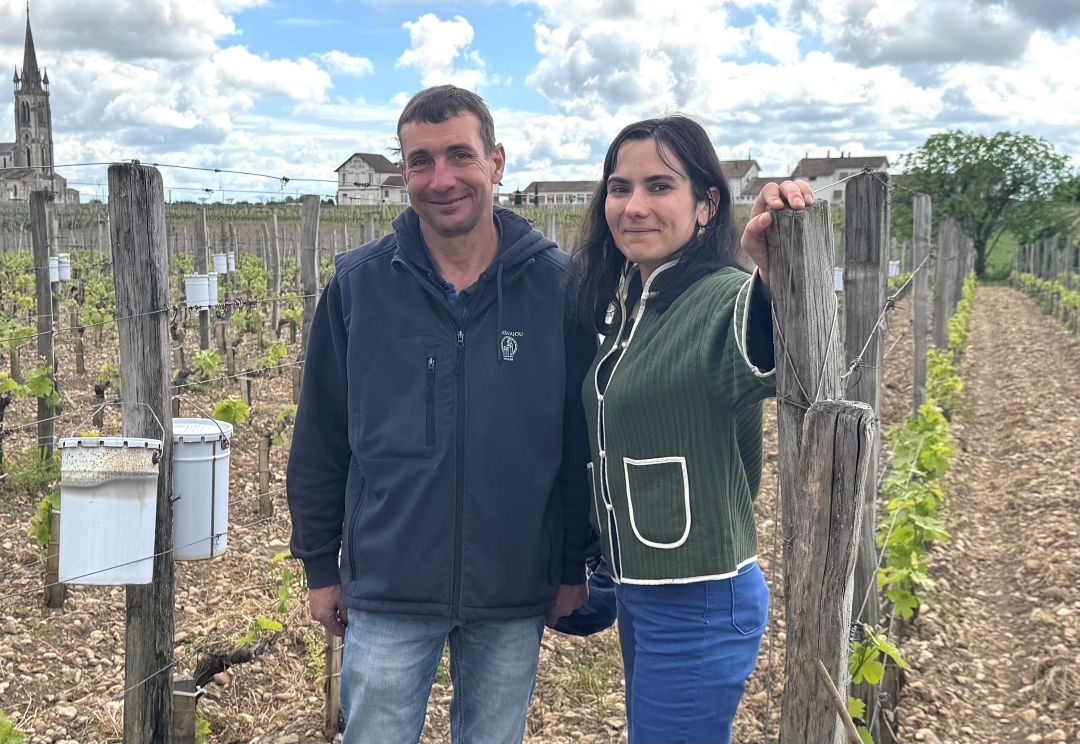
Longtime Technical Director Olivier Gautrat and Noëmie Durantou presented a stellar range of 2025s at L'Eglise-Clinet.
The State of the Market: Life’s Not Fair
In a perfect world, I would much prefer not to comment on the market at all. The wines should really stand (or not) on their own. But that is impossible in Bordeaux, where any discussion of the wines inevitably leads to a conversation about the market. After all, the entire point of en primeur is to show wines that will be offered for sale imminently on a coordinated global basis.
Bordeaux badly needs a win. Not just for business, but for overall morale. This campaign has to be a success. For that to happen, the 2025 vintage must be priced in line with 2024. After several years in which bottled wines have been offered at a discount to en primeur, the viability of the entire system is in question. These wines need to be priced attractively to have a chance of selling through. And what I mean by selling through is selling to the end consumer, not to the trade.
“We sold through our entire production en primeur in 2024; 2025 is a better vintage, so it must be priced higher,” a few estate managers told me. Let’s get something out of the way. Forcing trade partners to take their full allocation of wines under threat of losing access to those wines in future vintages is not selling. It’s coercion. Everyone knows those are the rules, and that’s just the way the game has been played. So far. I have no problem with it—everyone is a willing participant in the system. But that is not selling. A wine is sold when it has been bought by the end consumer. The idea that any 2024 Bordeaux has fully sold through to the end consumer is a mirage. Curious readers will find that every 2024 Bordeaux is available for purchase right now.
Some estate managers believe they already discounted 2024 significantly. That may be true, but the wines did not sell, so 2024 prices can’t be considered real prices. A home that is listed at a certain price but never sells is clearly not worth the asking price. I can’t say I am surprised. In my article last year, I posited that many wines would not sell regardless of price. That turns out to have been the case. If 2025 is priced in line with 2024, it will destroy the market for the 2024s. This is undoubtedly true, but it is also something that is going to happen anyway, sooner or later.
Proprietors will say that production is abnormally low and that the market can absorb higher prices, given small volumes. That may be true for a few estates, no more than five. Of course, every property thinks it is one of the five. For virtually every other château, anything more than a modest single-digit increase is a risky proposition.
I don’t say the above to be negative. The best 2025s are tremendous, some of the best wines I have ever tasted. But the market is the market. The world is in a very delicate place today. There is no getting around that. Readers of this publication are undoubtedly well versed in the headwinds facing the wine industry. Some of these include changing consumption patterns, overproduction in some regions, excessively high prices in other areas, egregious restaurant markups, a weak US dollar vis-à-vis the euro, uncertainty over tariffs and the increasing amount of quality, stored wine available at auction. Moreover, the overall quality of wine in Bordeaux (and around the world) has gone through the roof. I was reminded of this when I tasted a vertical of the last ten vintages at La Conseillante. That timespan includes 2025, 2022, 2020, 2019, 2018 and 2016, all exceptional vintages. The just-bottled 2024, 2023, 2021 and 2017 are lighter vintages, but they are far from what would have been considered “off-vintages” in previous generations. In short, Bordeaux turns out large volumes of very good to outstanding to profound wines in many years.
As if that were not enough, armed conflicts around the world have added another extremely concerning layer of uncertainty, so much so that even sectors that had previously appeared to be relatively protected from these issues—such as luxury goods companies—have recently missed sales targets. Buying a wine today that you won’t receive for two years requires a measure of optimism about the future. For many consumers, it’s hard to be optimistic right now.
Bordeaux still suffers from a somewhat tarnished image linked to a handful of very expensive wines. Today, that is much less the case than it once was. The reality is that in today’s market, Bordeaux often offers exceptional value, starting with appellations like Haut-Médoc, Fronsac and Côtes de Bordeaux that are at times passed over, to wines from more famous appellations that are simply not that well known. It’s hard to beat Bordeaux when it comes to fine ageworthy wines that can be had for modest sums.
Under different circumstances, the 2025s could probably be priced higher. But not today. Not now. Sometimes life is not fair.
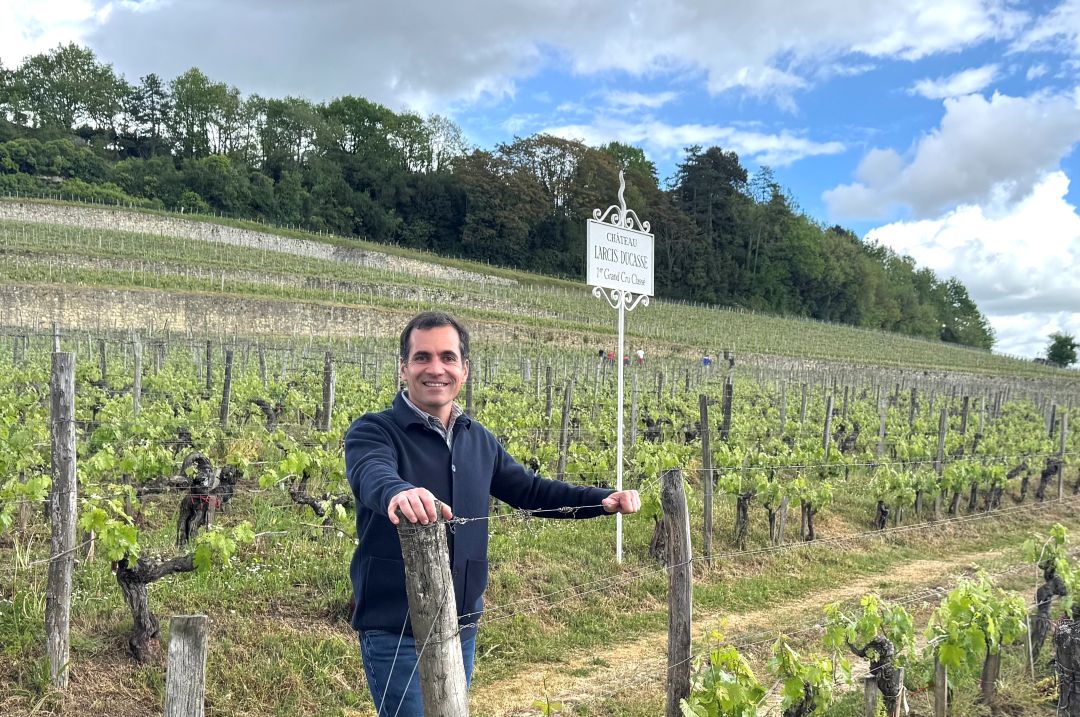
Technical Director David Suire at Larcis Ducasse.
Bordeaux’s Under-the-Radar Gems
These are some of my favorite overachievers of the year, wines I would be thrilled to own that offer exceptional quality, character and value.
Belgrave
Cantemerle
Clos Saint-Julien
Fonbadet
La Lagune
Larcis Ducasse
Le Pin Beausoleil
L'If
La Sirène de Giscours
Montlandrie
Pressac
Sociando Mallet
I tasted all the wines in this report in Bordeaux in April 2026.
© 2026, Vinous. No portion of this article may be copied, shared or redistributed without prior consent from Vinous. Doing so is not only a violation of our copyright but also threatens the survival of independent wine criticism.
You Might Also Enjoy
2023 Bordeaux: Signed, Sealed, Delivered, Antonio Galloni, March 2026
Bordeaux 2023 in Bottle: Coming Around Again, Neal Martin, February 2026
Event Horizon: Bordeaux 2024 Primeur, Neal Martin, May 2025
2024 Bordeaux En Primeur: The Razor’s Edge, Antonio Galloni, April 2025
A Place Beyond Praise: Bordeaux 2022, Neal Martin, February 2025
2022 Bordeaux in Bottle: Living in the Present, Antonio Galloni, January 2025
Show all the wines (sorted by score)
- Adaugusta
- Alcée
- Angélus
- Arnaud
- Ausone
- Badette
- Balestard La Tonnelle
- Barde-Haut
- Bastienne
- Bastor-Lamontagne
- Batailley
- Beaumont
- Beauregard
- Beau-Séjour Bécot
- Beau-Site
- Bel-Air (Lussac Saint-Émilion)
- Bélair-Monange
- Bel-Air (Pomerol)
- Belgrave
- Bellefont-Belcier
- Bellegrave
- Bellevue (Lussac-Saint-Émilion)
- Bellevue (Saint-Émilion)
- Berliquet
- Bertineau Saint-Vincent
- Beychevelle
- Biston-Brillette
- Bonalgue
- Bonnat
- Bourgie
- Bourgneuf
- Bouscaut
- Boutisse
- Branaire-Ducru
- Branas Grand Poujeaux
- Brane-Cantenac
- Broustet
- Brown
- Cadet-Bon
- Calicem
- Callac
- Calon Ségur
- Canon
- Canon La Gaffelière
- Canon Pécresse
- Cantelys
- Cantemerle
- Cantenac Brown
- Cantin
- Capbern
- Cap de Faugères
- Cap de Mourlin
- Capet-Guillier
- Cap St. George
- Carbonnieux
- Carlmagnus
- Cartillon
- Castera
- Cerons
- Certan de May
- Chantegrive
- Chasse-Spleen
- Château Beauséjour JDL
- Château Margaux
- Château Pauillac
- Chatelet
- Chauvin
- Cheval Blanc
- Citran
- Clarisse
- Claud-Bellevue
- Clerc Milon
- Clinet
- Clos Albus
- Clos Badon-Thunevin
- Clos Beauregard
- Clos Bertineau
- Clos de la Molénie
- Clos de la Vieille Église
- Clos de l'Oratoire
- Clos de Sarpe
- Clos des Jacobins
- Clos des Lunes
- Clos Dubreuil
- Clos du Clocher
- Clos du Marquis
- Clos du Roy
- Closerie Vitis Arbor
- Clos Floridène
- Clos Fourtet
- Clos Haut-Peyraguey
- Clos Lardière
- Clos L'Église
- Clos Lunelles
- Clos Manou
- Clos Marsalette
- Clos Puy Arnaud
- Clos René
- Clos Romanile
- Clos Saint-Julien
- Clos Saint-Martin
- Clos Saint-Vincent
- Corbin
- Cos d'Estournel
- Cos Labory
- Côte de Baleau
- Coufran
- Couhins
- Couhins-Lurton
- Coutet
- Croix Cardinale
- Croix de Labrie
- Croix de Rambeau
- d'Agassac
- d'Aiguilhe
- Dalem
- d'Angludet
- d'Armailhac
- Dassault
- Daugay
- Dauzac
- de Camensac
- de Candale
- de Carles
- de Chambrun
- de Clotte
- de Fonbel
- de France
- de la Huste
- de Lamarque
- de Malleret
- de Pez
- de Pressac
- de Saint-Pey
- de Sales
- Desmirail
- de Sours
- Destieux
- de Viaud
- Deyrem Valentin
- d'Issan
- Doisy-Daëne
- Doisy-Védrines
- Domaine de Cambes
- Domaine de Chevalier
- Domaine de Compostelle
- Domaine de Gachet
- Domaine de la Solitude
- Domaine de l'Aurage
- Domaine de L'Eglise
- Domaine des Gourdins
- Domaine des Verdots
- Domaines des Sabines
- Domaine Simon Blanchard
- Domaine Virginie Thunevin
- Dourthe
- du Courlat
- Ducru-Beaucaillou
- du Glana
- Duhart-Milon
- du Paradis
- Durfort-Vivens
- du Tertre
- Enclos Tourmaline
- Faizeau
- Faugères
- Fayat
- Ferran
- Ferrande
- Ferrière
- Feytit-Clinet
- Figeac
- Fleur Cardinale
- Fombrauge
- Fonbadet
- Fonplégade
- Fonroque
- Fontenil
- Fourcas Dupré
- Fourcas Hosten
- Franc La Rose
- Franc Lartigue
- Franc Le Maine
- Franc Mayne
- Garraud
- Gazin
- German Marbuzet
- Giscours
- Gloria
- Grand Barrail Lamarzelle Figeac
- Grand Corbin Despagne
- Grand Destieu
- Grand Mayne
- Grand-Puy Ducasse
- Grand-Puy-Lacoste
- Grand Village
- Greysac
- Grissac
- Gruaud Larose
- Guadet
- Guillot Clauzel
- Guiraud
- Haut-Bages Libéral
- Haut-Bages Monpelou
- Haut-Bailly
- Haut-Batailley
- Haut-Beauséjour
- Haut-Brion
- Haut-Condissas
- Haut Gros Caillou
- Haut-Madrac
- Haut-Maillet
- Haut-Marbuzet
- Haut-Meyreau
- Haut Rocher
- Haut Selve
- Haut-Simard
- Haut Surget
- Haut-Surget
- Haut-Veyrac
- Hosanna
- Hostens-Picant
- Hyon La Fleur
- JCP Maltus
- JCP Maltus - Teyssier
- Jean Faure
- Joanin Bécot
- Koor
- Labégorce
- La Brande
- La Cabanne
- La Chénade
- La Clémence
- La Clotte
- La Comedie
- La Commanderie
- La Confession
- La Conseillante
- Lacoste-Borie
- La Cote-Milon
- La Cour d'Argent
- La Couronne
- La Couspaude
- La Création
- La Croix Bellevue
- La Croix des Moines
- La Croix du Casse
- La Croix Lartigue
- La Croix St. Georges
- La Croix Younan
- La Dauphine
- La Dominique
- Lafaurie-Peyraguey
- Laffitte-Carcasset
- Lafite Rothschild
- Lafleur
- La Fleur
- La Fleur de Boüard
- Lafleur-Gazin
- La Fleur-Pétrus
- La Fleur Saint-Bonnet
- Lafon La Tuilerie
- Lafon-Rochet
- Lafont Fourcat
- La Fortune
- La Gaffelière
- La Garde
- Lagrange (Pomerol)
- Lagrange (Saint-Julien)
- Lagrave-Martillac
- La Gurgue
- La Lagune
- La Louvière
- La Marzelle
- L'Ambroisie
- La Mission Haut-Brion
- La Mondotte
- Lamothe-Bergeron
- La Mouline
- L'Amour
- Langoa-Barton
- Laniote Saint-Émilion
- La Papeterie
- La Patache
- La Pointe
- La Prade
- Larcis Ducasse
- La Rivière
- Larmande
- Laroque
- La Rose Bigaroux
- Larose Perganson
- La Rose Perrière
- La Rose Pourret
- Larose Trintaudon
- La Rousselle
- Laroze
- Larrivaux
- Larrivet Haut-Brion
- Lascombes
- La Serre
- Latour
- Latour à Pomerol
- La Tour Carnet
- La Tour de By
- La Tour de Mons
- La Tour Figeac
- Latour-Martillac
- Laujac
- Laurence
- Laussac
- La Vieille Croix
- La Vieille Cure
- La Violette
- La Voûte
- Le Bon Pasteur
- Le Boscq
- Le Calvaire
- Le Chemin
- Le Clos du Beau-Père
- Le Conte
- Le Coteau
- Le Crock
- Lécuyer
- L'Eden
- Le Doyenné
- Le Gay
- L'Eglise-Clinet
- L'Enclos
- Léoville Barton
- Léoville Las Cases
- Léoville-Poyferré
- L'Eperon
- Le Piat
- Le Pin
- Le Pin Beausoleil
- Le Prieuré
- Les Carmes Haut-Brion
- Les Champs Libres
- Les Charmes-Godard
- Les Combes
- Les Cruzelles
- Les Gravières
- Les Hauts-Conseillants
- Lespault-Martillac
- Lestage Simon
- Les Trois Croix
- Le Thil
- L'Évangile
- Leydet Valentin
- L'Hêtre
- L'If
- Lilian Ladouys
- L'Insouciance
- L'Isle Fort
- Liversan
- Loudenne Le Château
- Louis
- Lucia
- Lusseau
- Lynch-Bages
- Lynch-Moussas
- Lynsolence
- Magnan La Gaffeliere
- Magnol
- Maine Chaigneau
- Malartic-Lagravière
- Malescot St. Exupéry
- Mangot
- Marjosse
- Marquis d'Alesme
- Marquis de Terme
- Marsau
- Maucaillou
- Mauvesin Barton
- Mauvinon
- Mazeyres
- Meyney
- Milens
- Monbousquet
- Monbrison
- Moncets
- Mondesir-Gazin
- Monlot
- Monregard La Croix
- Montlabert
- Montlandrie
- Montlisse
- Mont-Pérat
- Montrose
- Montviel
- Moulin du Cadet
- Moulinet
- Moulin Eyquem
- Moulin Haut-Laroque
- Moulin Riche
- Moulin Saint-Georges
- Mouton Rothschild
- Négrit
- Nenin
- No. 1 Saint Cernin
- Olivier
- Ormeau
- Ormes de Pez
- Pabus
- Palais Cardinal
- Palmer
- Pape Clément
- Passe Craby
- Patache d'Aux
- Paveil de Luze
- Pavie
- Pavie-Macquin
- Péby Faugères
- Pédesclaux
- Perabon
- Petit Faurie de Soutard
- Petit Fombrauge
- Petit Gravet Ainé
- Petit-Village
- Petrus
- Pey La Tour
- Peymouton
- Phélan Ségur
- Pichon Baron
- Pichon-Longueville Comtesse de Lalande
- Picoron
- Picque Caillou
- Pierhem
- Pierre 1er
- Pin-Franc
- Plain Point
- Plincette
- Poesia
- Pontet Bayard
- Pontet-Canet
- Porte Chic
- Potensac
- Poujeaux
- Preuillac
- Prieuré-Lichine
- Puybarbe
- Puyblanquet
- Puyfromage
- Puygueraud
- Quinault L'Enclos
- Quintus
- Rahoul
- Rauzan Gassies
- Rauzan-Ségla
- Rayne-Vigneau
- Reignac
- Renon
- Reynon
- Reysson
- Ricaud
- Ripeau
- Roc de Bécot
- Roc de Calon
- Roc de Cambes
- Roc de Montpezat
- Rollan de By
- Rol Valentin
- Ronan by Clinet
- Roquefort
- Roudier
- Rouget
- Roylland
- Saamlong
- Sacré Cœur
- Saintayme
- Saint Georges
- Saint Georges (Côte Pavie)
- Saint-Pierre (Pomerol)
- Saint-Pierre (Saint-Julien)
- Samion
- Sanctus
- Sansonnet
- Seguin
- Séraphine
- Siaurac
- Simard
- Siran
- Smith Haut Lafitte
- Sociando-Mallet
- Soutard
- Soutard-Cadet
- Suduiraut
- Talbot
- Tayac
- Tertre Roteboeuf
- Tessendey
- Toumalin
- Tour Bayard
- Tour de Capet
- Tour de Pez
- Tour des Termes
- Tour Maillet
- Tour Saint Christophe
- Touzinat Prieuré
- Treytins
- Trianon
- Trigant
- Trocard
- Troplong Mondot
- Trotanoy
- Trotte Vieille
- Tutiac
- Vaisinerie
- Valandraud
- Valois
- Vieux Château Certan
- Vieux Château Saint-André
- Vieux Maillet
- Vieux Moulin de Cadet
- Villa Bel-Air
- Villemaurine
- Vray Croix de Gay