
Browse using the new Vinous website now. Launch →
Printed by, and for the sole use of . All rights reserved © 2015 Vinous Media
BY ANTONIO GALLONI | JULY 6, 2026
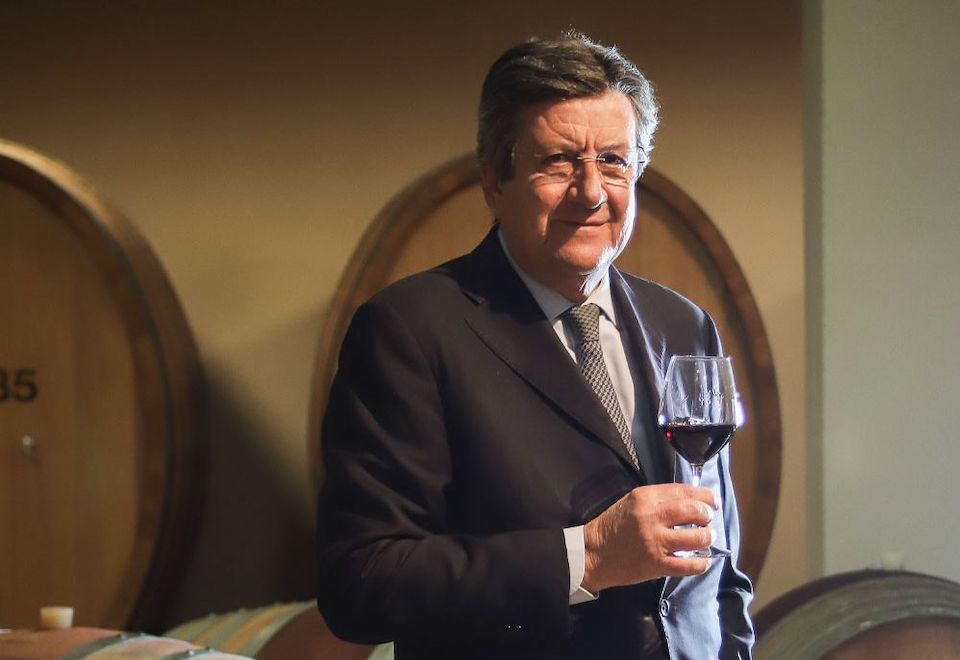
The wine world lost a true giant when Franco Bernabei passed away at 73 years of age on July 2. Bernabei was one of the handful of consultants in the late 1970s and early 1980s who brought contemporary best practices in winemaking to Tuscany and helped catapult Italian wines onto the global stage. He was an avid proponent of the virtues of Sangiovese at a time when few believed in its potential.
A native of Padova, Franco Bernabei established his winemaking roots in Tuscany and later established the Enoproject laboratory with his wife, Daniela, which is now run by their son, Matteo. Bernabei began working with Selvapiana, his first consulting client, in 1978 and had an immediate impact. A year later, Bernabei added the Manetti family at Fontodi to his growing roster of clients. Fèlsina followed shortly thereafter. Amazingly, Bernabei maintained these professional relationships until his passing, multi-decade tenures that are unheard of in today’s world.
It was a seminal moment for Tuscany, an era that saw the creation of so many wines that would go on to become icons. Selvapiana bottled their first Chianti Rùfina Vigneto Bucerchiale in 1979. Fontodi followed with Flaccianello in 1981 and then single-vineyard Vigna del Sorbo in 1985. Fèlsina debuted their Chianti Classico Riserva Rancia and Fontalloro with the 1983 vintage.
Many other estates created groundbreaking wines around the same time, including Montevertine Le Pergole Torte (1977), Antinori Solaia (1978), Castellare I Sodi di San Niccolò (1979), Isole e Olena Cepparello (1980), Castello di Ama La Casuccia, Bellavista and Apparita (1982, 1985 and 1985) and San Giusto a Rentennano Percarlo (1983). They followed on the heels of wines such as Antinori’s Tignanello (1971) and Castello di Monsanto’s Il Poggio (1962) that had previously set the stage for what became a major explosion of quality in the 1980s. Franco Bernabei and his contemporaries led this movement, elevating the perception of Tuscany reds away from quaffers served in a straw-covered bottles to serious, world-class wines. All of this happened as the baby boomers began to discover quality wines and became the economic driver for the wine industry.
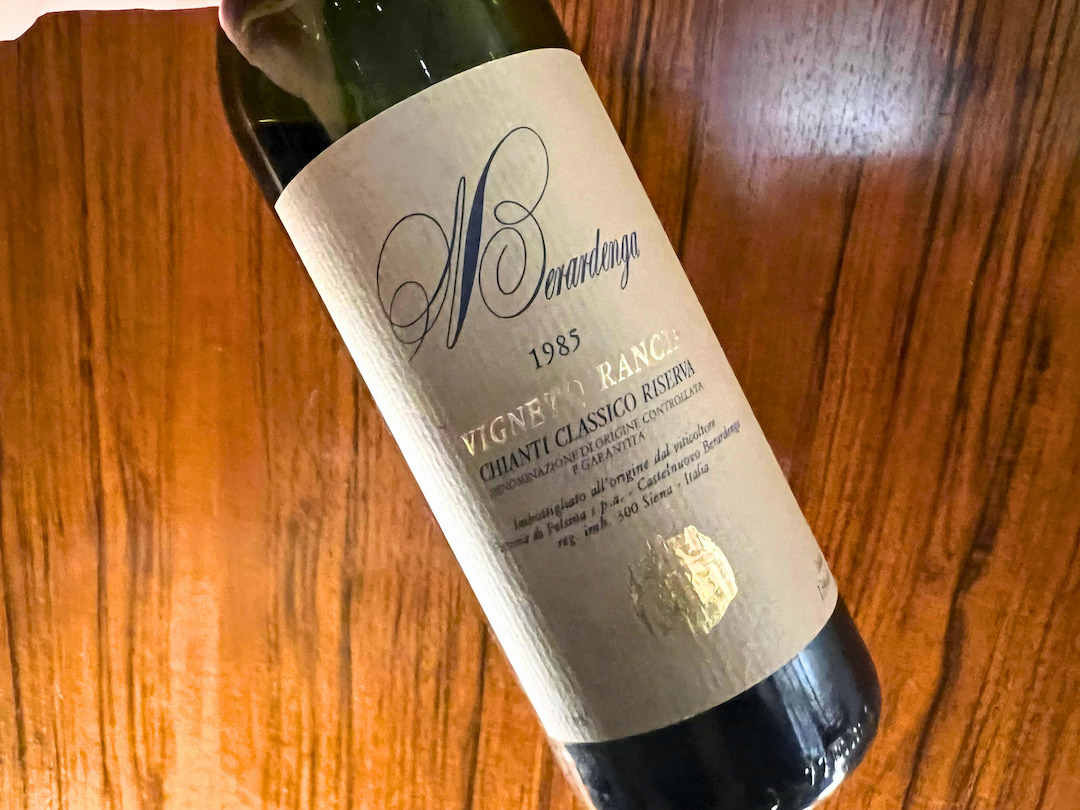
By the mid-1980s, with a few vintages under their belts, Fontodi’s Flaccianello and Fèlsina’s Rancia played a critical role in changing the course of Italian wine by showcasing the potential of Sangiovese farmed and vinified with true care and intention, at a time when Sangiovese was considered a second-class grape by global standards. These wines and their peers laid the foundation for what became Chianti Classico Gran Selezione decades later. Fontodi’s Vigna del Sorbo took longer to find its spotlight, but in my opinion, it was never a lesser wine than its more famous sibling.
Franco Bernabei was often a fixture of my tastings at his client estates, especially Fèlsina. Imposing in his physical presence and always impeccably dressed, Bernabei spoke with a mixture of confidence, passion and humor, all shaped by a strong accent that belied his Veneto origins and gravelly inflections from decades of smoking. One of my most vivid memories is a complete vertical of Fèlsina’s Chianti Classico Riserva Rancia in 2012 for my report, Staring into the Heart of Sangiovese. I had always been attracted to Fèlsina and Chianti Classico in general because of the wines’ extraordinary ability to age. A week of vertical tastings, and that vertical in particular, helped further cement these concepts. A few days later, Bernabei sent me a complete laboratory analysis for each of the wines, a level of detail that was simply remarkable for that time.
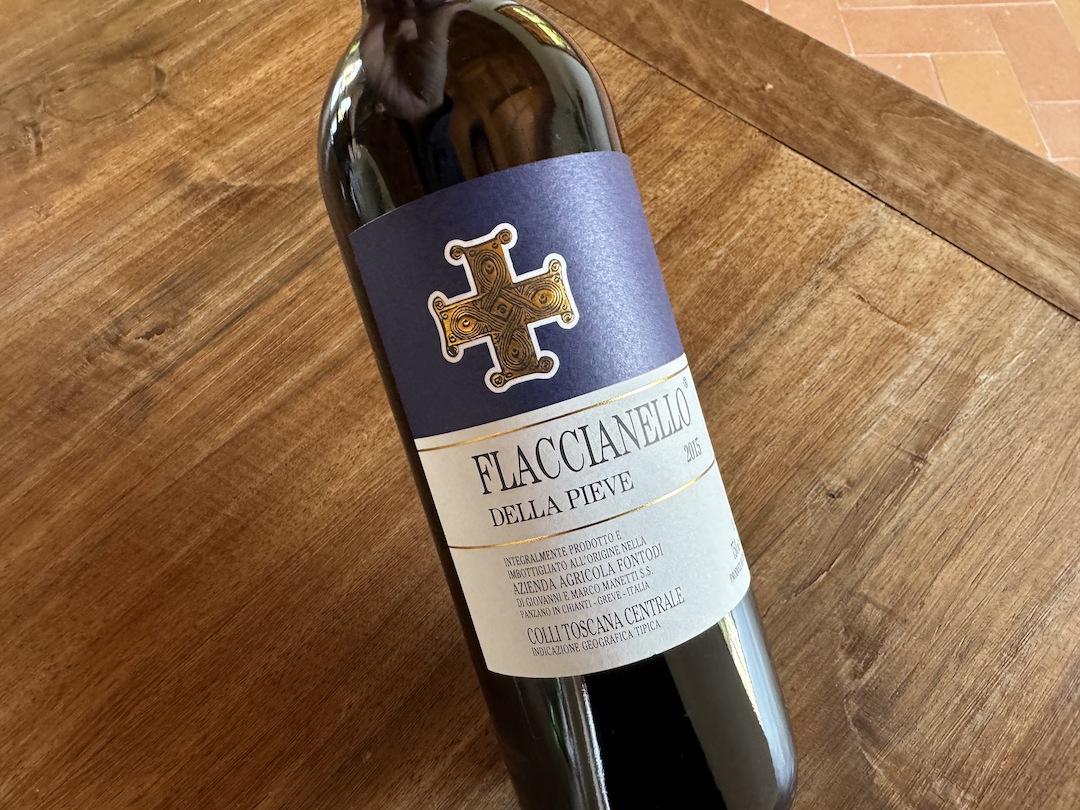
“Franco was my great teacher,” explained Giovanni Manetti, who joined Fontodi at just 16 years old. At that time, the Manettis were beginning to expand from the historical ceramic and tile business that remains a central part of their commercial interests. “I learned to taste from Franco, I learned to make wine from him. Naturally I had a different background, I had studied different things in school, but Franco taught me everything. In 47 years of working together, we never had an argument, which is quite remarkable given our completely opposite personalities.”
“My uncle, Giuseppe Mazzocolin, was running the winery,” proprietor Giovanni Poggiali recently told me at Fèlsina. “He had a humanist background and spent a lot of time in the intellectual circles of the day. Luigi Veronelli organized the first presentation of French oak barriques in Italy in the late 1970s. There, my uncle met Franco Bernabei. They formed an instant bond through their shared Veneto roots. Bernabei began working with us right away. In 1983, my uncle and Bernabei presented the project for Rancia and Fontalloro to my grandfather and father, and that was the beginning of our contemporary history.”
As much as Franco Bernabei influenced the estates he worked with, Bernabei also influenced all of those around him through his unwavering standard of excellence. He will be sorely missed.
All of us at Vinous extend our deepest condolences to the Bernabei family.
© 2026, Vinous. No portion of this article may be copied, shared or redistributed without prior consent from Vinous. Doing so is not only a violation of our copyright but also threatens the survival of independent wine criticism.
You Might Also Enjoy
Staring into the Heart of Sangiovese, Antonio Galloni, June 2012
Fontodi: Chianti Classico Riserva Vigna del Sorbo 1985-2010, Antonio Galloni, February 2014