
Browse using the new Vinous website now. Launch →
Printed by, and for the sole use of . All rights reserved © 2015 Vinous Media
Tuscany’s Quintessential Underdogs
BY ERIC GUIDO | APRIL 21, 2026
Condensing all of Tuscany into a single report is nearly impossible without sacrificing detail. While other Italian regions might allow for a generalized assessment of terroir, Tuscany requires a far more nuanced approach, which is why we offer annual coverage of Brunello di Montalcino, Chianti Classico, Nobile di Montepulciano and Coastal Tuscany in separate reports throughout the year. This article focuses on hundreds of other wines from smaller appellations that are just as notable.
Of the hundreds of wines I tasted for this report, a significant portion are labeled as IGT Toscana. These wines often originate from terroirs that have yet to be fully understood and quantified, such as the massive and varied Val d’Orcia, or the high-elevation slopes of Mount Amiata, which has become a hotbed for experimental projects. Be they young winemakers tending old vines with limited production, or multi-generational families that are finally expanding to a broader audience, producers in the smaller towns and subregions of Tuscany deserve attention. Some of these areas have actually benefited from climate change, and the untapped potential here is truly astonishing.
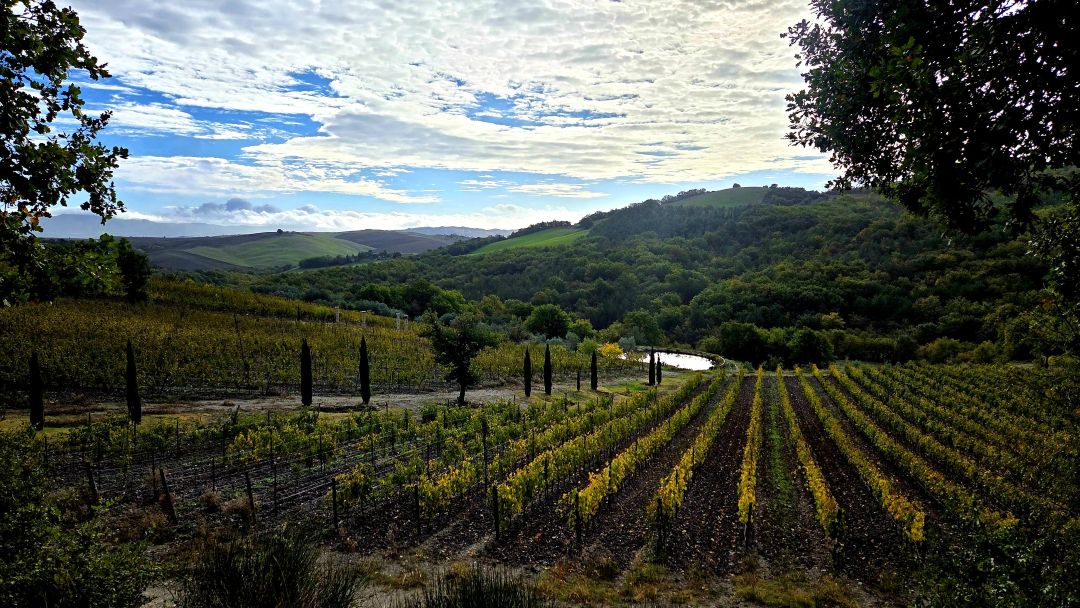
Vineyards in the vast Orcia Valley, which has pockets of terroir capable of turning out top-flight wines.
While this report focuses on a broad mix of different terroirs and varieties, I consider it one of the most important pieces I write each year. Without a highly regarded DOC or DOCG, or the branding of a big name like Brunello or Montepulciano to emblazon on their labels, these producers have to work especially hard to ensure that their wines will live up to consumers’ expectations.
Carmignano: International by Design
Carmignano is one of the most important but underrecognized appellations in Italy. Though Carmignano is geographically small, production here makes up a significant portion of Tuscany’s output year after year. Carmignano stands out from the rest of the region for its historical tendency to blend Sangiovese with Bordeaux varieties. While much of the modern Tuscan movement has pushed toward single-variety Sangioveses, producers in Carmignano continue to blend Sangiovese with 10-20% Cabernet Sauvignon or Cabernet Franc, and to a lesser extent, Merlot, just as they have for centuries.
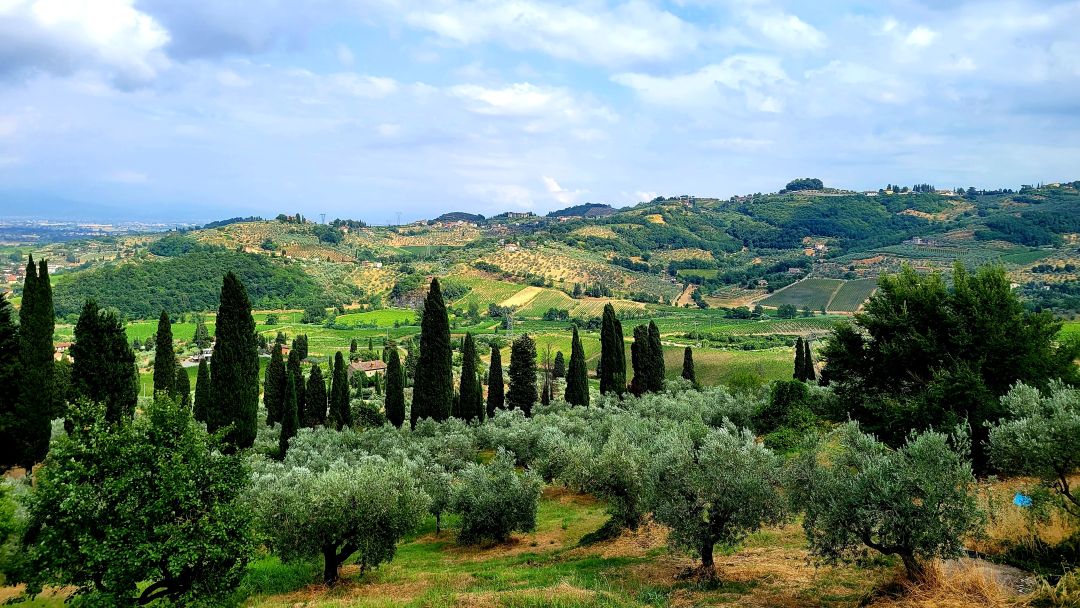
The view of Carmignano from Capezzana.
This is not a new "international" trend; Cabernet Sauvignon has a documented 500-year history in these soils. Occupying the eastern hills of Monte Albano northwest of Florence, Carmignano includes a secluded, bowl-shaped valley. The hills of Monte Albano and the Apennines form its western and eastern borders, respectively, blocking warming air currents from the Tyrrhenian Sea. This creates a unique microclimate where the more exposed low elevations (53 to 400 meters) are offset by unusually cool nights. Thick forest outcroppings surround the vineyards and further moderate the dry, sun-soaked summer days. The undulating hills are a lush green even during the warmest times of year.
This terroir yields rich, fruit-forward reds elevated by limestone-infused minerality, vibrant acidity and regal tannins. Recent vertical tastings at Piaggia and Tenuta di Capezzana demonstrated that these wines possess incredible aging potential, often maturing effortlessly for over two decades. Carmignano produces world-class Merlot, as evidenced by monovarietal bottlings from producers like Colline San Biagio and Fabrizio Pratesi.
Each year, I am more and more impressed by the steady rise in quality in Carmignano, driven by a tight-knit group of producers who reflect a truly collaborative spirit.
Montecucco: Too Big for its Britches
Montecucco has made a lot of progress over the last several years, but its immense potential is still largely unrealized. Montecucco acts as a natural land bridge between the southern reaches of Montalcino and the coastal Maremma. This positioning creates an incredibly diverse terroir with drastic changes in elevation throughout its 965 square kilometers. In the southwest, near the coast, fractured sandstone and maritime influences yield ripe, juicy, Mediterranean-styled wines. Vermentino excels here for that very reason, though the quality of Montecucco Sangiovese is less consistent.
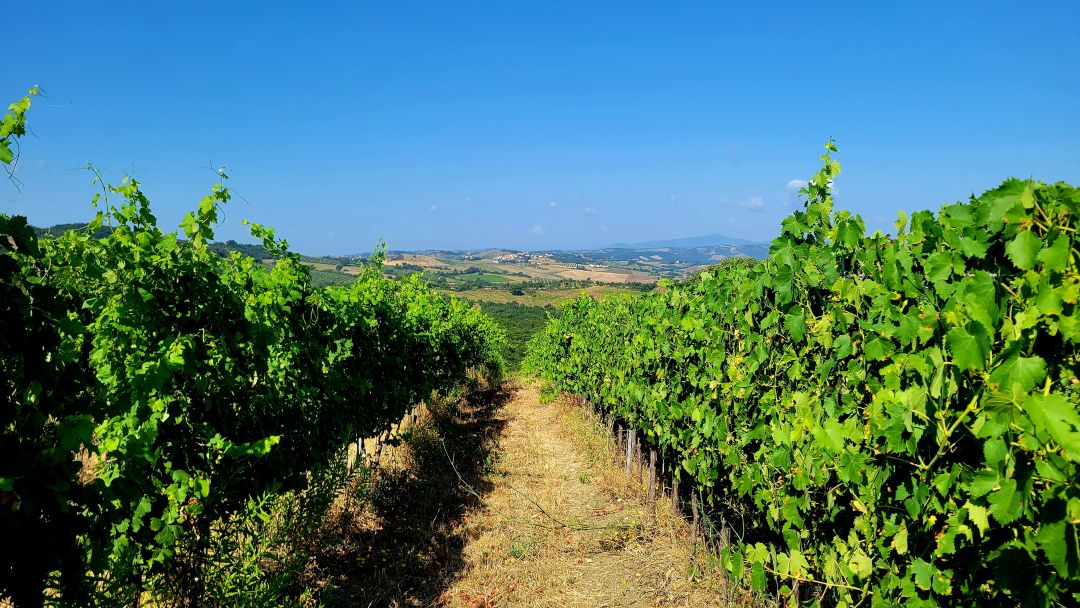
Vineyards in Montecucco, looking toward the Tuscan coast.
However, Montecucco’s northeast border with Montalcino is full of potential. Here, Mount Amiata's volcanic influence defines the landscape. As elevations rise toward 500 meters, the soils shift to a complex mix of red clay, loam and limestone. Producers such as ColleMassari, Basile and Salustri are leading a quality revolution, focusing on the Montecucco Sangiovese DOCG. I hope to see more estates following their lead. Sangiovese here is richer and bolder than in Montalcino, characterized by dark fruit, savory spice and a distinctively dusty tannic structure. Montecucco Rosso, for which producers blend Sangiovese with international varieties, is often rounder, earlier-drinking and more approachable.
The Ascent of Mount Amiata
The most exciting development in Southern Tuscany is the move toward the higher slopes of Mount Amiata. As warming trends continue to impact the lower valleys, winemakers are looking to elevations between 600 and 800 meters to derive tension and finesse. The conditions at these heights, marked by limestone, Flysch marls and volcanic sands, are ideal for mineral-driven Sangioveses with high-toned acidity.
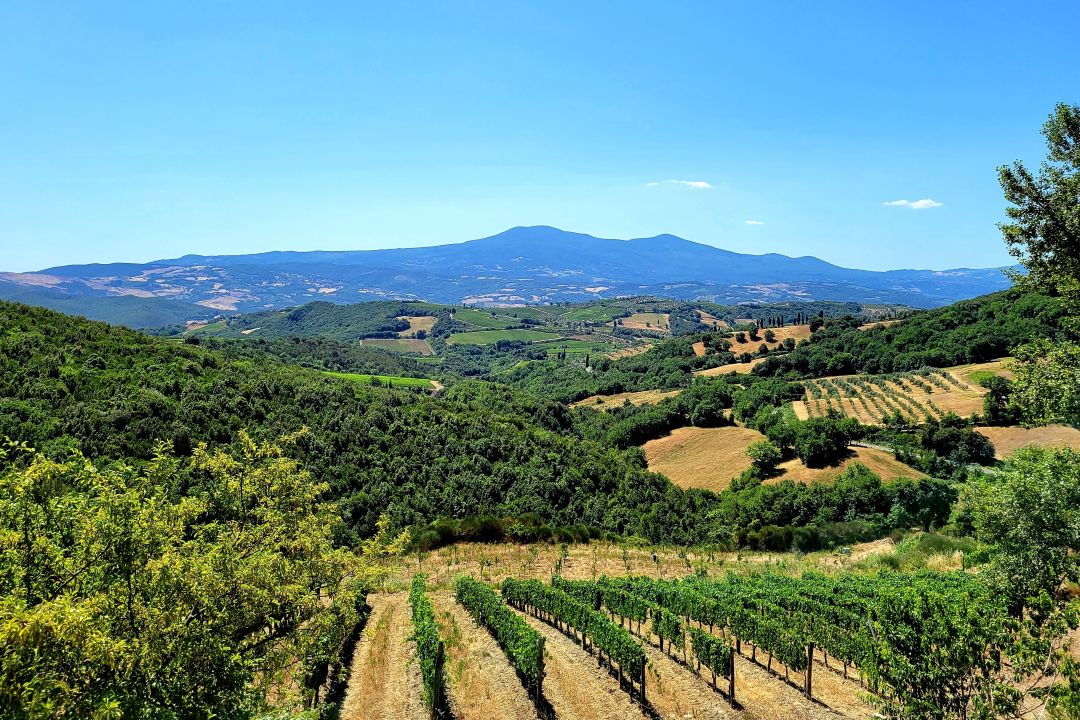
Mount Amiata looms large in the distance, as seen from Montalcino.
Producers throughout Montalcino, Val d'Orcia and Montecucco are paying close attention to the select few who have planted stakes on Mount Amiata. While current DOC rules often limit these high-altitude plantings to IGT Toscana status, the work of pioneers like Sebastian Nasello of Bakkanali is proving that Mount Amiata may be the next great frontier for Tuscan viticulture.
Cortona: A Taste of the Rhône
The hilltop town of Cortona and its surrounding vineyards mark the easternmost appellation in Tuscany. It’s also one of the most unique. Sangiovese may be king everywhere else, but in Cotrona, Syrah takes the spotlight. The Cortona DOC was established in 1999, but according to local legend, the presence of Syrah in the region dates back to the early twentieth century. Then, in the 1970s, Professor Attilio Scienza of the University of Milan conducted soil and climate research that demonstrated the terroir’s close resemblance to the Northern Rhône. Experimental plantings throughout the region confirmed Syrah’s potential, and today it accounts for 80% of plantings in Cortona.
Cortona is unlike anywhere else in Tuscany. The Apennines loom in the distance, and the sun beats down hard on clay-heavy soils laced with silt and sand. One could mistakenly believe they were in a desert region, given the intense daytime heat and large diurnal shifts. The resulting Syrah is dark and brooding, but nowhere near as feral and herbal as examples from the Rhône. A balance of acidity and minerality gives these wines appeal in their youth, though they can mature remarkably well for upwards of 20 years. Recent tastings show a trend toward purity and lift, as producers like Stefano Amerighi, Fabrizio Dionisio and Tenimenti d'Alessandro focus on viticulture to better understand which clones and practices work best.
Recent Vintages
The 2023 vintage proved difficult across Tuscany due to heavy, prolonged spring rains. Sangiovese fell victim to a Peronospora (downy mildew) outbreak, which I’ve detailed ad nauseam throughout the last two years. The 2024 season marked a return to warm, dry summer conditions, moderated by water reserves from the spring. The real challenge of 2024 came in September, when rain disrupted harvest across much of Tuscany. This will be a winemaker's vintage, where timing and skilled vineyard work will inform quality. Most of my tastings focused on the 2022s, which I enjoyed for their richness, and the 2023s, which impressed with their freshness. Both years were successful, with a slight edge to 2023.
I tasted the wines for this report in Tuscany in fall 2025 and in our NYC offices in early 2026.
© 2026, Vinous. No portion of this article may be copied, shared or redistributed without prior consent from Vinous. Doing so is not only a violation of our copyright but also threatens the survival of independent wine criticism.
You Might Also Enjoy
Unearthing Tuscan Gems: Carmignano, Montecucco and Beyond, Eric Guido, March 2025
Carmignano, Montecucco and Tuscany’s Unrivaled Diversity, Eric Guido, March 2024
Touring Tuscany: Carmignano, Montecucco and Beyond, Eric Guido, February 2023
Montepulciano, Carmignano and Montecucco: New Releases, Eric Guido, December 2021
Show all the wines (sorted by score)
- Argiano
- Assolati
- Bakkanali
- Basile
- Bibi Graetz
- Casale Pozzuolo
- Castello del Trebbio
- Castelvecchio di Filippo Rocchi
- ColleMassari
- Colline San Biagio
- Due Sassi
- Fabrizio Dionisio
- Fabrizio Pratesi
- Fattoria Ambra
- Ficomontanino
- Il Borro
- Il Colombaio di Santa Chiara
- Il Palazzo
- La Banditaccia
- La Nascosta
- Le Pianore
- Maciarine
- Marchesi Frescobaldi
- Mormoraia
- Otto Ettari
- Otto Ettari
- Palmoletino
- Parmoleto
- Peteglia
- Petra
- Piaggia
- Pieriniebrugi
- Podere Forte
- Podere Montale
- Poderi Borselli - Asseimani
- Poggio L'Apparita
- Poggio Stenti
- Prato al Pozzo
- Sassolo di Mannelli Antonio
- Stefano Amerighi
- Tenuta Casadei
- Tenuta Castelvecchio
- Tenuta Ceri
- Tenuta di Artimino
- Tenuta di Capezzana
- Tenuta Le Farnete
- Tenuta L'Impostino
- Tenuta Pierazzuoli
- Terra Quercus - F. d'Alessandro
- Villa Patrizia
- Vitabella