
Browse using the new Vinous website now. Launch →
Printed by, and for the sole use of . All rights reserved © 2015 Vinous Media
Mount Etna: The Juggernaut of Italian Wine
BY ERIC GUIDO | SEPTEMBER 10, 2026
Much like the volcano itself, there appears to be no stopping Mount Etna producers and the Consorzio di Tutela dei Vini Etna from codifying and elevating standards across the region. Over the last four years, I have witnessed a determined, unified push to define Etna’s place on the world stage. While regions across the globe question the future of fine wine and tread cautiously, Etna is moving decisively, advancing mapping projects, establishing intuitive MGA and municipal breakdowns, and launching an entirely new category for sparkling wine, all while standing on the precipice of DOCG status. Despite a series of challenging vintages, winemakers on Mount Etna are determined to prove that they belong among the world's elite.
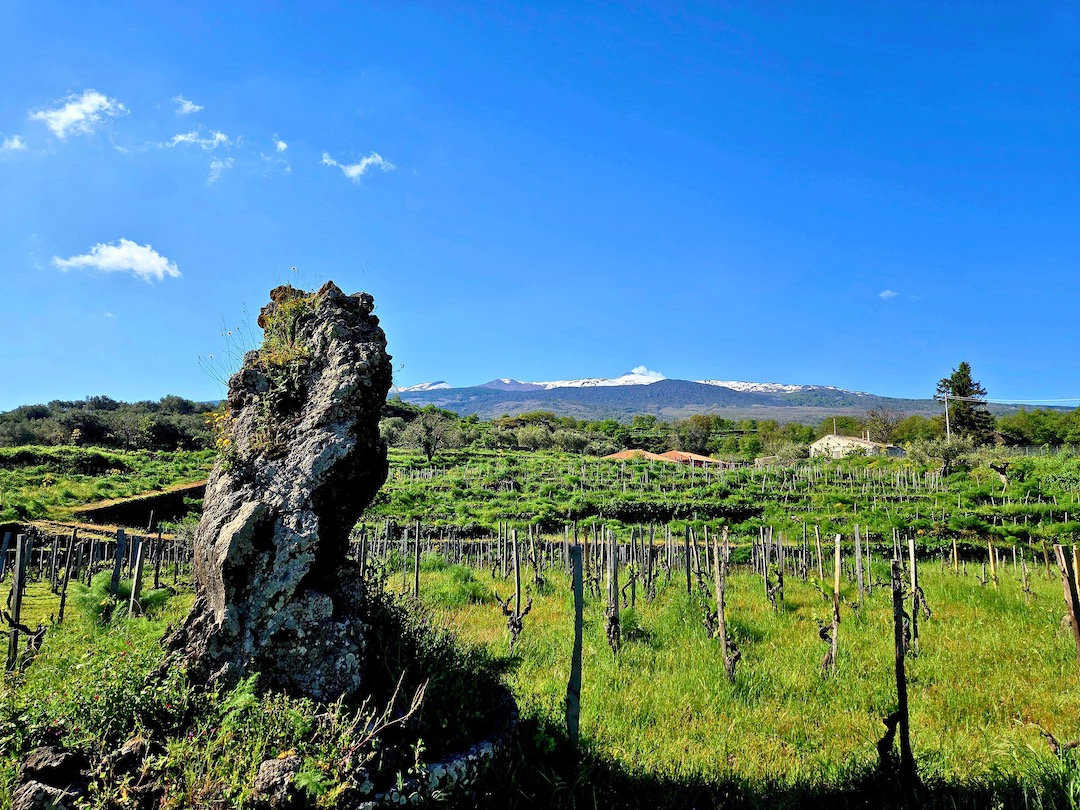
An ancient volcanic cone at the Alice Bonaccorsi winery in Contrada Croce Monaci.
Redefining Etna
Since the very beginning of Etna’s renaissance, the importance of place has been paramount, a foundational focus that immediately set the region up for success. The inclusion of a contrada name on an Etna Rosso or Bianco label signals to consumers that a wine deserves to be considered alongside those from iconic regions like Barolo and Burgundy, both of which built their reputations on detailed terroir classifications and single-vineyard cru designations.
While pioneering estates such as Passopisciaro, Frank Cornelissen, Alberto Graci, Alice Bonaccorsi, Benanti and Barone di Villagrande were all on the ground in the early 2000s and ready to share Etna’s singular terroir with the world, it was Marco de Grazia and his estate, Tenuta delle Terre Nere, that set the benchmark. Drawing on a highly successful career as an exporter who helped define regions like Barolo in international markets, de Grazia arrived on Etna with a strategic approach: leveraging contrade names to highlight site specificity. Coupled with narrative comparisons positioning Nerello Mascalese at the intersection of Pinot Noir and Nebbiolo, these wines took global markets by storm. The move sparked a rush of new investments by producers and established an immediate reliance on contrade designations to sell wine. Suddenly, a standard Etna Rosso, regardless of its actual quality, was considered a lower tier in consumers' minds when compared to a single-contrada bottle. (To be clear, that is not the way most Etna winemakers think of their Etna Rosso; nor should we.)
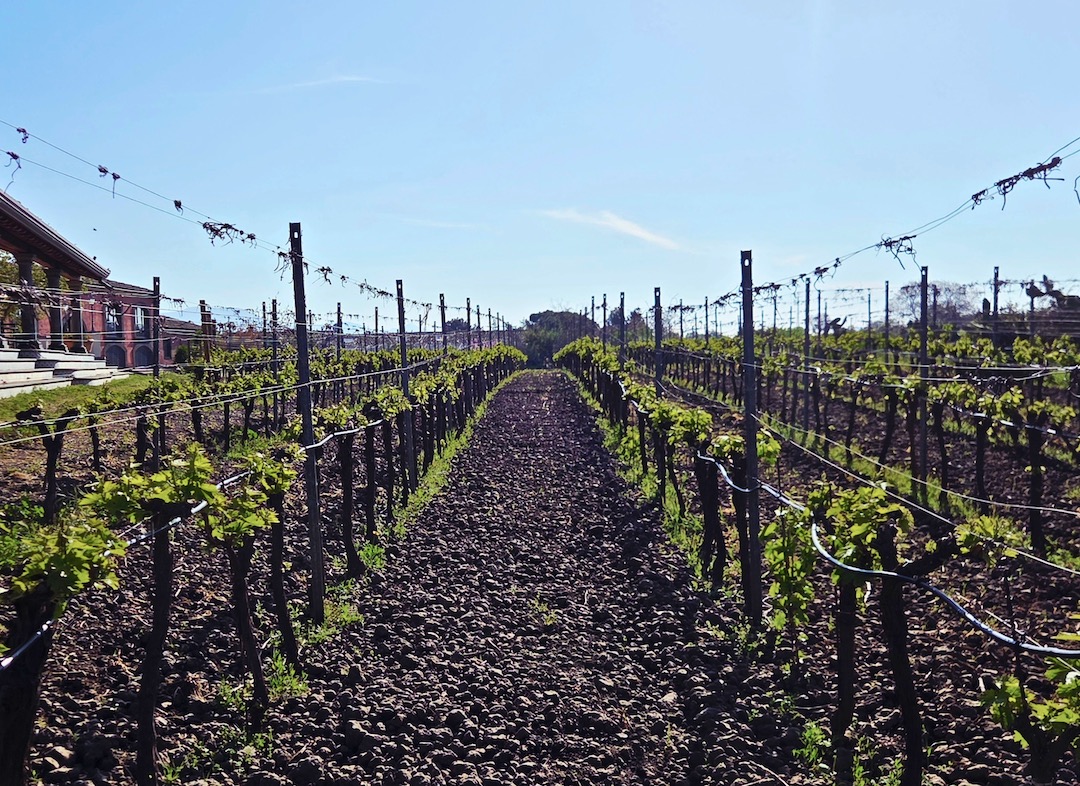
Contrada Calderara Sottana, directly outside of Tenuta delle Terre Nere.
Ironically, it was de Grazia himself who began to recognize the flaws in this framework over the two decades that followed. While a contrada indicates a general geographical area, its boundaries are often far too broad, encompassing vastly distinct terroirs within a single zone. Because Etna was reshaped by millennia of unpredictable volcanic activity, a single contrada can contain untouched ancient soils sitting like islands surrounded by vastly younger flows. Furthermore, in a contrada like Rampante, elevations range from 740 to 1,000 meters, stretching well beyond the DOC's legal limits. Realizing that the original system was an imperfect compromise, de Grazia began advocating for further defining his vineyards through individual parcel designations, while also spearheading the push for official municipal names (comuni) to bring Mount Etna to a level of precision truly comparable to that of Barolo and Burgundy.
Beginning with the 2026 vintage, the inclusion of municipal designations on Etna wines has officially become a reality. The Consorzio di Tutela dei Vini Etna now recognizes ten municipal and township names on front labels, alongside formal MGA (Menzioni Geografiche Aggiuntive) recognition. Consumers will now be able to track wines by their overarching commune — such as Castiglione di Sicilia, Randazzo, or Milo — while simultaneously considering the specific contrada or single vineyard within that municipality. To put the magnitude of this shift into perspective, iconic producers like Passopisciaro, who previously relied on single-letter abbreviations like "R" for Rampante, have already begun adapting their labels to align with this new framework. This marks a truly historic evolution for Mount Etna.
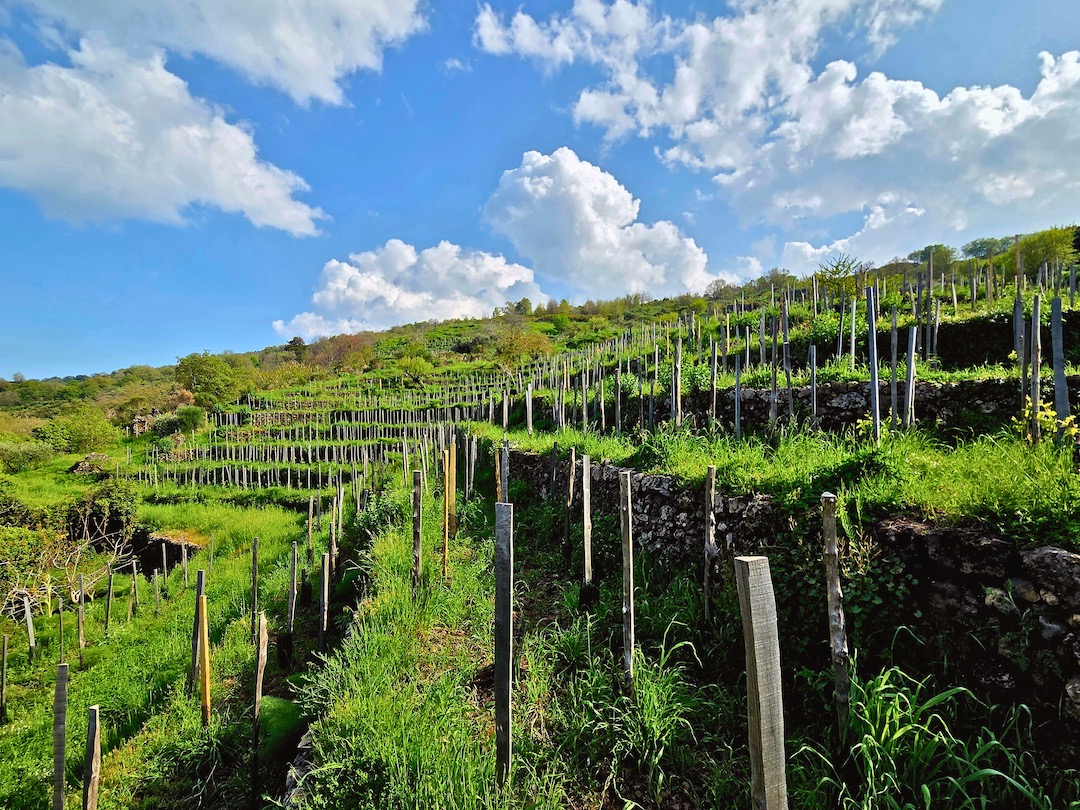
Ancient terraces above the Etna DOC boundaries on the north side of the volcano.
Transcending the Etna DOC
This brings me to the next major milestone in Etna’s history: the ascension from DOC to DOCG status. While not yet officially finalized, approval from Italy’s Ministry of Agriculture is considered imminent, with the new classification expected to take effect for the 2026 or 2027 vintage releases.
I’ll get my only grievance out of the way first. For years, I’ve pointed out that vineyards sitting above 800 meters on Etna's north side (some reaching well past 1,000 meters) yield some of the most compelling wines on the volcano, yet they are forced to carry the humble IGT Terre Siciliane designation simply because they sit outside the legal DOC boundary. Regrettably, this rule remains intact. The primary rationale, as it has been explained to me, is “political caution.” Expanding the appellation boundaries to accommodate higher-elevation sites could establish a precedent that producers in less-desirable flatland areas might then use to argue for their own inclusion. In other words, the concern is less about the merits of the higher sites themselves than about opening a door that could ultimately dilute the appellation.I n the end, it is a compromise, and something I don't foresee changing anytime soon. Top producers like Tenuta Boccarossa, Sciara, Passopisciaro, Frank Cornelissen and Eduardo Torres Acosta (to name just a few) will continue to release many of their top bottlings under the IGT classification.

Husband-and-wife team Michele and Claudia Calabretta of Tenuta Boccarossa in their Fiat 500.
As for what will change with the presumed approval of the DOCG, producers will have to operate under a set of regulations that reduce yields, with Etna Rosso capped at 8.0 tons per hectare and contrada wines dropped to 6.5-7.0 tons per hectare. The new framework also establishes minimum vine-age requirements, setting five to seven years as the baseline for contrada-labeled wines, alongside mandatory cellar aging of two years. Separately, the Consorzio has capped vineyard expansion at just 50 hectares per year for the entire region. Why is this so important? Over the last few years, developers have been planting new vines across more accessible locations, which really means lower elevations, less important sites and far less complex soils. This new restriction forces wineries to look inward instead, encouraging them to restore existing, older, potentially overgrown sites to expand their holdings.
All in all, these new rules will drive quality up across the board. What’s more, producers won’t have a safety net to fall back on. If a wine fails to meet the DOCG regulations, it won't be demoted to Etna DOC. Instead, it will be downgraded straight to IGT Terre Siciliane or generic Vino d'Italia.
Evolving Beyond Rosso and Bianco
The popularity of Mount Etna grew primarily on the back of Etna Rosso, with Etna Bianco Superiore, a classification centered specifically around the town of Milo, gaining tremendous traction over the last few years. Today, however, the talk around the volcano is Etna Spumante. Initially created in 2011, with historic wineries like Benanti starting production as early as 2002, the sparkling category is being updated with new regulations as the broader appellation ascends to DOCG status.
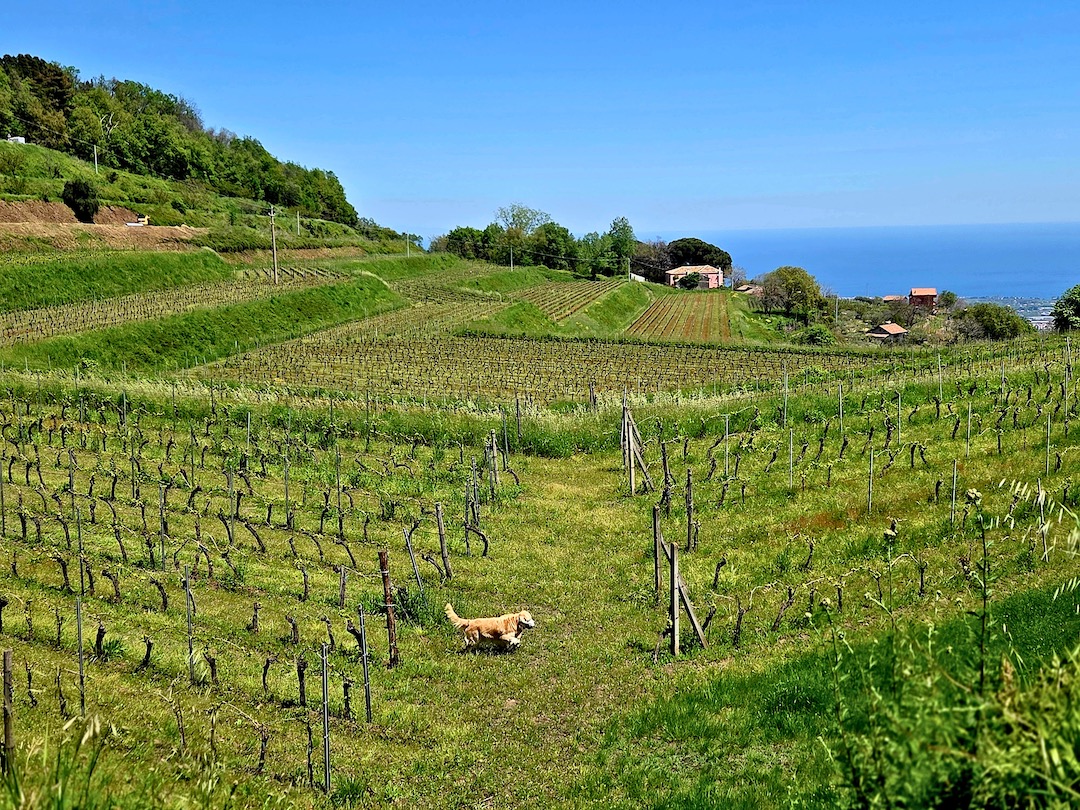
Barone di Villagrande’s Carricante vineyards in the town of Milo.
The most significant of these upgrades is the allowance of Carricante for Metodo Classico sparkling wine. Up until now, a white Etna Spumante was restricted to Blanc de Noir made from Nerello Mascalese; any white made from Carricante was bottled as IGT. What’s more, only Brut and Extra-Brut were allowed. But with the recent excitement surrounding Carricante and the global popularity of zero-dosage (Pas Dosé) styles, the updated regulations will now permit Carricante for white sparkling wines and Nerello Mascalese for Rosé Metodo Classico wines. Pas Dosé will also be permitted under the new rules. Winemakers will be required to age the wines on the lees for at least 18 months before disgorgement, and all wine must be Millesimato (vintage-dated). Having tasted and thoroughly enjoyed my share of Carricante-based sparkling wines from Etna, I believe these changes position the region as a serious competitor to Franciacorta. Imagine that.
No Shortage of Challenging Vintages
Difficult vintages appear to be the new normal throughout much of Italy. Just when producers think their biggest challenge is drought, a season comes along that waterlogs vineyards and triggers devastating disease outbreaks, or vice versa. Mount Etna is by no means immune to these swings. Last year, when writing about the just-bottled 2023s, I noted that the producers who succeeded "made some of the most exotic yet finessed and elegant wines imaginable, more like Cru Beaujolais than Burgundy in style."
The primary problem in 2023 was quantity. As a refresher, roughly 400 mm of spring rain in 2023 sparked a devastating outbreak of downy mildew, reducing red wine crops by an average of 70% on Etna's north side. The eastern slopes largely escaped this disease pressure, which explains the higher quality of the 2023 whites vis-à-vis the reds. A warm, drought-stricken summer followed, creating thick skins and spurring uneven ripening. Fortunately, late-September rains and ideal October harvest conditions saved the vintage from total disaster, though success required relentless berry-by-berry selection. Even so, many estates suffered crippling crop losses. Red wine production was down by 100% at Boccarossa, 80% at I Custodi, 70% at Girolamo Russo, 50% at Cornelissen and 42% at Benanti. Compounding matters, certain producers simply lacked the resources to sort out damaged fruit in the vineyard and winery.
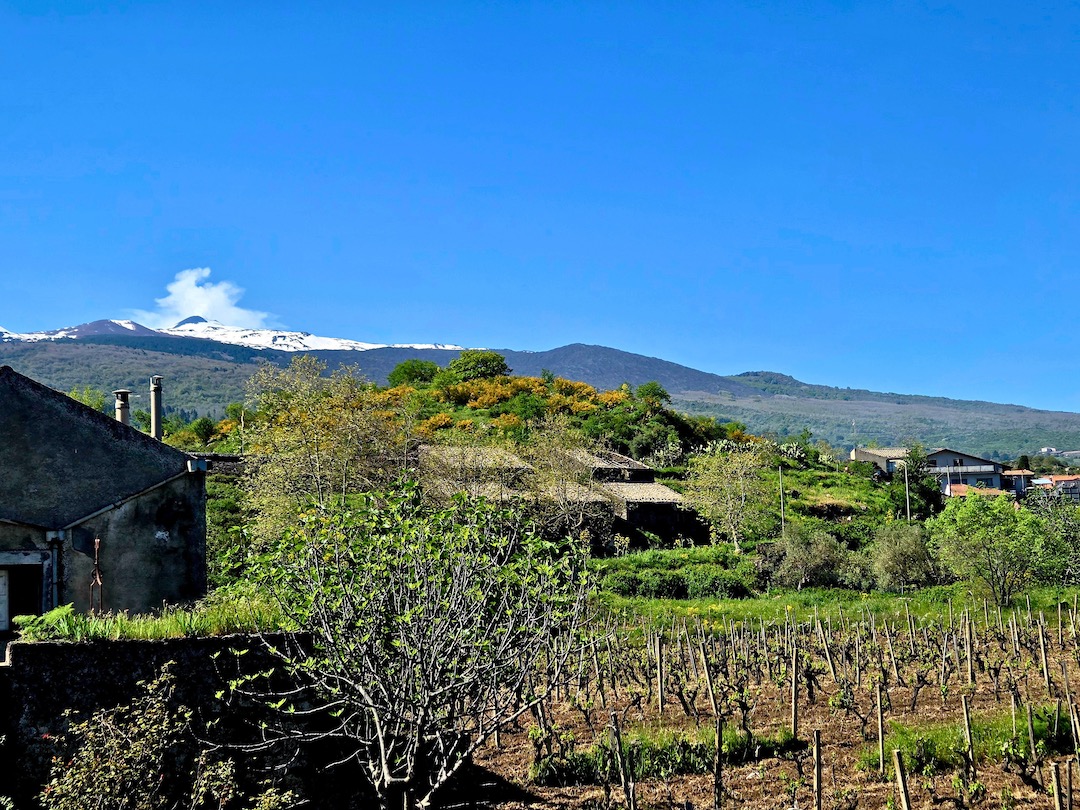
Contrada Porcaria, made famous by Passopisciaro’s Vini Franchetti.
The resulting wines are inconsistent across the board, but several winemakers produced some of the most stimulating and enjoyable, if atypical, wines I’ve encountered. Two thousand twenty-three is far from a vintage to skip, particularly with Etna Bianco Superiore, but it is one where readers must be highly selective. It bears mentioning that my top wine of the year in 2025 (the 2023 Etna Rosso San Lorenzo from Tenuta delle Terre Nere) is from the northern side of Etna.
This brings me to the new releases from 2024. Where 2023 challenged growers with relentless rain, 2024 did the exact opposite. It was a year of severe drought.
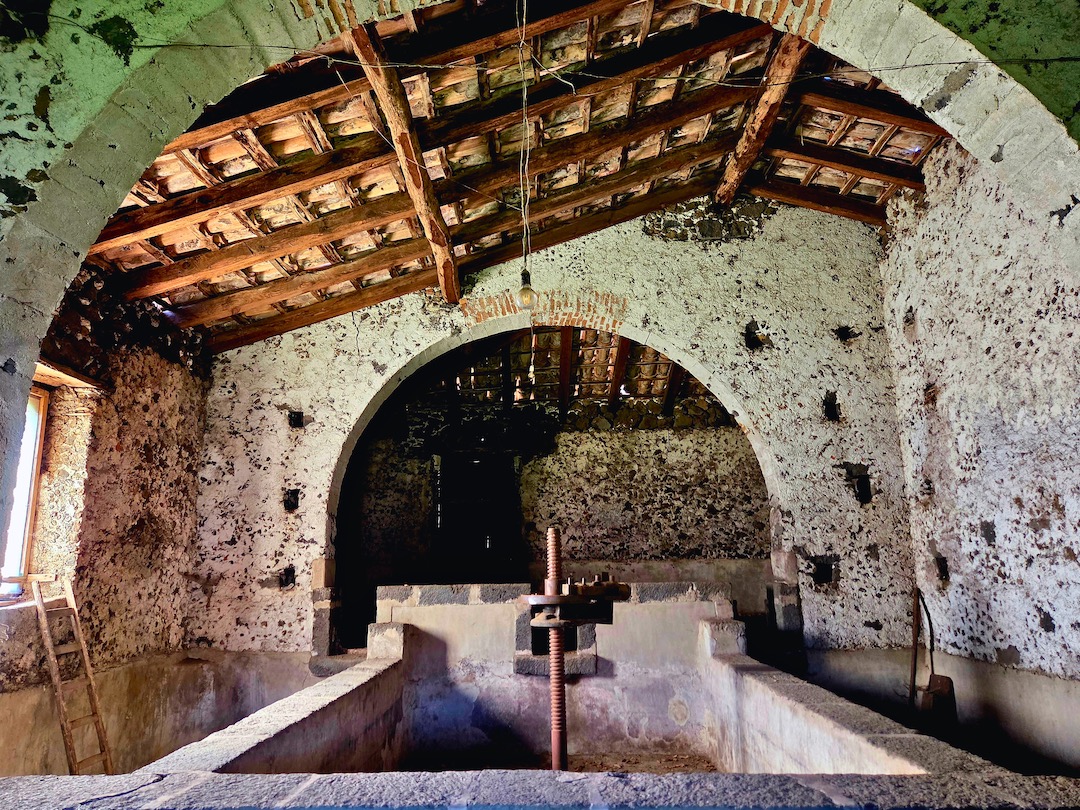
One of many gravity-fed palmenti that dot the Etna landscape.
In a year like 2024, vine age is everything. The northern side of Etna is home to vines well beyond 80 or 90 years old, with some reaching 130 years of age or more, such as in Contrada Feudo di Mezzo. These old vines possess deep root systems capable of tapping into subterranean water reserves that remain entirely out of reach for younger vines. The winter of 2023 into 2024 marked the third consecutive winter in which Etna received virtually no snowfall. A small amount of spring precipitation helped restore a degree of balance, followed by an unseasonably warm summer that remained fairly steady without extreme heat spikes. Still, vines shut down, berries shriveled and skins thickened. On the eastern side of Etna, where precipitation is typically higher, conditions were far less severe, which greatly benefited the production of Etna Bianco Superiore.
Late August into September delivered rain, just enough to restart the vegetative cycle. Even so, harvest generally ran about two weeks ahead of an average year. Many producers maintained an optimistic outlook, relieved by low disease pressure and higher yields than the previous season, but the vintage undeniably left its mark.
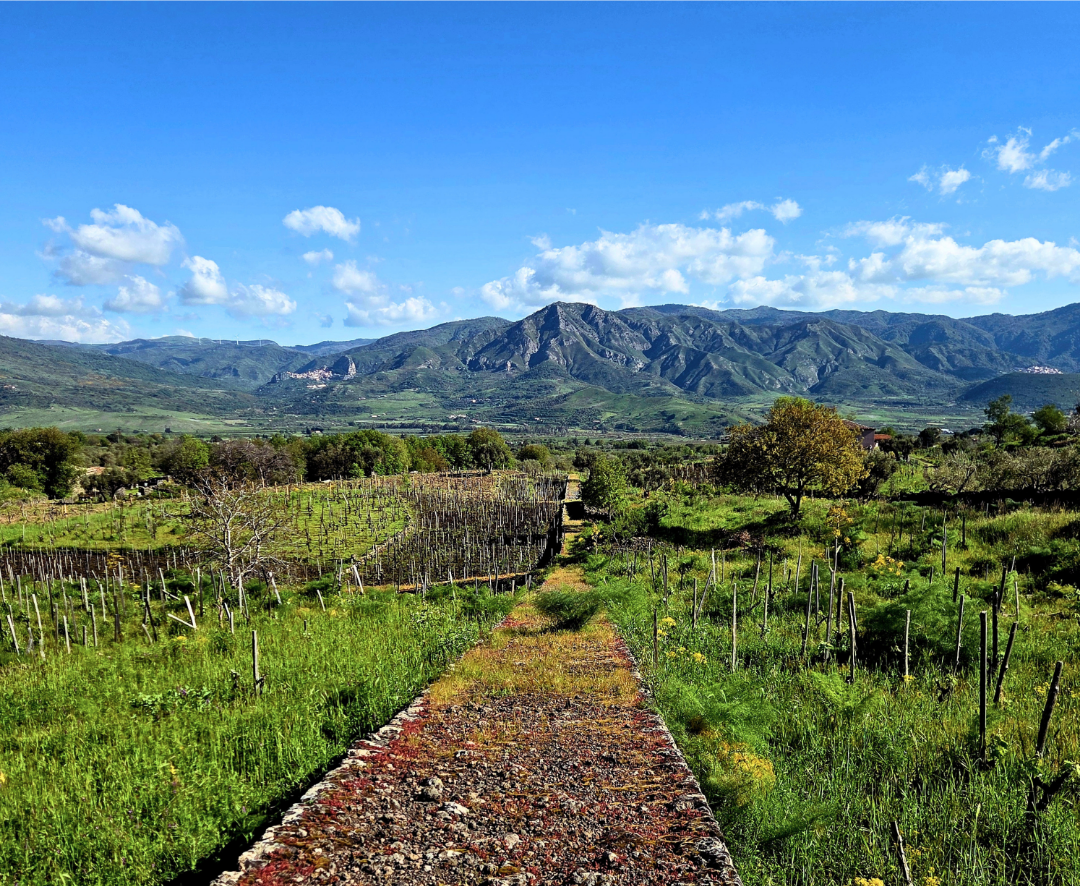
Contrada Feudo di Mezzo, outside of Planeta's Etna winery, looking out toward the Nebrodi Mountains.
The 2024s reflect the year's sun-kissed conditions, showing dark, rich fruit and concentration but surprisingly high acidity. The wines are accessible in their youth, though sometimes marked by underripe tannins. In the worst instances, these wines can grow tiring on the palate or lack site transparency and complexity. In others, the wines are particularly decadent, teetering on the edge of balance yet immensely enjoyable. Carricante from the eastern slopes fared notably better, yielding wines of impressive radiance and energy. Ultimately, I don’t expect the 2024s to be long-distance runners, but the successful wines already deliver pleasure and should continue to deliver over the short to medium term. As in 2023, consistency is an issue across the region, and readers should choose wisely by consulting the producer commentaries attached to the respective tasting notes.
Through it all, Etna continues to press onward — progressive and intuitive, with its collective sights firmly set on establishing its rightful place among the world's premier sources of fine wine.
I tasted the wines in this article in April 2026 while visiting Mount Etna and throughout the following months at our office in New York City.
© 2026, Vinous. No portion of this article may be copied, shared or redistributed without prior consent from Vinous. Doing so is not only a violation of our copyright but also threatens the survival of independent wine criticism.
You Might Also Enjoy
An Eruption of Fine Wine on Mount Etna, Eric Guido, May 2025
Sicily Excels Despite Mother Nature's Wrath: The 2022 and 2023 Vintages, Eric Guido, July 2025
Unveiling the Diverse Palette of Sicily: New Releases and Beyond, Eric Guido, June 2024
Surpassing Expectations: New Releases from Sicily, Eric Guido, September 2023
Sicily: Welcome to the Revolution, Eric Guido, June 2022
Show all the wines (sorted by score)
- Alessandro di Camporeale
- Alice Bonaccorsi
- Ammura
- Barone di Villagrande
- Bella-Colonna
- Benanti
- Biondi
- Buscemi
- Calabretta
- Calcagno
- Camporè
- Cantina del Malandrino
- Casale 120
- Cottanera
- Cusumano - Alta Mora
- DBE - De Bartoli Etna
- Donnafugata
- Eduardo Torres Acosta
- Famiglia Statella
- Frank Cornelissen
- Generazione Alessandro
- Giovanni Rosso
- Girolamo Russo
- Graci
- Grottafumata - Mauro Cutuli
- Gulfi
- I Custodi delle Vigne dell’Etna
- IDDA
- Iuppa
- I Vigneri
- Massimo Lentsch
- Maugeri
- Monte Arso - Marco Nicolosi Asmundo
- Monteleone
- Murgo
- Palmento Costanzo
- Passopisciaro
- Pietradolce
- Planeta
- Sciara
- Tasca d'Almerita - Tenuta Tascante
- Tenuta Bastonaca
- Tenuta Boccarossa
- Tenuta delle Terre Nere
- Tenuta di Fessina
- Tenute Bosco
- Tenute Nicosia
- Terra Costantino
- Terre dei Miti
- Tornatore
- Vigneti Vecchio
- Vulcani d'Italia