
Browse using the new Vinous website now. Launch →
Printed by, and for the sole use of . All rights reserved © 2015 Vinous Media
Abruzzo’s Triumphant 2025 Vintage
BY ERIC GUIDO | JUNE 4, 2026
Article Additions: August 25, 2026 - Arche', Fiamme, Nestore Bosco, Visconti della Rocca
Covering Central Italy over the last two years has been a brutal task due to the seemingly endless challenges of the 2023 and 2024 vintages. I felt deep empathy for the winemakers in these regions, as visits revealed Peronospora-stricken vineyards in 2023, or vines with minuscule canopies and clay soils cracked open during heatwaves and drought in 2024. In retrospect, it seems that Abruzzo may have suffered more than any other Italian region. However, the 2025 vintage was a blessing following Mother Nature’s wrath. The growing season enabled a return to consistent quality and normal quantities, but also to more classically styled wines. The icing on the cake is that if 2026 continues to play out as it has throughout the winter and spring, Abruzzo may have another good vintage lined up.
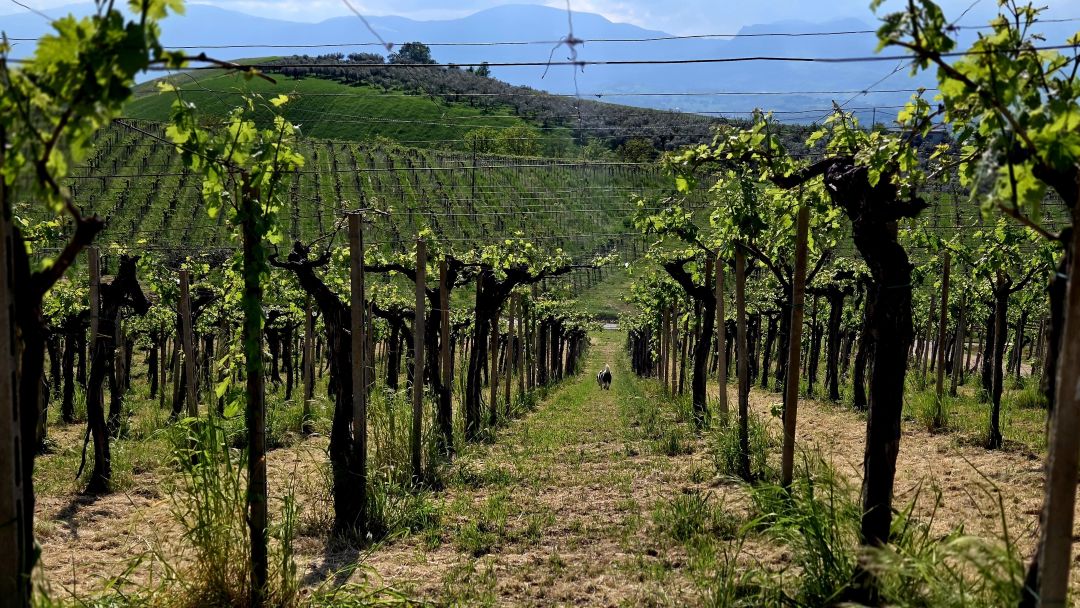
Trebbiano Abruzzese planted in 1974 in the
Ciavolich vineyards around Loreto Aprutino.
Abruzzo simply doesn’t get the credit it deserves. The wines offer serious depth, complexity and structure in all colors. Best of all, most wines remain exceptional values when compared to global peers. Abruzzo is built on tradition, with many vineyards planted 30, 50 or even 100 years ago. Pergola training, once considered outdated, has proven key to Abruzzo’s success. This method allows a vine's foliage to shade the fruit during scorching summer months while retaining moisture in the soil below.
For many years, Montepulciano was Abruzzo’s standard-bearer variety. Montepulciano d’Abruzzo remains one of the most dependably high-quality choices on any restaurant wine list. While warming trends have convinced several key producers (Valentini, Cingilia, De Fermo, among others) that Montepulciano’s days are numbered, I do not foresee any decline in the near future. Consumers continue to vote with their dollars, and though Montepulciano may not be where these producers want to focus their attention, the fact remains that it still sells.
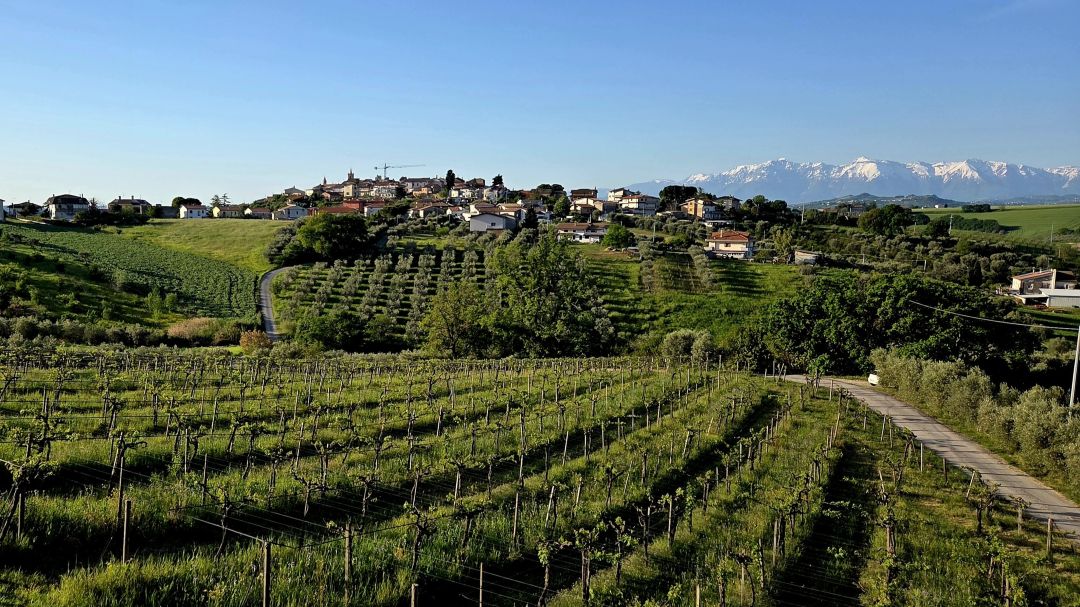
Torano Nuovo in the province of Teramo, a key part of the Colline Teramane DOCG.
The white Pecorino variety made a splash in the mid-2000s when sommeliers clamored over its fruit intensity and riveting acidity. The quality of Pecorino wines has reached a new high, especially in Abruzzo’s interior and mountainous areas, where deep minerality and savory tension enter the mix.
For those seeking a more serious style of white, enter Trebbiano d’Abruzzo. While there is plenty of easy-drinking Trebbiano d’Abruzzo in the market, this variety can reach an entirely different level. Old-vine Trebbiano, whether crafted by quality-driven artisan winemakers who follow strict cellar protocols to ensure purity, or by more traditional producers whose methods lend the wines pleasant rusticity and oily textures, the variety is a blank canvas for terroir. Abruzzo also has its own distinct, elusive clone, Trebbiano Abruzzese, but only a select few estates have verified the genetic makeup of their vineyards to confirm what is in fact Trebbiano Abruzzese. To make matters more complicated, the Trebbiano d'Abruzzo DOC requires wines to be at least 85% Trebbiano Abruzzese, Trebbiano Toscano and/or Bombino Bianco, while the remaining 15% can include other indigenous white varieties, such as Passerina, Cococciola and Malvasia Toscana, which can lead to quite a bit of confusion among consumers as to what 'Trebbiano d'Abruzzo' actually is. Not surprisingly, this leads to a wide range of wines across the quality and stylistic spectrum.
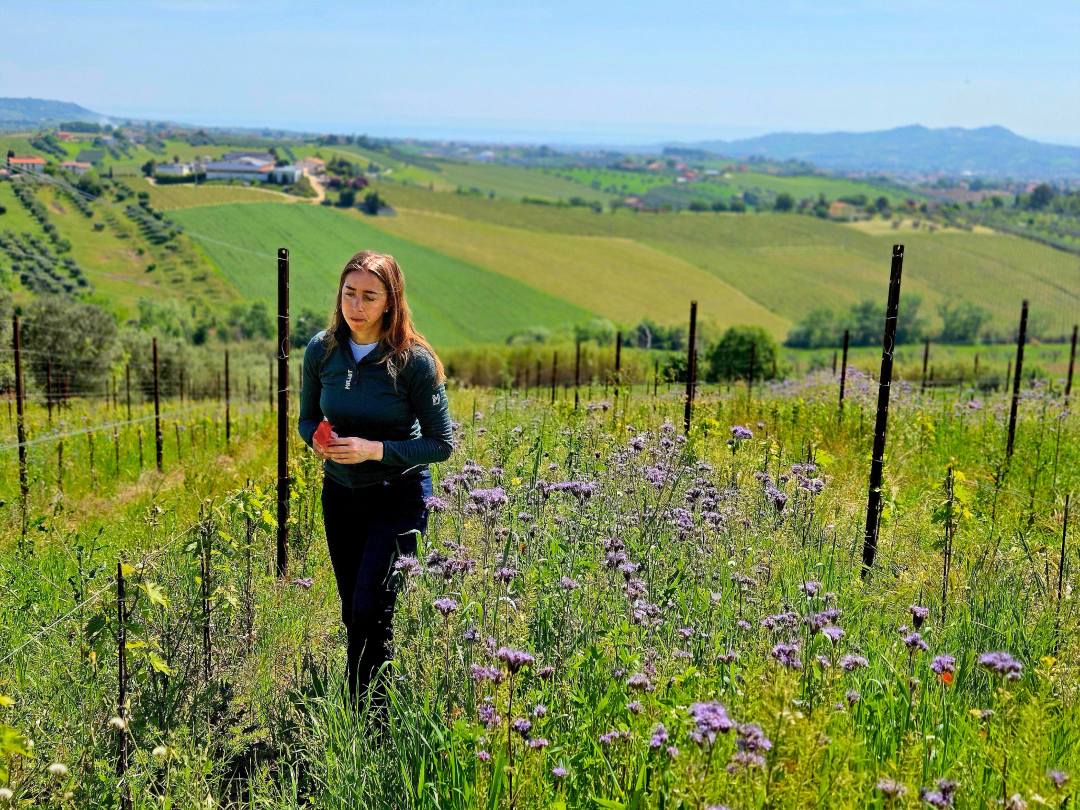
Chiara De Iulis Pepe explains biodiversity on her young Montepulciano vineyards.
Abruzzo is home to another compelling category that many dismiss: Cerasuolo d’Abruzzo. Here, Montepulciano grapes are vinified with less time on the skins, yielding lighter-hued wines that are mistakenly lumped into the Rosé category. In fact, Cerasuolo d’Abruzzo is a rich, layered, structured wine with bright, mouthwatering acidity. It may be the ultimate food-pairing wine; Cerasuolo seems to go well with just about any cuisine. Moreover, as tastes around the world lean toward fresher wines that can still deliver complexity, Cerasuolo d’Abruzzo is poised to grow in popularity.
Abruzzo Finds Its Place
Abruzzo’s challenge is communicating a sense of place to the end consumer. The region as a whole has made significant moves over the past few years to raise quality standards, such as the changes to the DOC I detailed in my 2024 article. These new regulations focus on protecting consumers from bulk bottlers and companies outside of Abruzzo that use the DOC on their labels but don’t bottle wines within the region. These changes also saw the addition of the Superiore and Riserva categories, which permit wineries to use subzone names, such as Colline Pescaresi, Colline Teramane, Terre di l’Aquila and Terre di Chieti. Still, these subzones make little sense to producers, as these territories are overly broad and too generalized to accurately communicate terroir differences. The DOC also added stipulations regarding fruit sources, lowered yields by 10%, and reduced blending with other varieties to 15%. Ultimately, this is a win for consumers and a positive development for wine quality.
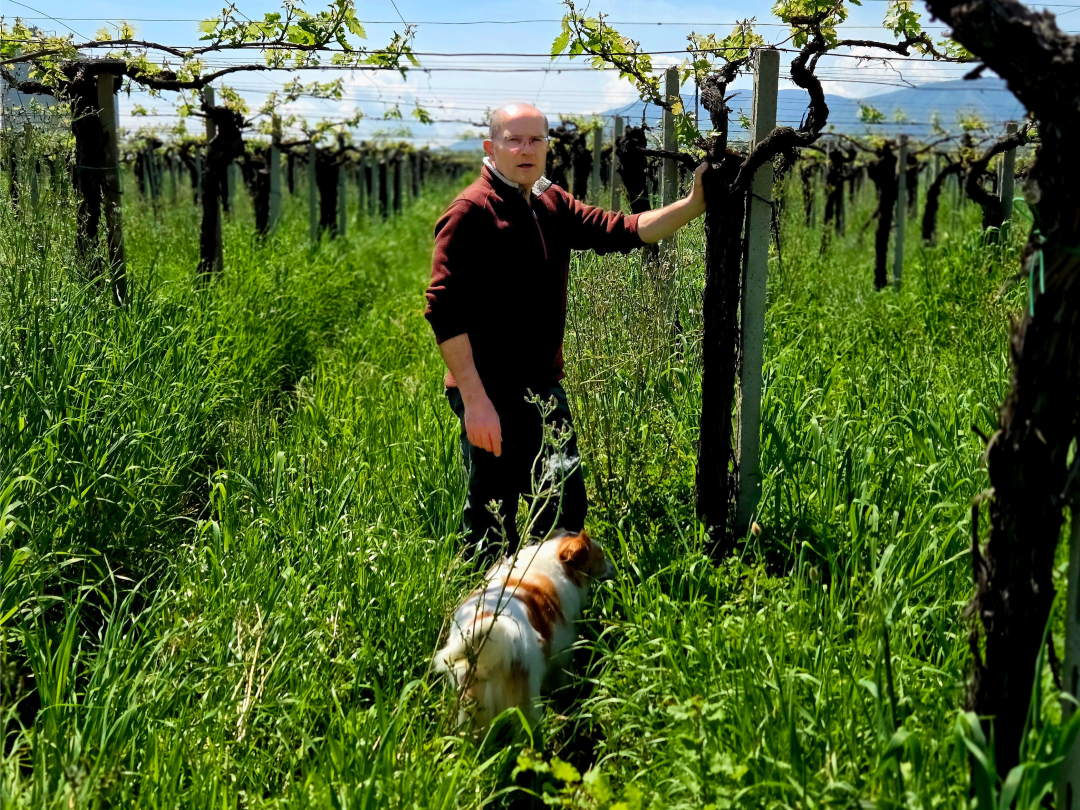
Fausto Albanesi of Torre dei Beati.
As of the 2023 vintage, the eight preexisting territorial IGTs were replaced by the new Terre d’Abruzzo IGT. While this caused a bit of a stir at the time, many producers believe the possibility of adding Village Designations (or UGAs) to wine labels is on the horizon. The Consorzio Tutela Vini d'Abruzzo has indicated that they intend to move in that direction, but there is not yet a clear timeline for such changes to take effect. Hopefully, the day will soon come when Montepulciano, Pecorino, Cerasuolo or Trebbiano Superiore from Loreto Aprutino can be compared to those from Ofena or Cugnoli. It’s been a long road for these changes to come to fruition, but now that the end is in sight, it’s an exciting time to follow these wines.
The 2025 Vintage and What Came Before
The bottled, early-release 2025s I’ve tasted so far are simply irresistible—bright, lively, radiant, complex and crisply refreshing. Tasting many barrel and tank samples during my recent visit, the maturing wines exhibited perfumed, expressive personalities and balanced structures. Reds, whites and Cerasuolos are all equally impressive in 2025. It will be especially interesting to see whether these same vintage qualities lend themselves well to communicating the complexities of the region’s terroirs.
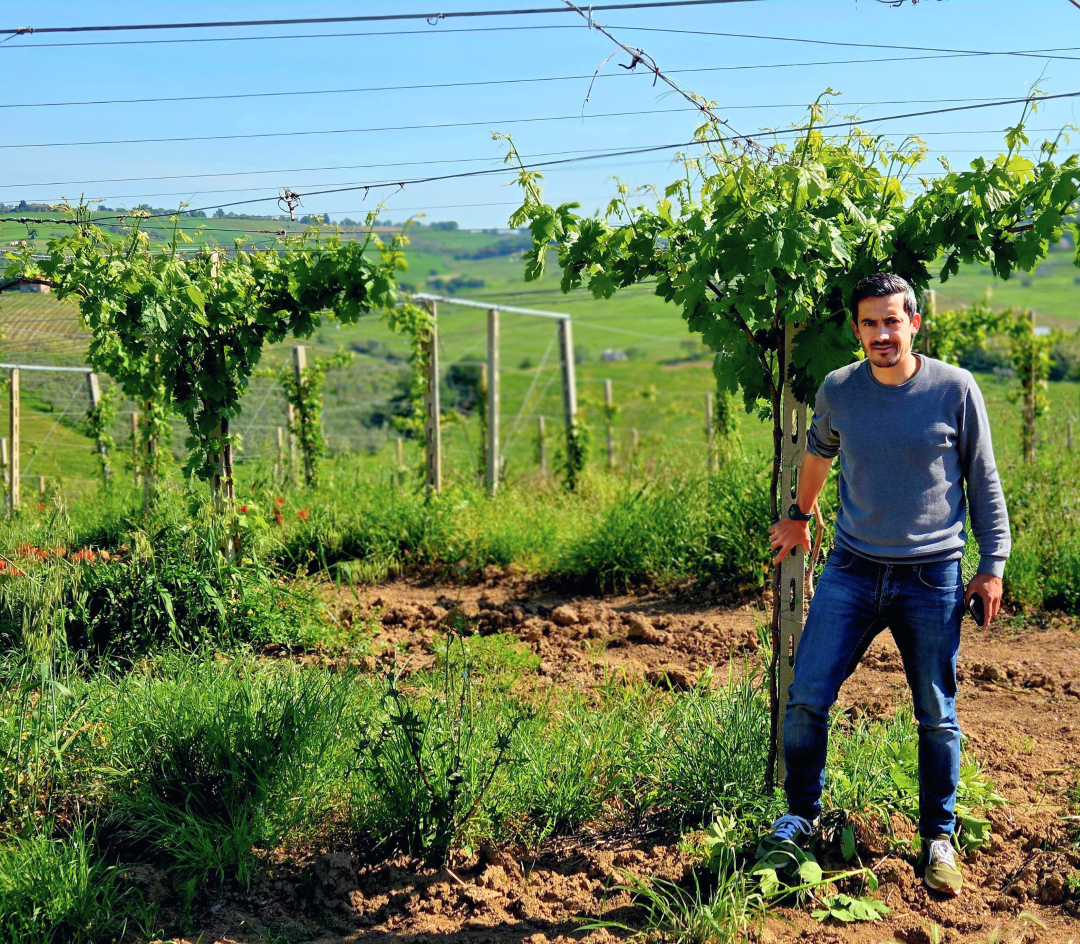
Fabio di Donato of Cingilia in his three-year-old Trebbiano Abruzzese
vineyards, which he will one day use for his next single-vineyard wine.
The word that best describes the 2025 season is balance. While past vintages were defined by extremes, whether it was rain, drought or heat, the 2025 season saw harmony between well-timed and plentiful precipitation, warm, sunny days and a temperate harvest period. Following the 2024 drought, a cool and rainy start to the 2025 vintage replenished water reserves. When I visited the region in March 2025, snow that remained in the mountains was just beginning to melt. In previous years, the lack of winter snow had a significant impact, but in 2025, mountain snow melted gradually and flowed down to form water reserves. Cool temperatures delayed budbreak, which was a blessing in disguise as it mitigated the risk of frost. Unlike in 2023, regular windy conditions and breaks in precipitation helped maintain vine health. A small temperature spike in June helped get the season back on track, and the remainder of the summer was cooler than average. Large diurnal shifts occurred through August and September, likely a reason for the 2025s' freshness and perfume. A small amount of timely rain in the fall didn’t get in the way of harvest. The 2025 season finished a bit earlier than the long-term average, but the fruit was healthy with full phenolic ripeness.
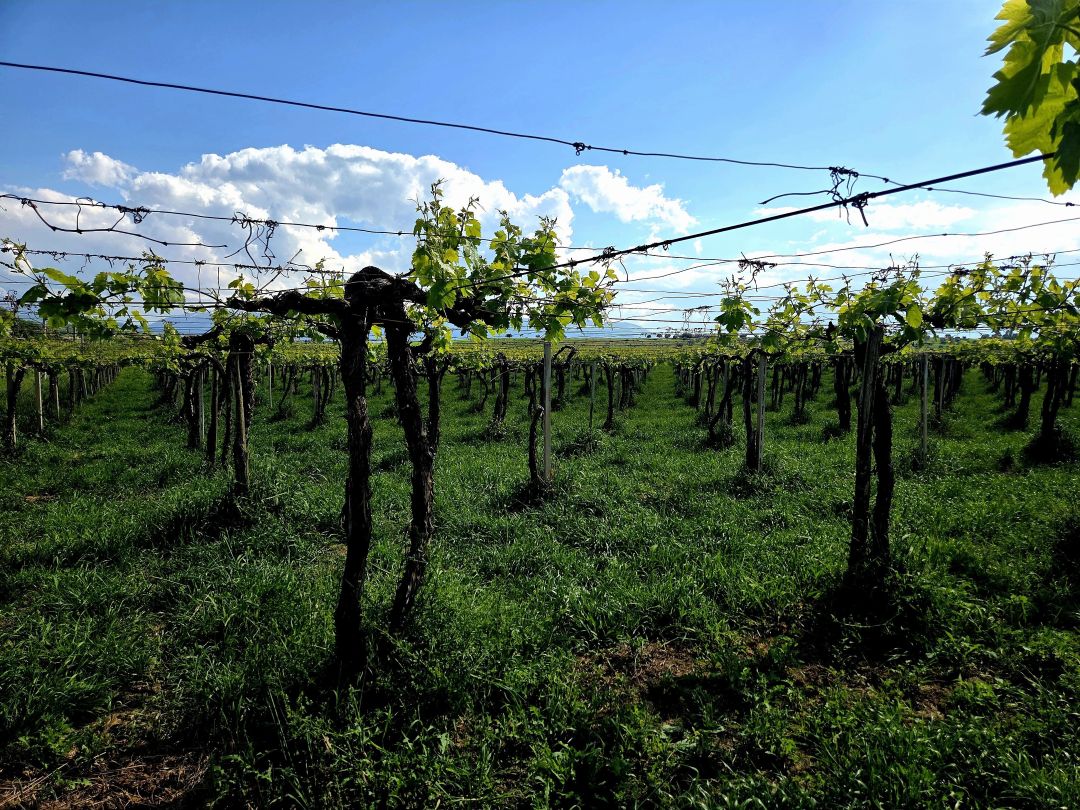
Tiberio's century-old Trebbiano Abruzzese vines
recovered well after the challenging 2024 vintage.
In retrospect, 2024 was the complete opposite of 2025. The vintage was compromised before it even began due to a lack of winter snow. As mentioned previously, Abruzzo depends on a mountain snowpack that slowly melts and replenishes streams and rivers. Without that, and with no spring rain to compensate, the region suffered drought conditions from spring through August. A late-April frost in areas like Cugnoli, Loreto Aprutino and the Peligna Valley further compounded the crisis, halting sap flow just as budding began. This created a perfect storm in which vines shut down from frost and failed to restart due to drought. Though rain finally arrived late in the season, it amounted to only 50% of the annual average. Coastal areas fared better in 2024, as the sea’s warming influence and scattered rain helped vines escape the frost, but they still struggled with heat and uneven ripening. Many producers did not bottle any red Montepulciano in 2024, instead using their entire red grape production for Cerasuolo d’Abruzzo. There are success stories, most involving severe selection in the vineyard and significant adaptations in the winery, but in the end, there’s very little wine to go around.
I also revisited the 2023 vintage one last time, as some of these wines are still entering the market. Abruzzo suffered three months of continuous rain and overcast skies in the spring, triggering a catastrophic outbreak of Peronospora. Many of the region’s organic estates depend on spray treatments that, in 2023, washed off the vines as soon as they were applied. The result was a staggering 70-80% loss of production, particularly in coastal areas. To make matters worse, the following summer was arid and warm, inducing hydric stress and slowing ripening. By harvest, the remaining bunches often showed uneven ripeness and required drastic selection. Many estates lost their entire production for the year, while others produced only Cerasuolo or had to purchase fruit from larger industrial vineyards that managed the season through chemical applications. The emerging silver lining of 2023 is the minerality many of these wines are beginning to display. Trebbiano fared much better than both Montepulciano and Pecorino, while many 2023 Trebbianos are surprisingly fine.
I tasted the wines for this article in Abruzzo in May 2026.
© 2026, Vinous. No portion of this article may be copied, shared or redistributed without prior consent from Vinous. Doing so is not only a violation of our copyright but also threatens the survival of independent wine criticism.
You Might Also Enjoy
Abruzzo Weathers the Storm: Surviving the 2023 and 2024 Vintages, Eric Guido, May 2025
Abruzzo: Trials and Tribulations, Eric Guido, September 2024
Tiberio's Fonte Canale: Redefining Trebbiano d'Abruzzo, Eric Guido, August 2024
Chomping at the Bit: New Releases from Abruzzo, Eric Guido, August 2023
Abruzzo: The Great Divide, Eric Guido, October 2022
Show all the wines (sorted by score)
- Amorotti
- Arche'
- Barone Cornacchia
- Binomio
- Cantina Tollo
- Cantina Valle Tritàna
- Cantina Zaccagnini
- Cascina Del Colle
- Castorani
- Catabbo
- Cataldi Madonna
- Centorame
- Chiarieri
- Ciavolich
- Cingilia
- Cirelli Wines
- De Angelis Corvi
- De Fermo
- Emidio Pepe
- Fantini
- Feudo Antico
- Fiamme
- Filomusi Guelfi
- Fontefico
- Fosso Corno
- Idi di Marzo
- Il Feuduccio
- Illuminati
- Jasci & Marchesani
- La Valentina
- Masciarelli
- Mastrangelo Tenimenti del Grifone
- Nestore Bosco
- Nicodemi
- Nic Tartaglia
- Novaripa
- Pasetti Vini
- Pettinella
- Praesidium
- Talamonti
- Tenuta Cerulli Spinozzi
- Tenuta I Fauri
- Tenuta Terraviva
- TerraSublata
- Tiberio
- Torre dei Beati
- Torre Raone
- Torre Zambra
- Umani Ronchi
- Valentini
- Valle Martello
- Valle Reale
- Valori
- Velenosi
- Visconti della Rocca