
Browse using the new Vinous website now. Launch →
Printed by, and for the sole use of . All rights reserved © 2015 Vinous Media
Sekt: Effervescent Germany and Austria
BY ANNE KREBIEHL MW | DECEMBER 9, 2025
Sekt: Effervescent Germany and Austria
This third Vinous Sekt report once again combines the effervescent efforts of Austria and Germany from a stunning geographic reach. Readers will find Austrian Sekts from Niederösterreich, Burgenland and Steiermark, and German Sekts from Mosel, Saar, Ruwer, Mittelrhein, Rheingau, Nahe, Rheinhessen and Pfalz, as well as Franken, Württemberg and Sachsen. Over one quarter of these wines are pure Rieslingsekts, while more than half are made from the usual trio of sparkling varieties (Chardonnay, Pinot Noir, Pinot Meunier). Brut Nature styles and low dosage feature heavily across both countries. While quality is variable, the best Sekts can easily compete with the finest sparkling wines in the world.
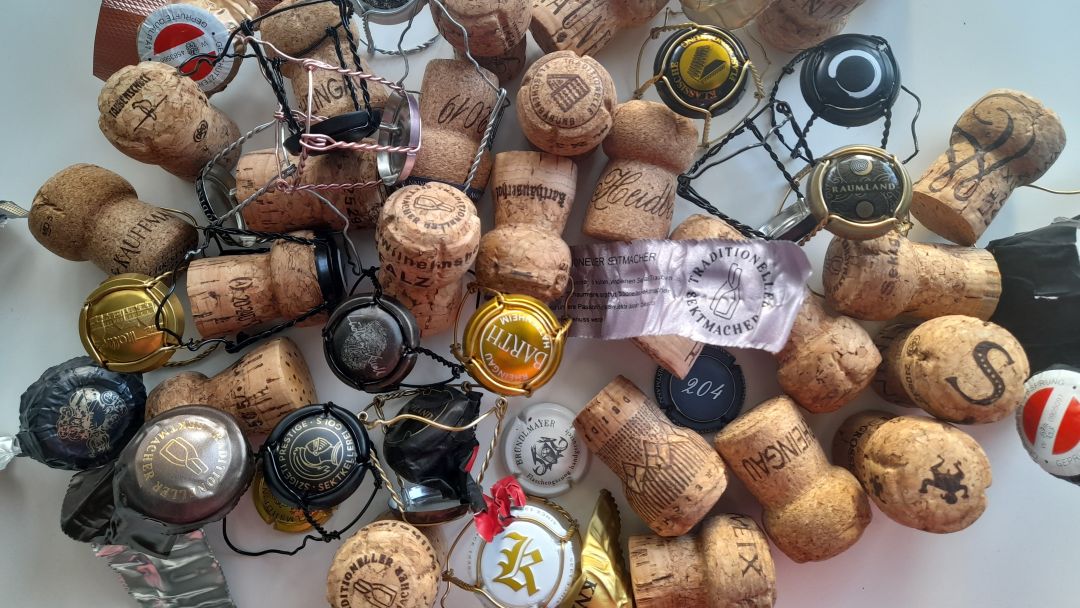
Bandwagons
I cannot avoid saying this: there are still too many Sekts whose only difference from a still wine is the fact that they have bubbles—wines that were not fully conceived as sparkling styles, even when made with ambition. Bottling a Sekt from a single site alone does not automatically confer quality or character, nor does long lees-aging. These elements only make sense when a base wine itself is made for the eventual goal of sparkling wine from the outset. Too many Sekts still feel like an afterthought—like producers jumping on the bandwagon. The beauty, of course, is that there now is a bandwagon, a true Sekt category in both Germany and Austria with enough credibility, quality and weight to be taken seriously.
Quality
Old hands who have scoped out their sites over many years, who have perfected their methods, who were amongst the pioneers to revive the Sekt category often perform the best, though others succeed as well. Caroline Diel of Schlossgut Diel explained that making good Sekt depends on doing so “right from the start,” meaning that fruit destined to become Sekt must be farmed differently from fruit destined for still wine. Ideal parameters shift towards higher acidity and moderate alcohol, but still full ripeness, and some sites are better at delivering that than others. Northerly latitude helps achieve these characteristics. The German Sekts in this report hail from latitudes that range from 51.16°N to 48.8°N. The Austrian Sekts span from 48.74°N in the Weinviertel—just south of the Czech border—to 46.6°N on the Slovenian border in Styria, but vineyards there are at altitudes of at least 300 meters. For comparison, Champagne vineyards reach from 49.3°N in the Massif de Saint-Thierry to just below 48°N in the Aube.
Hansjörg Rebholz of Ökonomierat Rebholz noted that every single step of their winemaking is now done in-house, from tirage to disgorgement, ensuring seamless control of every process and reflecting a serious investment in the Sekt category. Rebholz has also taken to aging his wines in an abandoned mine tunnel deep in the Pfälzerwald, just as Max von Kunow of Von Hövel ages his Sekts in a limestone cave in the upper Mosel Valley. Regarding vinification, Rebholz emphasized, “Pressing is the be-all and end-all.” Gunter Künstler shared that his pressing regimen is completely modelled on Champagne—he even uses a Coquard press.
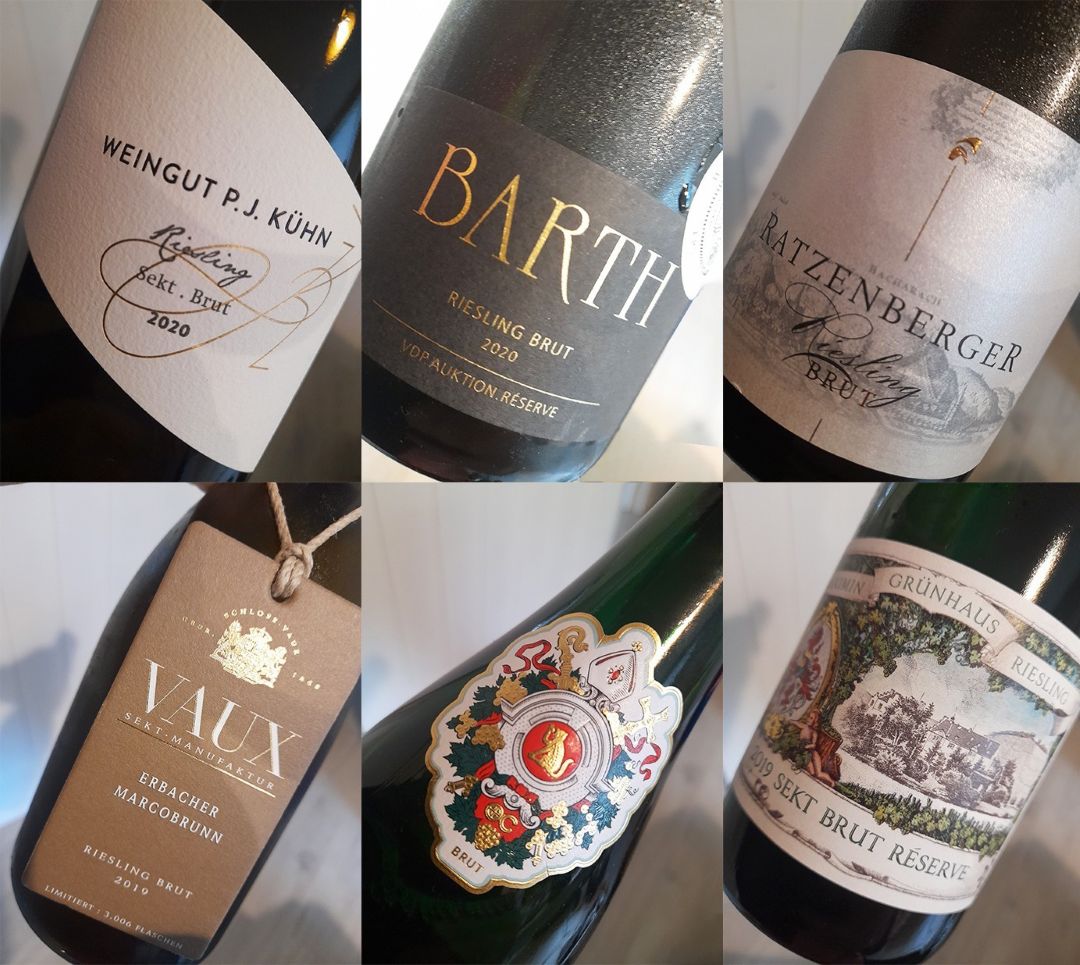
Rieslingsekt
The majority of Rieslingsekts in this report hail from Germany, where traditional method Riesling has a long history. I discussed the challenges of making Sekt from Riesling in my most recent report. Rieslingsekts come in a range of styles, from those where the varietal nature of the wine is underlined by dosage made from sweet (but unbotrytized) Riesling Beerenauslese at Van Volxem to far more autolytic styles. That Rieslingsekt can age is no secret, and many vintage-dated wines prove that. However, this year I also tasted two Rieslingsekts that are simply hors catégorie, namely a 1992 and 1984 Sekt from Weingut Peter Lauer. Florian Lauer releases these museum pieces in tiny quantities, and whoever is lucky enough to taste them realizes that they are no longer just Sekts, but deeply visceral flavor experiences. These wines no longer fit any existing paradigms of sparkling wines and are individualistic explorations of umami depth. Each bottle is an adventure.
Varietal Breadth
Outside of Rieslingsekt, more than half of the wines in this report were made from Chardonnay, Pinot Noir and Pinot Meunier, and thus compare directly on the world stage. The best of these wines easily hold their own. Pinot Blanc can also yield successful results, whether in a blend with the traditional varieties or bottled separately. I am, as ever, skeptical of other grape varieties as Sekt, exception for Zweigelt, which makes absolutely lovely Sekts. I am less sure of Cabernet Sauvignon, Viognier, Sauvignon Blanc or Traminer.
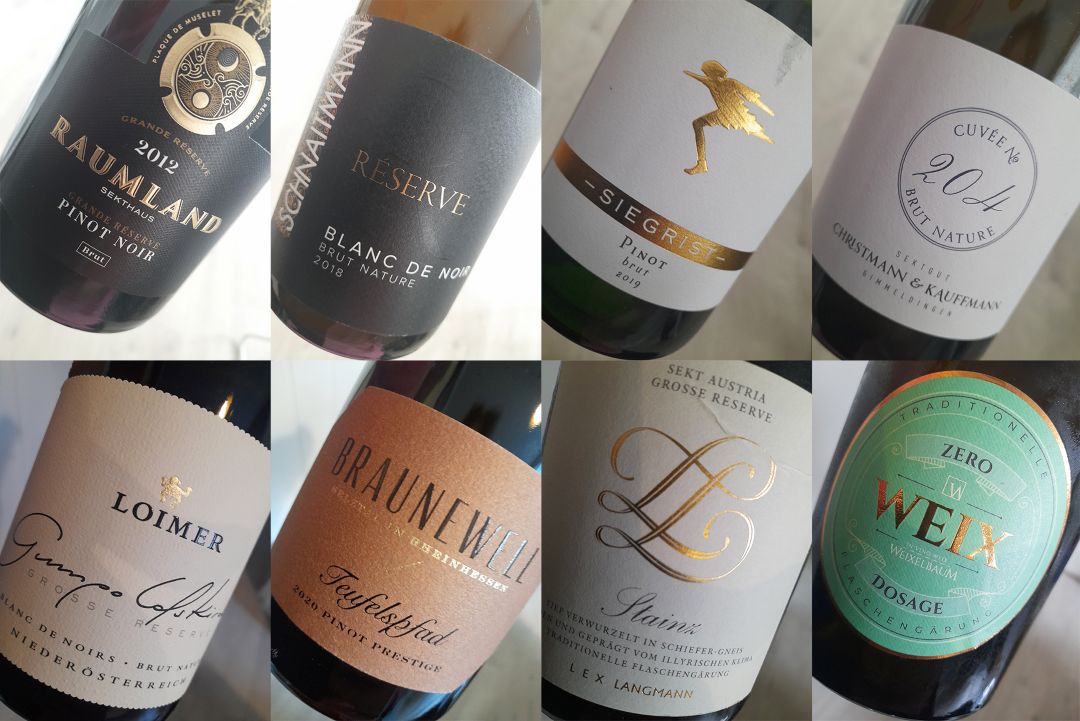
Brutish Obsessions
An astonishing 44% of the Sekts reviewed here have zero dosage, whether that is declared as Brut Nature on the label or not. Twenty percent have low dosages up to 3 grams per liter, and only 8% have dosages above 8 grams per liter. This drive towards low and no dosage was already clear last year and can only be interpreted as a wish to mask as little character as possible with sweetness. What is even clearer is that lovers of fine fizz have a rewarding hunting ground in Austria and Germany.
I tasted the majority of the wines for this report in London in October 2025, with the remainder tasted during my Germany visits over the summer of 2025.
© 2025, Vinous. No portion of this article may be copied, shared or redistributed without prior consent from Vinous. Doing so is not only a violation of our copyright but also threatens the survival of independent wine criticism.
You Might Also Enjoy
Popping Corks: The Second Vinous Sekt Report, Anne Krebiehl MW, May 2025
2024 Mosel, Saar and Ruwer: Tales of Woe and Wow, Anne Krebiehl MW, October 2025
Rheingau and Nahe 2024: Rain, Frost and Unexpected Brilliance, Anne Krebiehl MW, September 2025
2023 Burgenland and Austria’s East: Gorgeous Reds, Aromatic Whites and Killer Sweets, Anne Krebiehl MW, March 2025
Evoe! German and Austrian Sekt Report, Anne Krebiehl MW, March 2024
Show all the wines (sorted by score)
- Alphart am Mühlbach
- A-Nobis Sektkellerei Norbert Szigeti
- A-Nobis Sektkellerei N. Szigeti
- Arndorfer Martin & Anna
- August Eser
- Bassermann-Jordan
- Bibo Runge
- Braunewell
- Bründlmayer
- Buchegger
- Cantzheim
- Christmann & Kauffmann
- Dr. Loosen
- Dr Wehrheim
- Erzherzog Johann Weine
- Forstreiter
- Frank
- Frank John
- Fritz Josef
- Fürstlich Castell´sche Domäne
- Georg Preisinger
- Gollenz
- Graf Hardegg
- Gross
- Gruber Röschitz
- Hagn
- Jäger
- J. Neus
- Johannes Gebeshuber
- Jordan
- Jülg
- Karthäuserhof
- Kästenburg
- Keller
- Kloster Eberbach
- Knipser
- Koehler-Ruprecht
- Kögl
- Künstler
- Langmann
- Leitz
- Loimer
- Markus Molitor
- Markus Schneider
- Maximin Grünhaus - von Schubert
- Meißner
- Odinstal
- Ökonomierat Rebholz
- Oliver Zeter
- Peter Jakob Kühn
- Peter Lauer
- Ratzenberger
- Reckendorfer
- Regele
- Reichsrat von Buhl
- Riffel
- Rings
- Rudolf May
- Schloss Gobelsburg
- Schlossgut Diel
- Schloss Proschwitz
- Schuster
- Sekthaus Raumland
- Sektmanufaktur Hattemer
- Sektmanufaktur Momentum
- Sektmanufaktur Schloss Vaux
- Siegrist
- Staatliche Weinbaudomäne Oppenheim
- Steininger
- Stift Göttweig
- Sturm
- Szigeti
- Taubenschuss
- Tement
- Toni Jost
- Twardowski
- Van Volxem
- Von Hövel
- von Winning
- Wagner Stempel
- Weingut am Stein
- Weingut Bürgerspital
- Weingut Prinz
- Weingut Prinz Salm
- Weingut Schnaitmann
- Weingut Weedenborn
- Weingut Winter
- Weinschloss Thaller
- Wein- und Sektgut Barth
- Weixelbaum
- Wilhelmshof
- Winkler-Hermaden
- Zuschmann-Schöffmann