
Browse using the new Vinous website now. Launch →
Printed by, and for the sole use of . All rights reserved © 2015 Vinous Media
2025 New Zealand White Wines: Pump Up the Volume
BY REBECCA GIBB MW | FEBRUARY 24, 2026
New Zealand turned the volume knob to the right in 2025. Crops were large, tanks were filled up, and the season spoke loudly from the outset. Yet the cool opening notes of summer set a slower tempo, and not every vineyard kept pace as the year unfolded. As ever, it was those who adjusted the dial that got it right, managing yields and nutrition based on nature’s bounty.
Indeed, the defining feature of the 2025 vintage was its sheer scale. The country’s harvest exceeded half a million tonnes, the second largest in its history. The region of Marlborough, the nation’s engine room, upped its yields by 31% compared with 2024. And the final tonnage didn’t tell the whole picture; many vines were left unharvested as wineries looked at the slowing wine market and exercised caution with their intake.
Despite good flowering and early expectations that a big crop was on the horizon, final yields were often larger than originally anticipated, in some cases significantly so, with some describing bunches “as big as your head.” What made this particularly challenging was how late the reality of those volumes became apparent, limiting the opportunity for corrective action. While large crops are not inherently problematic in Sauvignon Blanc—a variety that retains its distinctive aromatics even at high yields—finding a home for all the fruit, both logistically and commercially, was more important.
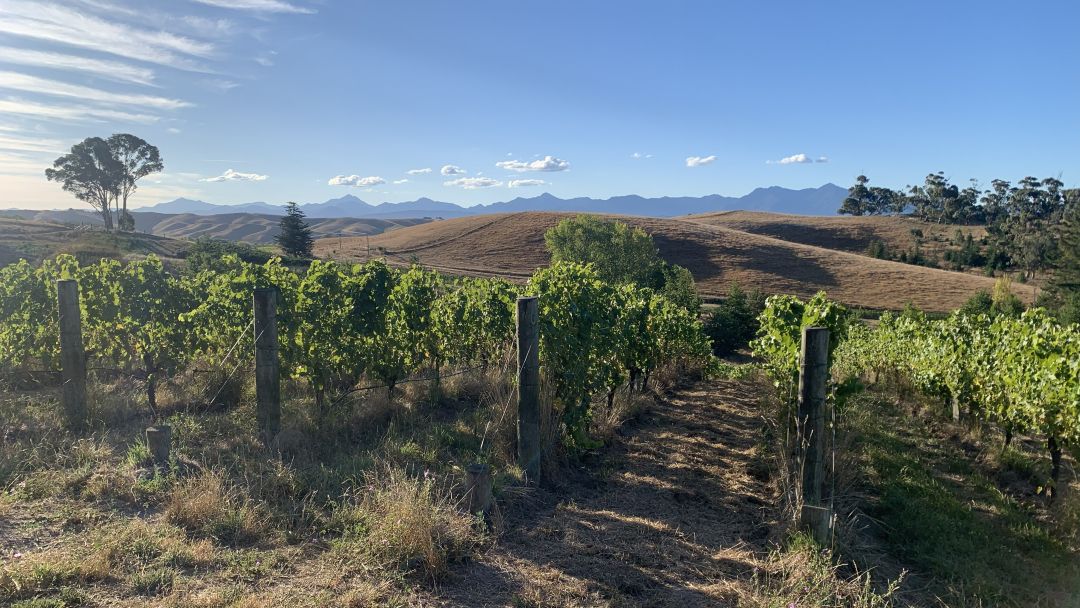
In the hillsides of Marlborough’s Southern Valleys, the wines tend to have more body and texture than on the alluvial, free-draining valley floors.
Tempo Changes
The growing season did not progress at an even tempo. While spring was warm, leading some to wonder whether they’d need to start preparing for an early harvest, the brakes were firmly pressed at Christmas and into the new year as temperatures cooled. It was the coolest January on record in both the Wairarapa (home to Martinborough) and North Canterbury, with other regions not far off their lowest records. I remember landing in New Zealand during the first few days of February. Instead of changing into the packed summer wardrobe, I had to buy a woolly jumper.
Cool, cloudy weather is hardly conducive to ripening a large crop, particularly in the naturally cool climes of New Zealand’s South Island. As a result, the vineyards became a hub of crop thinning, from mechanically shaking the vines to thinning bunches manually, or even cutting off full fruit-bearing canes. For example, Cloudy Bay reduced canes from three to two to keep yields around 12-15 tonnes per hectare, according to Winemaker Kelly Stuart.
Summer finally returned in February, offering sunny, warm, dry weather that continued into March. The large crop size meant that it was a stop-start harvest with a lot of waiting for the fruit to ripen. Instead of the frenzied 24-hour harvest, wineries would only run 12 hours a day, and even those shifts might be curtailed when there wasn’t a single barrel left to rack nor a corner left to clean. Fortunately, there was little disease pressure with just half the usual summer rainfall, and growers could wait without the fear of losing their crop to rot. However, encouraging extended hangtime could not make up for a lack of intensity in the fruit.
Abundance clearly had its consequences. Large yields mean an inevitable dilution of flavours across the board. The 2025 vintage is marked by greener flavours, from green capsicum and snow pea to lime, mint and jalapeño. The tropical fruit flamboyancy of Marlborough Sauvignon Blanc has taken a gap year. While growing season statistics show 2025 was warmer than the long-term average, it’s no surprise that the flavours remain in the greener and citrus spectrum due to the massive crop. But there was also another explanation. “While the bunches were big, we had small berries within the bunch structure, and I think that’s where the greener notes were coming in,” said Stuart. “I’ve never seen that happen before.”
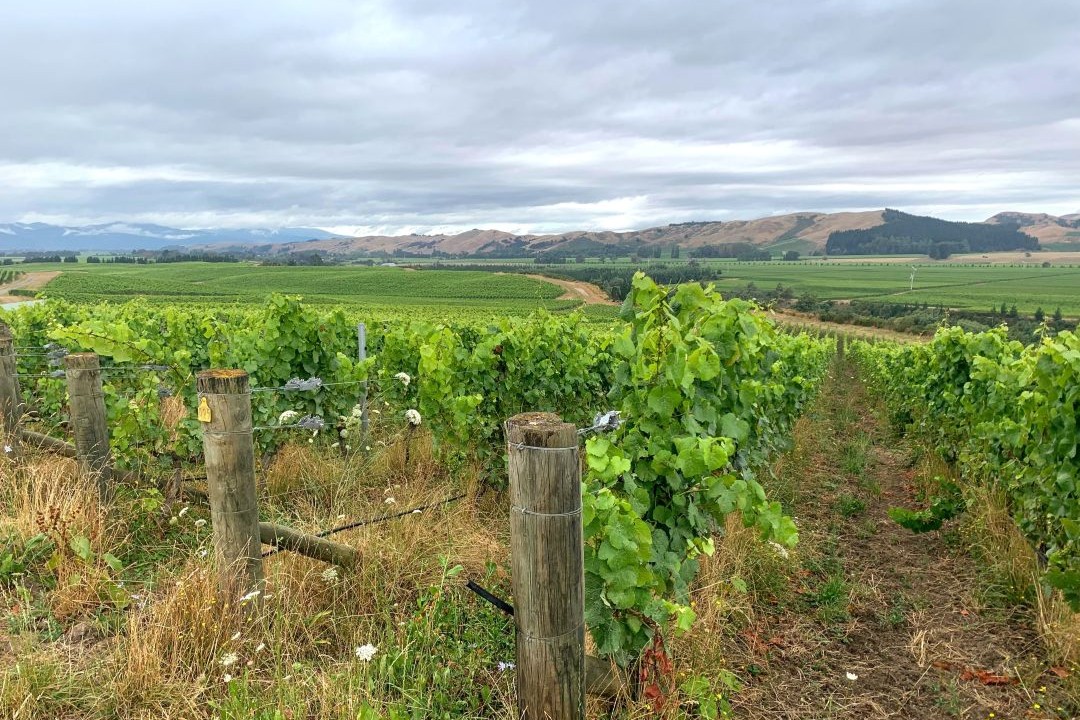
Marlborough’s bumper 2025 crop coincided with the 50th anniversary of Sauvignon Blanc taking root in the region.
The Shape of You
One of the more subtle challenges of the year lies in the numbers. Malic acidity levels were generally moderate to low, but that was accompanied by low pH values, emphasising the perception of tightness, sometimes at the expense of generosity. At the entry level to lower mid-range, particularly wines from the alluvial plains, the 2025 Sauvignons are also marked by a greater incidence of obtrusive sulphides, lending an onion-like note to the wines. This could be because some sulphur residues from vineyard sprays ended up in the wines, but in a relatively disease-free, dry year, it’s more likely that fermenting musts lacked nitrogen and yeasts struggled, creating these volatile sulphur compounds.
For buyers, there is no shortage of wine to go around. But beneath that abundance lies a vintage that demands careful selection. Producers who stayed on top of crop load and vine nutrition turned plenty into quality, but it won’t be a legendary year for concentration or flavour intensity. Attention to producer track record, vineyard discipline and stylistic intent matters more than usual, as the range between the best and weakest wines is wider than normal.
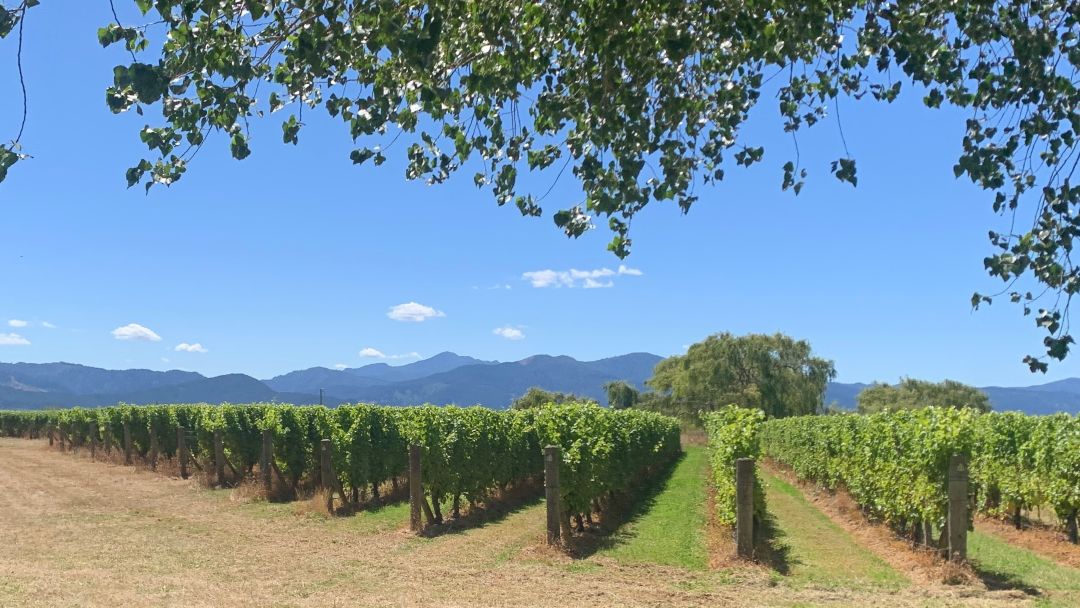
Marlborough’s Wairau Valley normally basks under bright blue skies. Its Māori name is Kei puta te Wairau: “Place with the hole in the cloud."
Later Releases
New Zealand’s producers were engaged in a seemingly interminable battle with the elements in the run-up to both the 2022 and 2023 vintages, facing high disease pressure (particularly powdery mildew and botrytis) as well as a cyclone. As a result, top-quality Chardonnay and later-release, lees-aged Sauvignons have been a little thin on the ground since 2021. However, with the release of the 2024s, there’s reason to be excited again. Wines that spent extended time on lees and in barrel are now on the market and show excellent potential. Despite a relatively cool spring and early summer, which led to small yields, the 2024 growing season resulted in high levels of concentration and phenolic ripeness, lending excellent texture to the wines. It wasn’t just a good vintage for the vines; it was a good vintage for the people. Helen Masters, Ata Rangi’s winemaker, explained, “Two thousand twenty-four was great for the team. It was really tough farming organically in 2022 and 2023 and some producers pulled out of organics, but we stayed the line. Spring was settled but a little cooler, so cropping levels were bang on, and we could dry farm because we got rain when we needed it.”
Whether in Martinborough, Marlborough, Hawke’s Bay or elsewhere, the top producers’ 2024s are full of intensity and power. While there isn’t a lot to go around, it’s worth seeking out the top names for your cellar with the knowledge that 2025 won’t provide the same concentration that’s on offer in 2024.
I tasted the wines for this report between November 2025 and January 2026 in England.
© 2026, Vinous. No portion of this article may be copied, shared or redistributed without prior consent from Vinous. Doing so is not only a violation of our copyright but also threatens the survival of independent wine criticism.
You Might Also Enjoy
New Zealand Reds: Making the Bucket List, Rebecca Gibb MW, July 2025
New Zealand Whites: Never Gonna Give You Up, Rebecca Gibb MW, March 2025
Kumeu River: The Kiwi Dream, Rebecca Gibb MW, September 2024
New Zealand’s Latest Red Releases: Growing Up, Rebecca Gibb MW, May 2024
2023 New Zealand Whites: The Cyclone Vintage, Rebecca Gibb MW, April 2024
Show all the wines (sorted by score)
- AC Wines
- Ahi Kā
- Akitu
- Alchemy Wines
- Allan Scott
- Alpha Domus
- Amisfield
- Askerne
- Astrolabe
- Ata Rangi
- Auntsfield
- Babich Wines
- Bilancia
- Black Cottage
- Black Estate
- Blank Canvas
- Burn Cottage
- Catalina Sounds
- Chard Farm
- Clearview Estate
- Clos Henri
- Cloudy Bay
- Craggy Range
- Crowded House
- Cuvar
- Dashwood
- Decibel Wines
- Deep Down
- Delta Estate
- Dog Point Vineyard
- Earthsong
- Elephant Hill
- Eradus Wines
- Escarpment Winery
- Esk Valley
- Eva Pemper
- Felton Road
- Forrest
- Framingham
- Giesen
- Goldschmidt Vineyards
- Gravel & Loam
- Greystone Wines
- Greywacke
- Headwaters Bay
- Heaphy
- Huia
- Hunter's
- Jules Taylor Wines
- Kelly Washington Wines
- Kumeu River
- Lake Chalice
- Leftfield
- Loveblock
- Mahi
- Man O'War
- Matahiwi Estate
- Miha
- Misty Cove Wines
- Moroki
- Mount Cullen
- Mount Edward
- Mount Fishtail
- Mount Riley Wines
- Mt Beautiful
- Mussel Bay
- Nautilus Estate
- Neudorf
- No. 1 Family Estate
- Palliser Estate
- Paradise Bay
- Paritua
- Pask
- Pegasus Bay
- Peregrine
- Pyramid Valley
- Quartz Reef
- Rapaura Springs
- Rimapere
- Rockburn
- Rongopai
- Rose & Rose
- Saint Clair Family Estate
- Seaside Cellars
- Settlement
- Sherwood Estate
- Sileni
- Smith & Sheth
- Smythe & Renfield
- Sorrell
- SPOKE
- Spy Valley
- Swift Sure
- TAPI
- Te Henga
- Te Kairanga
- Te Mata Estate
- Te Pā Family Vineyards
- The Marlborist
- The Ned
- The Retreat
- Tiki
- Tinpot Hut
- Tohu
- Tohu Winery
- Tony Bish
- Trinity Hill
- Tūpari
- Turnbull & Thomas
- Tussock Jumper
- Urlar
- Valli
- Vavasour
- Vidal
- Villa Maria
- Wairau River
- Whitehaven
- Wild Earth
- Yealands Estate
- Zephyr